

Category: Cat Behavior
Great Pet Care - Pet health information — simplified.
Do Cats Cry? Everything You Need to Know
- 2024-09-27T01:47:26
- Jodi Helmer
Your cat isn’t afraid to express their emotions — especially when their breakfast isn’t served on time — and there may have been times that you’ve witnessed big, fat drops that definitely resemble tears falling from their eyes. But you’re probably still wondering: do cats cry? Keep reading to find out!
Do Cats Cry? We Asked the Experts
Cats are emotional creatures. Studies show that cats have 276 distinct facial expressions and are reported to express six different emotions: anger, happiness, fear, surprise, disgust, and sadness. Cats even respond to human emotions, with research showing higher stress levels when their humans were stressed or sad.[1, 2, 3]
If cats experience sadness and their facial expressions mirror their emotions, do cats cry tears when they are sad? Despite the plethora of internet memes depicting crying kitties, cats don’t shed tears when they are sad, notes Dr. Alex Lynch, associate professor of emergency and critical care and co-director of the Feline Health Center at NC State.
“Cats do produce tears, but we don’t associate that as a sign of pain or distress,” Dr. Lynch says. “Tear production is a normal process to keep the eye healthy.”
What’s Really Going on with Crying Cats
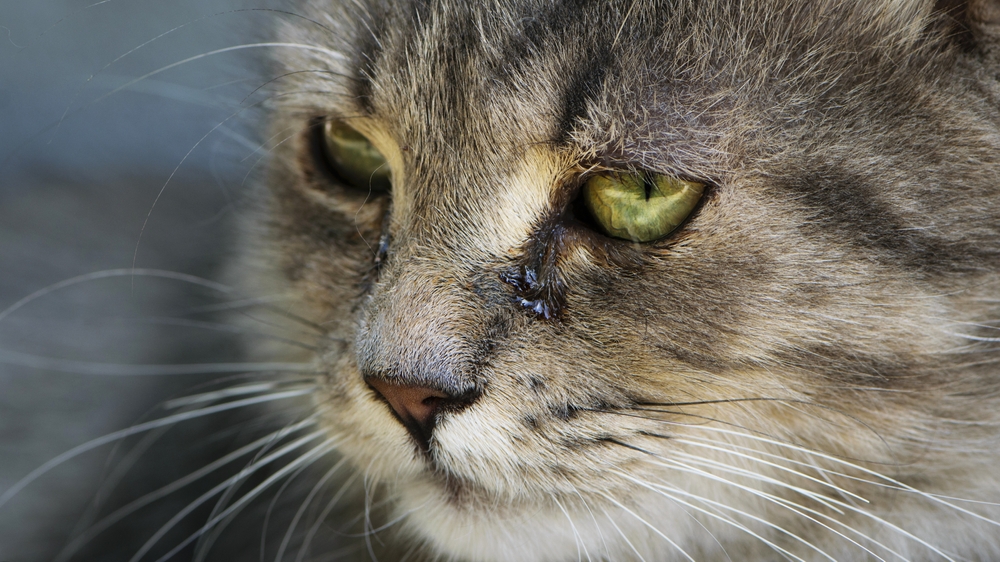
It’s common for cats to make vocalizations that sound like cries. In fact, older research found that domestic cats make a sound that is akin to an infant’s distress cries and use these so-called “isolation cries” to beg for food.[4] Researchers noted, “Humans are highly sensitive to it…[that] could serve as a subtle means of exploitation.”
All cats can make sounds that mimic cries — but some are more vocal than others, according to Dr. Matthew Fife, a veterinary ophthalmologist with Veterinary Eye Institute in Orlando.
“Many cats will vocalize when experiencing stress or pain,” Dr. Fife says. “We have many patients that will vocalize constantly when in an unusual environment, such as in the vet hospital, while others never make a peep.”
Do Cats Cry Tears?
Cats do produce tears — but it’s not from feeling sadness.
Dr. Fife calls cat tears “incredibly important” to eye health. Tears lubricate your cat’s eyes and contain proteins that help to control bacterial levels and fight infections. “Healthy and adequate tear production is essential for maintaining good vision,” he adds.
Why Is My Cat Crying? 6 Possible Reasons
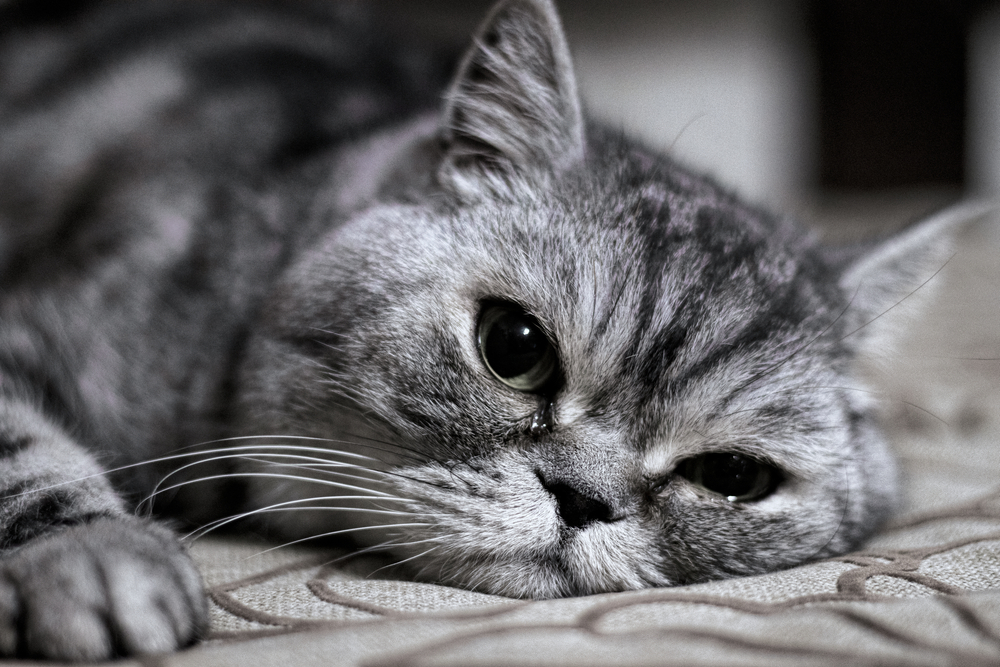
Epiphora is the medical term for an overflow of tears from the eyes. The most common causes are conditions that create an overproduction of tears or prevent tears from draining normally.
Eye infections
Conjunctivitis, an inflammation of the mucous membrane that lines your cat’s eyelids and covers the white part of their eyeballs, causes excessive tearing. In addition to producing excessive tears, cats with conjunctivitis might also squint, or have cloudy yellow or greenish discharge or swelling in one or both eyes.
Bacteria and viruses, including feline viral rhinotracheitis (also known as feline herpesvirus), are common infectious causes of conjunctivitis.
Antibiotic eye drops are the most typical type of medication used to treat eye infections, although there might be some circumstances where oral medications are recommended too, Dr. Lynch says.
Eye disease
Glaucoma is caused when the fluid in the front part of a cat’s eye is unable to drain normally and puts pressure on the optic nerve, causing pain and interfering with vision. The nerve damage can result in partial or total blindness.
Excessive tear production, cloudiness in the eyes, and squinting are some of the early signs of glaucoma. There is no cure for the disease, but there are medications to help ease the symptoms and control the pain.
Eye injuries
Possible eye injuries include scratches, irritation from eyelashes, foreign material being present in the eye, and rubbing the eye against something in their environment — but any damage to the cornea will cause eyes to water, Dr. Fife says.
“Traumatic injuries that occur during play or from other animals are common, viral infections can cause ulceration on the surface of the cornea, and foreign material in the eye can be very irritating.”
Eyelid abnormalities
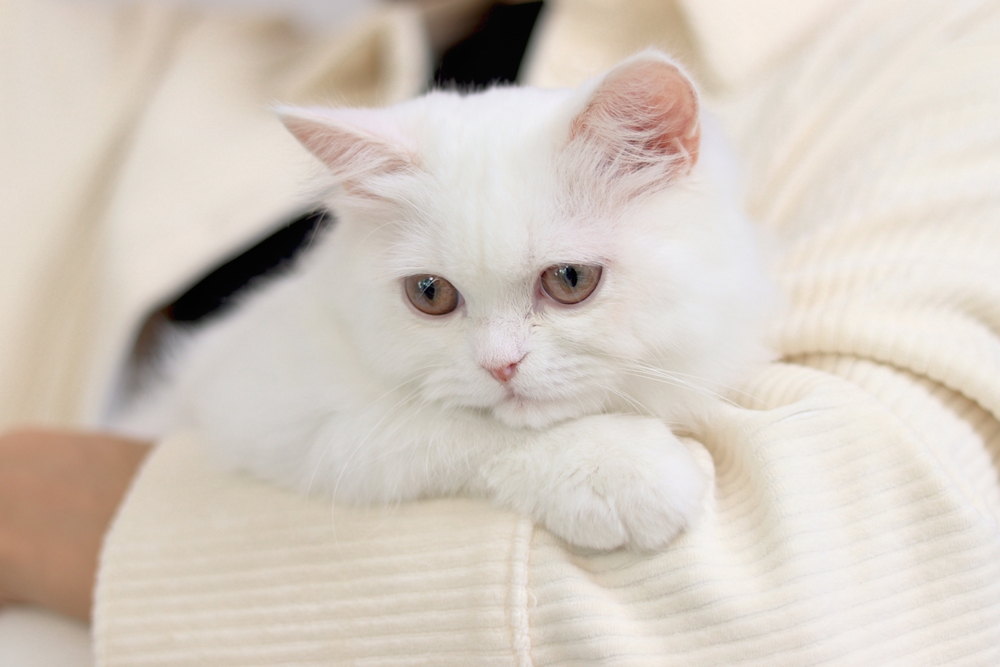
Entropion (a condition that causes eyelids to turn inward) and ectropion (a condition that causes the tissues lining the inner surface of the eyelids to roll outward) cause irritation that can lead to watery eyes.
Persians, Himalayans, and other flat-faced breeds are at greater risk of eyelid abnormalities because their facial anatomies make it harder for tears to drain properly. Often, their tears roll down their faces instead of draining through the tear ducts.
Blocked tear ducts
“Damage to the tear drainage duct is quite common, especially in stray cats that are more prone to severe respiratory infections,” Dr. Fife says.
Infections can cause scarring in the tear duct that drains tears from the eye into the nose, causing a blockage. When the tears can’t drain, they spill onto the face, making it look like your cat is crying.
Environmental irritants
Environmental allergies are very common in animals, and Dr. Fife notes that mild allergies will cause watery eyes.
“Dirt and pollen in the environment can get into the eyes, especially in animals spending a lot of time outside,” he says. “This can produce some thicker, mucous discharge.”
Additionally, cats that like to dig a lot in the litter box can get clay particles in the eyes, which can cause tearing, he adds.
What Is Your Crying Cat Trying to Tell You?
Cats need to produce tears, so don’t fret if your cat sheds one occasionally. But Dr. Lynch notes that too many tears could be a sign that something is wrong.
“Obvious or apparently excessive tear production…could represent a problem with the eye itself, perhaps an injury to the eye surface like an ulcer or scratch, or other issues like allergies or infections,” he says.
Dr. Lynch suggests watching for additional changes in their health and behavior, like red eyes or holding their eyes closed. Looking at your cat’s tail language could also help you understand how your cat is feeling when they are “crying.”
Make an appointment with your veterinarian if you notice your cat shedding an excessive amount of tears. They can examine the eye and help identify if there is something abnormal going on.
When Cat Crying May Indicate a Problem
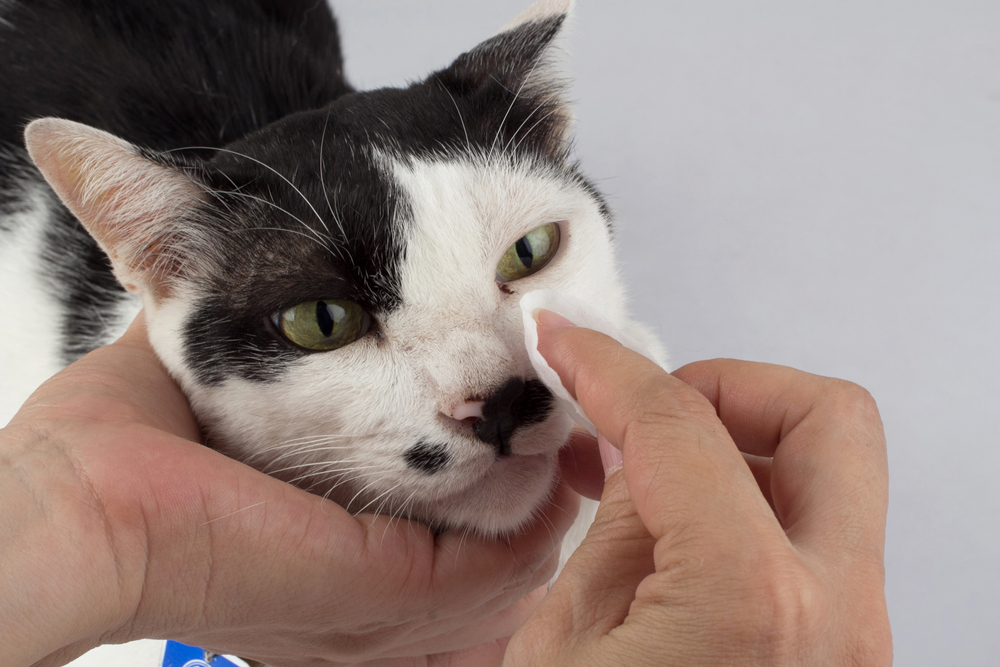
While most cat cries are likely nothing to worry about, changes in vocalizations or persistent cries could indicate your cat is feeling pain or discomfort. Excessive tear production, especially if it’s accompanied by mucous or thick, green discharge, could also be a sign of a health issue.
“Since so many things can cause teary eyes, the only real thing to do is have it checked and try to address any underlying problem,” Dr. Fife says.
How to Prevent Crying in Cats
Normal tear production keeps your cat’s eyes healthy, but it’s important to protect them from illnesses and injuries that may cause too many tears. Depending on the cause, Dr. Lynch suggests preventive measures such as avoiding cleaning products or other environmental irritants that could lead to watery eyes, isolating new or sick animals from each other to reduce the risk of spreading infection, and keeping cats indoors to minimize injuries from other animals or vehicles. Keeping your cat up to date on vaccinations can also prevent some infections that contribute to conjunctivitis.
“If you’re worried about your cat having watery eyes, please contact your veterinary team,” Dr. Lynch urges. “They will help advise the best way to get your cat feeling better again.”
References
- Lauren Scott, Brittany N. Florkiewicz, “Feline faces: Unraveling the social function of domestic cat facial signals,” Behavioural Processes, Volume 213, 2023, 104959. https://doi.org/10.1016/j.beproc.2023.104959
- Martens, P., Enders-Slegers, M. J., & Walker, J. K., “The Emotional Lives of Companion Animals: Attachment and Subjective Claims by Owners of Cats and Dogs.” Anthrozoös, 2016. https://doi.org/10.1080/08927936.2015.1075299
- Quaranta A, d’Ingeo S, Amoruso R, Siniscalchi M., “Emotion Recognition in Cats.” Animals (Basel), 2020 Jun 28. https://www.ncbi.nlm.nih.gov/pmc/articles/PMC7401521/
- McComb, Karen et al. “The cry embedded within the purr.” Current biology : CB vol. 19,13 (2009): R507-8. doi:10.1016/j.cub.2009.05.033
Why Does My Cat Headbutt Me?
- 2024-02-11T23:29:00
- Katie Koschalk
You’re sitting on your couch, engrossed in a TV show, when your cat jumps up beside you, and all of a sudden — BONK! Your feline friend gently but firmly presses their head against you. It’s a cute and somewhat perplexing behavior that may leave many of us wondering, “Why does my cat headbutt me?”
Before we decode why cats headbutt their human companions, let’s understand what this curious cat behavior actually entails.
The Cat Headbutt: What Is It?
A cat headbutt (also known as “head bunting,” “head bonking,” or “head bumping”) is a deliberate act in which a cat approaches you and nudges their head against your face, hands, or any other part of your body.
The term “head” is used pretty broadly here. While some felines favor headbutting with their crown or skull, others might prefer using their forehead or cheeks to bonk you. Unlike a forceful collision, a headbutt is usually gentle and accompanied by signs of contentment, such as purring, trilling, tail vibrating, or slow blinks.
The appearance of headbutting can vary slightly in intensity, frequency, and technique from cat to cat, says certified Feline Training and Behavior Specialist (CFTBS) Stephen Quandt, founder of Feline Behavior Associates, LLC.
“Some cats actively ‘bump’ you, and others do a more gentle head rub, rolling or twisting their head as they apply pressure,” he adds.
Headbutting is a fundamental aspect of a cat’s social and communicative repertoire. It’s not exclusive to interactions with their human family members, either. Cats often headbutt other cats, animals, and even objects in their environment.
Why Does My Cat Headbutt Me? 6 Possible Reasons
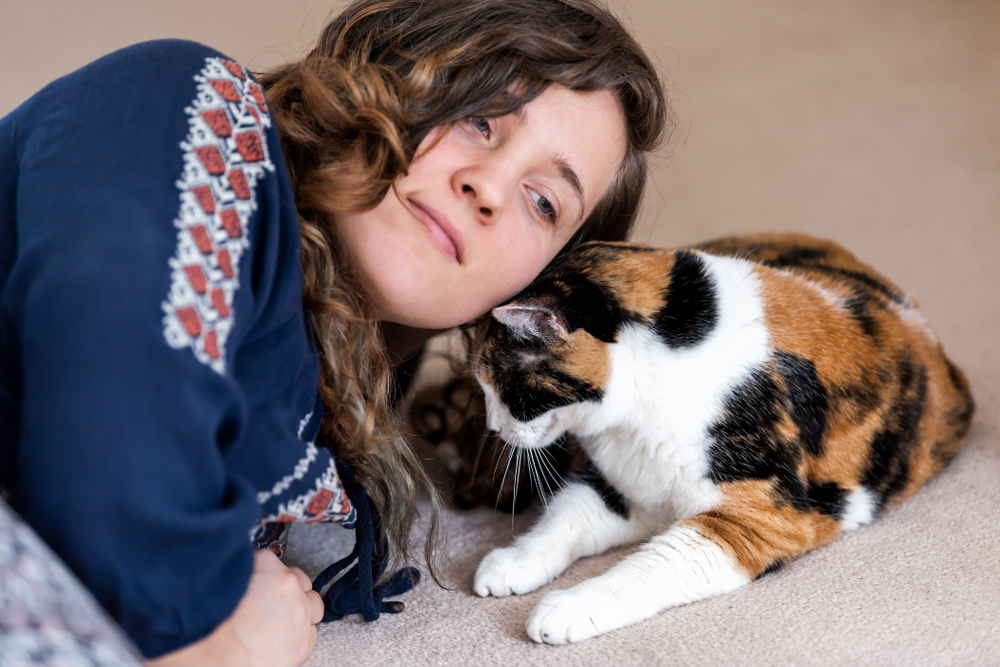
Now that we’ve established what a cat headbutt is, let’s unravel the motivations behind this endearing behavior. Here are some of the most common reasons for cat headbutting.
Marking Their Territory (Including You!)
Cats are territorial animals by nature. To lay claim to their turf, they often use scent marking to establish ownership over their surroundings, including objects, other animals, and their human family members.
Cats have scent glands all over their bodies, with several in prominent locations on their foreheads and cheeks, says Quandt. When a cat rubs their head and face against an object, they release pheromones. These chemical messages broadcast essential information to other cats, sending signals about territory, emotion, and social interaction.
When your cat headbutts you (or other objects in their environment), they’re essentially marking you as part of their territory. This scent-marking behavior tells other cats that you’re within their social circle. It’s as if your cat is saying, “You belong to me, and I belong to you.”
“If our cats’ scents were visible to us like a bright blue dye, I think we would all be shocked by the blue ocean of color around us,” says Quandt.
Creating a Colony Scent
Cats are known for their social structures, which can include other cats in a multi-cat household or their human family member. Headbutting is a way for cats to establish a unified scent among the members of their social group. Evolutionarily, this shared scent helps maintain harmony within the group, reduce potential conflicts, and promote connectedness among its members.
Showing Affection
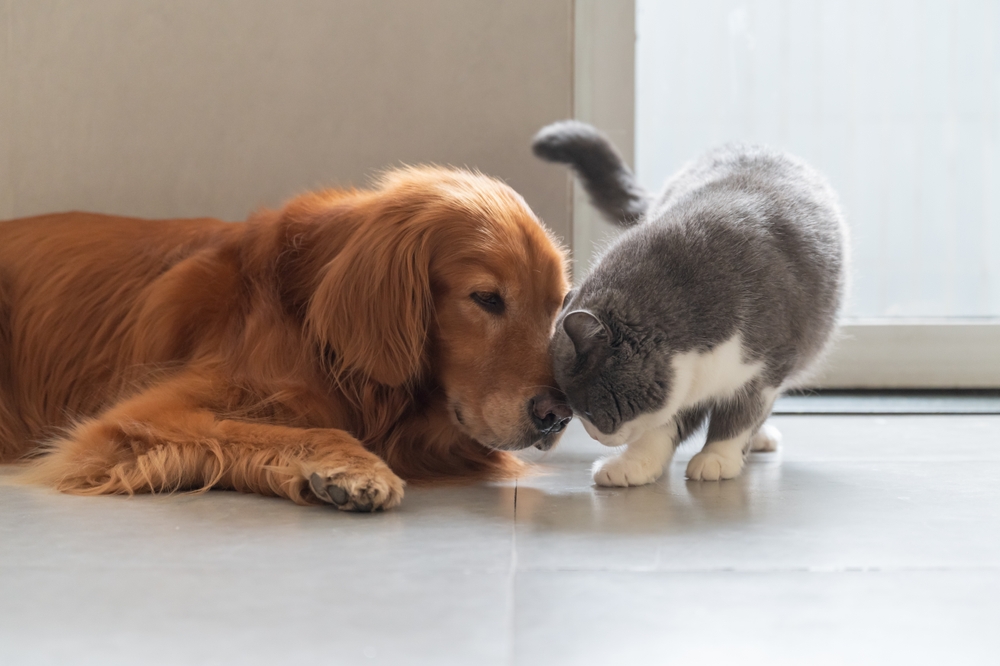
While headbutting has practical implications for cats, it’s ultimately a display of trust, adoration, and affection.
“When a cat rubs their cheek against you or gently ‘bumps’ you with their forehead, they’re communicating a social message and saying, ‘Hey, I really like you and we are family,’” says Quandt. “It’s totally a sign of affection.”
This affectionate gesture is often accompanied by purring, soft vocalizations, and contented body language, such as kneading their paws or snuggling against you.
Self-Soothing
“Cats will sometimes try to make themselves feel more secure in their environment by depositing their pheromones using bunting,” says cat behavior expert Joey Lusvardi, a certified member of the International Association of Animal Behavior Consultants and owner of Class Act Cats.
“This can be especially important in households where there are multiple cats. It helps the cat feel like they have territory that’s their own and communicate with the other cats in the home,” he adds.
You might also notice that your cat headbutts you in situations where they feel anxious, such as during a visit to the veterinarian. It’s their way of comforting themselves and finding solace in the familiar scents of their loved ones.
Seeking Attention
Cats are experts when it comes to demanding your attention, and headbutting is a tried-and-true tactic for doing so. It’s their subtle yet effective method of saying, “I’m here and would appreciate some quality time with you.”
Responding to their headbutts with affection and playtime can reinforce the positive connection you share with your furry feline companion.
Wanting or Needing Something
Cats may headbutt you to communicate they want something from you, such as food, diversion, or access to a closed-off room.
However, be aware that how you respond to such signals may become the expected default, whether you want it to or not.
“Cats are very good at picking up on patterns, so if they make the connection between the two events, they’ll keep doing it,” says Lusvardi.
For example, suppose your cat was repeatedly headbutting you just before receiving food. They might inadvertently learn to associate headbutting with mealtime, leading them to headbutt you to communicate their desire to be fed.
Decoding Your Cat’s Headbutting
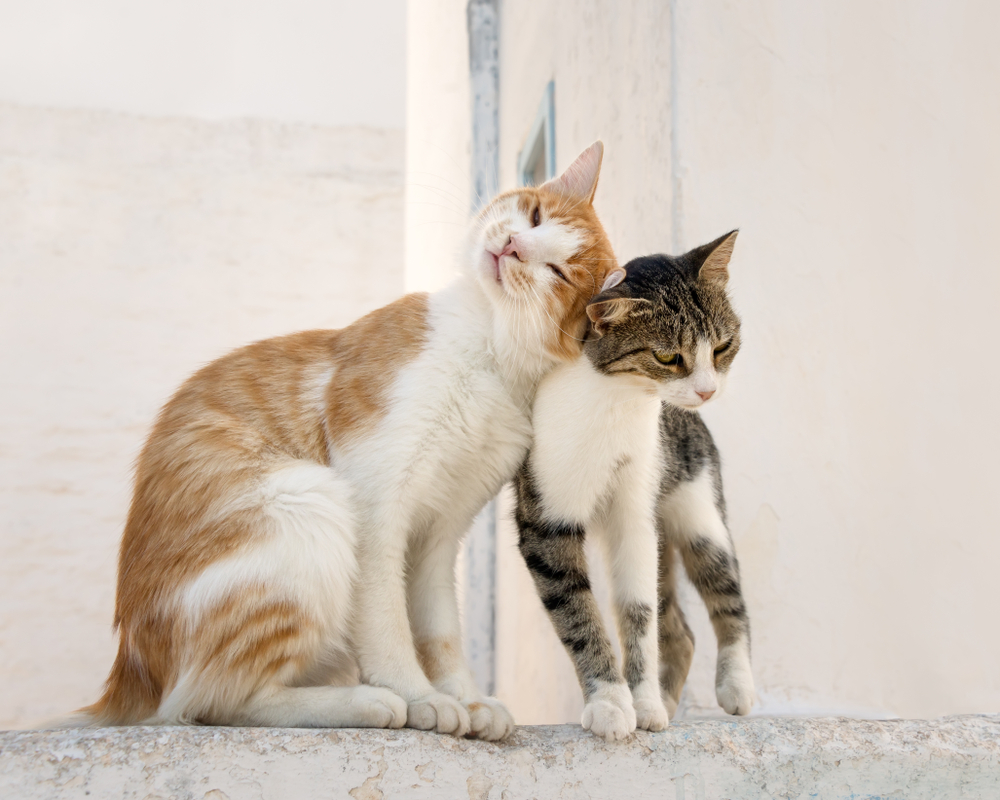
Context is everything when it comes to deciphering your cat’s headbutts, says Quandt. For instance:
- If your cat headbutts you right before mealtime or in the vicinity of their food bowl, it’s a strong indicator that they’re signaling their hunger and desire for food.
- If your cat headbutts you while you’re cuddling on the couch, it’s likely a simple display of affection, love, and contentment.
- If your cat headbutts you while waiting to be seen at a veterinarian’s office, it’s a clear indicator of their anxiety and your cat’s attempt to seek comfort and reassurance through scent marking.
- If your cat is headbutting or cheek rubbing your furniture or other objects in your home, they’re likely scent marking their territory, signaling to other cats that this is their space.
Typically, cats appear content and at ease when they headbutt. If your cat exhibits signs of tension, discomfort, or pain during headbutting, it’s crucial to promptly bring them to a veterinarian for an evaluation.
Additionally, Quandt notes that there’s a different type of behavior that can be confused with headbutting called “head pressing.” This is when a cat presses its head against something, often a wall, and holds it there.
Among other causes, head pressing could be a sign of damage to your cat’s nervous system. If you notice this behavior, it’s best to take your cat to the vet as soon as possible for a thorough evaluation.
How to Respond to Cat Headbutting
What should you do when your cat headbutts you? Here’s what the experts suggest:
- Pause and Appreciate: First and foremost, take a moment to appreciate that your cat’s headbutting is a genuine display of affection and a testament to your strong connection. Your kitty loves you, and that’s awesome!
- Acknowledge and Reciprocate: Gently acknowledge your cat’s headbutt with some gentle petting or loving words.
- Tend to Their Needs: If you sense that your cat’s headbutting is a signal for something specific, such as hunger or a desire for attention, fulfill their needs, if appropriate. If it’s mealtime, provide them with their food. If they seek your attention, spend some quality time engaging with them.
Responding to your cat’s cues not only strengthens your bond but also ensures your cat feels heard and understood.
Cat Headbutting: Quirks and FAQs
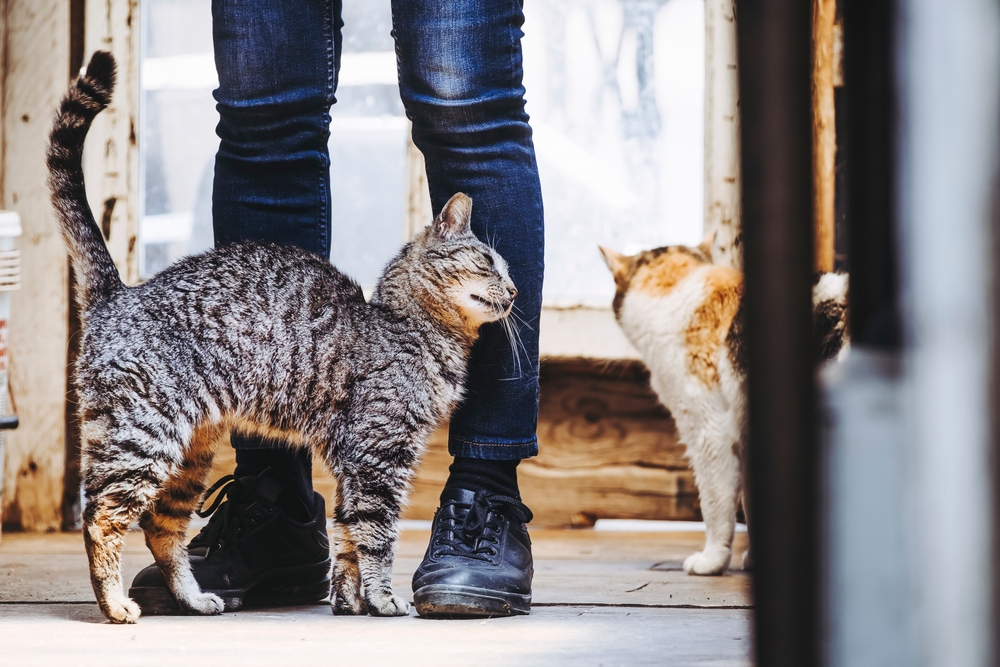
Now that we’ve covered the basics of cat headbutting, let’s answer some more specific questions you might have about this behavior.
Why does my cat headbutt me and then bite me?
Your cat might gently bite you after headbutting as a form of play or affection. However, if the bites are more forceful or accompanied by signs of irritation, it’s likely a sign that your cat is overstimulated. In such cases, it’s best to respect their boundaries and give them space.
Why does my cat headbutt me when I’m sleeping?
If your cat headbutts you while you’re sleeping, it’s likely an attempt to wake you up for attention, food, snuggles, or playtime, says Lusvardi. After all, cats are crepuscular creatures, meaning they are most active during dawn and dusk.
Why does my cat headbutt me so hard?
The force of a cat’s headbutt can vary depending on their personality and the situation. A harder headbutt might indicate heightened excitement or a stronger desire to convey affection. It’s generally a positive sign that your cat feels deeply attached to you.
However, if your cat’s headbutts become very forceful or frequent, it’s advisable to consult with a veterinarian to rule out any underlying medical issues.
Should I headbutt my cat back?
When your cat headbutts you, you can try to reciprocate by giving them a gentle headbutt back. The keyword here is “gentle.” Do not bonk them with your head or press into them too hard. Instead, gently nuzzle your head into their head or body. Of course, not all cats will like this, so observe your cat’s body language to see if they welcome the interaction. If they’re not a fan, stick to petting with your hands.
Cat Headbutting Tips and Other Bonding Strategies
At its core, headbutting is a form of communication. “Kittens ask their mothers for food, attention, comfort, security, and play, and they do that by meowing, purring, and rubbing,” says Quandt.
Cats do the same thing to us, and headbutting is a part of that. By responding to your cat with affection, petting, comfort, or food, you’re essentially acting as a mother cat to them, and it’s deeply bonding, explains Quandt.
Pay close attention to your cat’s body language during headbutting and other interactions. Learn to recognize signs of contentment, stress, or discomfort. This can help you effectively tailor your responses to your cat’s emotional needs.
Besides being present during headbutting, here are a few other things you can do to bond with your kitty:
- Interactive Play: Engage in interactive play sessions with your cat using toys that mimic hunting behaviors. Playtime provides physical exercise and is an excellent opportunity for them to release pent-up energy and stress, but it also strengthens the bond between you and your cat.
- Regular Grooming: Cats often groom each other as a sign of affection and social bonding. You can mimic this behavior by gently brushing your cat. Not only does it promote a healthier coat, but it also reinforces your connection.
- Quality Time: Dedicate quality time to simply being in your cat’s company. Whether it’s working while they sleep beside you or snuggling, time spent together can reinforce the emotional connection between you.
By continually striving to understand your cat’s unique language and cater to their needs, you’ll find that the bond between you and your furry companion grows stronger with each passing day — and that’s pretty darn special!
Do Cats Sleep at Night? Understanding Feline Sleep Patterns
- 2024-01-19T02:15:29
- Katie Koschalk
It’s no secret cats have a fondness for daytime snoozing, giving rise to the familiar term “cat naps.” But do cats sleep at night?
Indeed, most cats spend a portion of the night sleeping. However, they typically exhibit bursts of energy and activity in the late evening or early morning hours. This nighttime vigor can sometimes interrupt their human companions’ sleep, as the felines prowl around the house and unleash the zoomies.
Why do cats follow this sleeping pattern? And what can pet parents do to help their cats rest more at night? Let’s find out.
Are Cats Nocturnal?
The myth that cats are nocturnal creatures is quite common, but they’re actually crepuscular, which means that they’re most active during the twilight hours of dawn and dusk.
According to Dr. Jessica Taylor, DVM, vice president of veterinary medicine at PetFolk, this pattern stems from their ancestry. Wild cats find these times optimal for hunting, given that they see best in low-light conditions and their prey (rodents, rabbits, etc.) are active during these times.
“It’s often more advantageous to rest during the hotter parts of the day, conserving energy for the evening hunt,” says Dr. Taylor.
This behavior explains why your kitty might seem to be winding up when you’re winding down for the night, or why you might be woken up by your cat tearing through your house at 4 a.m. like they’re on a caffeine high. It’s all part of their natural rhythm and crepuscular nature.
Do Cats Sleep at Night?
Cats sleep a lot — from 12 to 20 hours a day. This range varies based on their age, lifestyle, boredom level, and even the season.
When it comes to a cat’s sleeping schedule, their crepuscular behavior means they’re likely to take several naps throughout the day and night, interspersed with periods of activity, particularly in the late evening and early morning.
“When they’re awake, they can be very active and expend a lot of energy in a short amount of time,” says Dr. Taylor. This commonly looks like sudden sprints around your house (aka “zoomies”). They also might just poke around and explore.
So, while cats do sleep at night, it’s not in one long stretch like humans. Instead, their sleep is segmented, allowing for times of alertness and activity.
Why a Cat Might Be More Active at Night Than Usual
There are certain factors that might make a cat more active at night than the average cat.
Age
While kittens require more sleep than adult cats, usually up to 20 hours a day, this sleep is often broken up into shorter periods than adult cats. Consequently, kittens may have longer periods of activity during the night.
Health conditions
Certain medical issues can disrupt a cat’s sleep schedule. For example, vision loss, changes in blood pressure, or hyperthyroidism can cause restlessness and confusion, leading to more nighttime disturbances or vocalizations, says Dr. Taylor.
Breed
Some breeds are inherently more active than others. For instance, Siamese and Bengal cats are known for their energetic and playful nature and might be more prone to nighttime activity than more sedate breeds like Persian or Ragdoll cats.
Environmental factors
Changes in the home environment can impact a cat’s sleep schedule. A new pet, a change in your work hours, or moving can cause your cat stress and anxiety, leading to more nocturnal activity.
How to Get a Cat to Sleep at Night
If you’re finding that your cat is too active during the night, causing you sleep disturbances, there are several strategies you can adopt to encourage your feline friend to sleep more during the night.
Increase Their Daytime Enrichment
Keeping your cat engaged and active during the day can help them sleep better at night. Anything that engages their natural hunting instincts can be particularly beneficial, says Dr. Taylor.
Aim to engage kittens and adult cats in two daily play sessions, each lasting between 10 to 20 minutes. For senior cats, a single play session per day is sufficient.
It can also help to enrich their environment with cat trees, scratching posts, and toys they can play with by themselves.
Play to Their Natural Rhythm
Cats are hardwired to follow a natural rhythm: hunt, feast on their catch, unwind, sleep. You can use this pattern to your advantage by engaging your cat in a play session close to your bedtime and then serving them a small meal or snack. With any luck, your cat will settle down after they finish eating and drift off to sleep.
If your cat tends to wake you up at dawn for food, consider setting a timed feeder to dispense a snack at, say, 4 a.m. to tide them over until breakfast.
Create a Comfortable Sleeping Environment
Ensure your cat has a quiet, comfortable, and safe place to sleep. This could be a dedicated cat bed, access to your bed, or a cozy blanket on your couch.
Consider Over-the-Counter Supplements
Some pet parents have found success with certain over-the-counter supplements, like those containing chamomile or melatonin. When given to your cat before your bedtime, these supplements can help calm your kitty and encourage nighttime sleep. Just be sure to always consult with a veterinarian before giving your cat a new supplement.
When to Seek Additional Support
While small modifications to their daily routine, diet, and environment can help sync your cat’s sleep schedule with yours, there may be instances where these adjustments aren’t effective.
If your efforts to adjust your cat’s sleep pattern don’t seem to bring about a noticeable change, consulting a cat behaviorist may help. They can provide tailored strategies to gently modify your cat’s sleep schedule without causing undue stress or discomfort.
If you notice a sudden change in your cat’s sleep patterns, visit your veterinarian. Certain medical conditions can significantly impact a cat’s sleep, and these can often go unnoticed without professional input.
Remember, seeking additional support doesn’t mean you’ve failed your feline companion. On the contrary, it demonstrates a deep level of care and commitment to their well-being, ensuring that they have the happiest and healthiest life by your side.
How Long Does a Cat Hold a Grudge?
- 2024-01-10T20:11:39
- Lisa Selvaggio
There’s still a lot to learn about cats, but researchers have been able to shed some light on the feline brain and memory. For instance, experts discovered that your kitty can recognize your voice. [1] And a study found that cats can recall information, indicating that they may have episodic memory. [2]
Despite what scientists have reported, your kitty’s everyday behaviors might leave you guessing about what’s going on in their mind. And if you’ve ever done something to upset your cat, you might even wonder if they’re able to hold a grudge or feel resentful.
To get to the bottom of things, we spoke with three cat behaviorists who can help you better understand your pet’s reactions to positive and negative events.
Do Cats Hold Grudges?
All of the experts we talked with agree: cats don’t hold grudges.
“When we think of a grudge from a human perspective, we mean that a person is holding onto long-term feelings of anger, resentment, or spite toward someone else. These types of emotions do not affect cat behaviors. Cats behave in a way that meets their instinctual needs to be safe; they do not act out of spite, revenge, or holding grudges,” says Rachel Geller, Ed.D., a cat behaviorist and founder/president of All Cats All the Time.
“Grudges are a human emotion and a human concept. Thinking of a cat as holding a grudge is anthropomorphizing, or applying human thinking to something that does not think like a human. Trying to apply human centered thinking like this not only harms the bond between human and cat, but also makes it much harder for humans to address unwanted behaviors in cats,” says Joey Lusvardi, an IAABC certified cat behavior consultant who runs Class Act Cats.
“For example, if your cat is peeing on your carpet whenever you return from vacation, you might think that they’re doing it to get revenge, out of spite, or because they’re mad at you. The more likely emotion is stress due to changes in the cat’s routine. By looking at it from a stress perspective, you can actually begin to take real, actionable steps to address the problem,” he adds.
Positive vs. Negative Associations
A cat’s behavior is influenced by positive and negative associations.
“Cats can develop negative associations – not resentment, which is a human emotion – toward people, other pets, or even inanimate objects. They do so based on past experience with a human or pet. For example, if a cat meets another cat and the other cat hisses, chases, and bites, they’re going to develop a fearful response to the other cat. If you yell at your cat or use a squirt bottle on them, they’re going to become fearful of you. That may create all sorts of other unwanted behaviors. Depending on the strength of the fear, these responses can be long-lasting,” says Lusvardi.
Geller agrees that cats can form positive and negative associations. “Cats have associative memories, so if you consistently do something positive or negative with a cat, [they] will develop an association with you and that action,” she says.
Pet parents might mistake a negative association for a grudge. According to Daniel Warren-Cummings, the central behavior officer for Cats Protection, an example of this is a cat’s fear of being put in a pet carrier. While a kitty’s behavior might change because of the stress, if their relationship with their human is good, they’ll go back to normal once they feel at ease again. “The cat doesn’t hold grudges; the cat just knows that this particular thing was very stressful. If the next day you bring the carrier out again, the cat may show avoidance or fear-based behaviors, but it will specifically be in the context of the unpleasant stimulus, not because the cat has a grudge,” he says.
How Long Does a Cat Hold a Grudge? A Look at Cat Memory

Although it might seem like your cat is holding a grudge, experts advise against applying human emotions to your furry companion. It’s best to consider your kitty’s behavior from a feline – not a human – perspective. However, just because your cat doesn’t hold a grudge doesn’t mean she doesn’t remember things.
How good is a cat’s memory? Short-term memory is believed to be about 16 hours, while long-term memory might last for many years, and perhaps the life of a cat.
According to Lusvardi, several factors can influence how long a cat will remember something, and some experiences can change a kitty’s behavior for the long run. “Particularly pleasant or aversive stimuli can cause life-long associations, and cats can display behavior changes as a consequence of events that happened years prior. I work with a lot of clients whose cats were, for example, mistreated or abused by someone, and they will still be fearful of anyone who has enough of a similarity to that individual. So, while there may be some memories that fade after 16 hours, your cat absolutely can remember things longer than that,” he says.
Changes in a Cat’s Behavior in the Short-Term
In addition to long-term changes, a cat might shift their behavior for a little while after a negative experience – but, again, this doesn’t mean they feel resentful.
All of the behaviorists we spoke with used the example of accidentally stepping on your cat’s tail. You might notice that your cat is on edge around you for a short time, but they aren’t holding a grudge; instead, they’re afraid you’ll step on their tail again and want to prevent another painful experience.
What Do Cats Remember?
“Cats are more likely to remember things that either cause strong pleasant emotional responses or strong negative emotional responses. They may also remember things that happen repeatedly over time,” says Lusvardi. “One of the biggest predictors of how well a cat remembers something is how strong the emotional response is.”
Warren-Cummings says cats will remember things that help them survive. This includes where they can get food and water and where they can hide when they feel threatened. He also says they’ll remember the good things that they like.
Geller states that cats have spatial memory to remember where their things are throughout the house, and they can also remember people that they haven’t seen in a long time.
Signs Your Cat Might Be Mad at You
Understanding your cat’s body language can help you figure out what they’re feeling. While growling is an obvious sign that your kitty is uneasy, there are other things to look for, such as changes in the position of the ears or the movement of the tail.
“Cats will display what we call distance increasing behaviors when they’re feeling fearful or stressed. These may include slinking or running away, trying to make themselves smaller, or walking around something that’s stressing them out. You may also note their pupils dilate, [their] ears go to the side or get pinned back, or that their tail begins thrashing,” says Lusvardi.
“Hissing and swiping are generally high-level indicators of fear,” adds Warren-Cummings. “If the cat is escalating to these behaviors, there is a good chance the owner has missed a lot of the lower-mid level body language cues.”
How to Rebuild Your Bond With Your Cat
Okay, let’s say your cat is having a negative reaction to you. Do cats forgive? As discussed above, cats react to situations and learn from their experiences. By taking the right approach, you can prevent your kitty from creating negative associations with your family.
If you feel like there’s a wedge between you and your pet, and you need to rebuild or strengthen your bond, there are things you can do. Just remember to think like a cat.
Identify the Issue
You can start by figuring out what’s causing your kitty to feel unhappy. “Once you identify what the stressor is, be it something you are doing or something in the environment, it is important to reduce the impact of the stressor,” says Warren-Cummings.
“Reflect on your own behavior. In most cases, cats are just exhibiting natural cat behaviors. We often are the ones who need to adjust our actions,” adds Lusvardi.
Take Time to Bond
Lusvardi also recommends creating a positive association by doing things like giving your cat treats and playing with her.
Geller agrees that interactive play can help create a strong bond while your kitty has fun. “For the play session to be beneficial, the cat needs to have multiple captures. She has to be able to successfully grab the toy in [their] mouth or in [their] paws. Sometimes, people get too carried away with keeping the toy out of the cat’s reach, and that just ends up adding to the cat’s frustration or tension.”
Don’t React Harshly
“I strongly recommend against any sort of punishment toward your cat,” says Lusvardi. “Using a squirt bottle, making loud noises, or yelling at your cat isn’t going to help them feel less fearful. Plus, they’re potentially going to develop a fearful association with you. That will only exacerbate the problem. Focus on addressing the cat’s needs and building up your relationship.”
Consider Asking Professionals for Help
Consulting a veterinarian or pet behaviorist can be beneficial. “If you see a behavior change or behavior problem develop,” says Warren-Cummings, “it is important to have your cat checked by a veterinarian to rule out underlying medical issues. From there, consult a qualified behaviorist.”
REFERENCES
- Arnold, Carrie, “Your cat can recognize your voice. Yes, really.” National Geographic (2022 October). Retrieved from: https://www.nationalgeographic.com/animals/article/your-cat-can-recognize-your-voice
- Takagi, Saho et al. “Use of incidentally encoded memory from a single experience in cats.” Behavioural processes vol. 141,Pt 3 (2017): 267-272. doi:10.1016/j.beproc.2016.12.014
Why Do Cats Scratch?
- 2024-01-09T20:04:58
- Katie Koschalk
As a cat parent, you’ve undoubtedly noticed your feline companion’s enthusiastic propensity for scratching. Whether they’re sinking their claws into your brand-new Pottery Barn sofa or your wicker bed frame, cats are naturally inclined to scratch a variety of surfaces. And of course, this begs the question: why do cats scratch?
Read on to get the scoop on cat scratching.
Why Do Cats Scratch?
While scratching might seem like a destructive habit to humans, rest assured your cat isn’t doing it to vex you. In fact, one survey found that 84 percent of cats scratch inappropriate items (chairs, furniture, carpets, etc.), making this a widespread concern for many cat parents. [1]
While this behavior can be destructive and frustrating, scratching is a natural instinct for cats and serves multiple vital functions in their lives, explains Samantha Bell, cat behavior expert at Best Friends Animal Society. This instinct is so strong that trying to eliminate scratching completely is not only unrealistic but also unfair to the cat.
Your goal shouldn’t be to stop your cat from scratching in general, but rather to train them to only scratch their scratching posts and other designated scratching areas. We’ll cover ways to encourage appropriate scratching shortly, but first, let’s explore some cat scratching basics.
So, why do they do it? Here are the key reasons:
Marking territory
Cats are territorial creatures by nature, and scratching serves as a dual method for marking territory. “In the wild, big cats make deep scratch marks on trees along the perimeter of their territory to provide a visual signal to other cats that this area belongs to them,” says Bell.
Additionally, the scent glands in their paw pads release pheromones during scratching, leaving an olfactory marker that serves as a “no trespassing” sign to other animals.
“Our domestic cats have these same instincts and want to feel like they ‘own’ territory in their home,” says Bell. This is one reason cats tend to scratch various items in their humans’ houses.
Claw maintenance
Just as humans trim their nails, cats need to maintain their claws. “Scratching gets rid of the dead sheaths on cats’ nails,” says Bell. Shedding this outer layer of the claw reveals a sharper, healthier claw underneath.
Having sharp, well-maintained claws helps with a cat’s day-to-day activities, including climbing, hunting, or gripping onto surfaces.
Stretching and exercise
Scratching is an effective form of stretching for cats, akin to the feline version of yoga. “When cats scratch, they engage their front leg muscles to dig into surfaces and their back leg muscles to push,” says Bell. By reaching up as far as they can, they also release muscle tension in their back and shoulders.
When done vigorously, scratching can even serve as exercise, as it activates various muscle groups, elevates heart rate and burns calories, says Bell.
Stress relief and emotional expression
Scratching can serve as a healthy outlet for stress relief. Just like humans may go for a run or hit a punching bag when they’re feeling tense, cats may resort to scratching to release built-up stress.
“Scratching is used to express excitement or frustration,” says Bell. “It’s like how kids jump up and down when excited.” This is why your cat might excitedly run to their scratching post to scratch while you’re preparing their food or when you come home.
Why Do Cats Scratch Furniture?
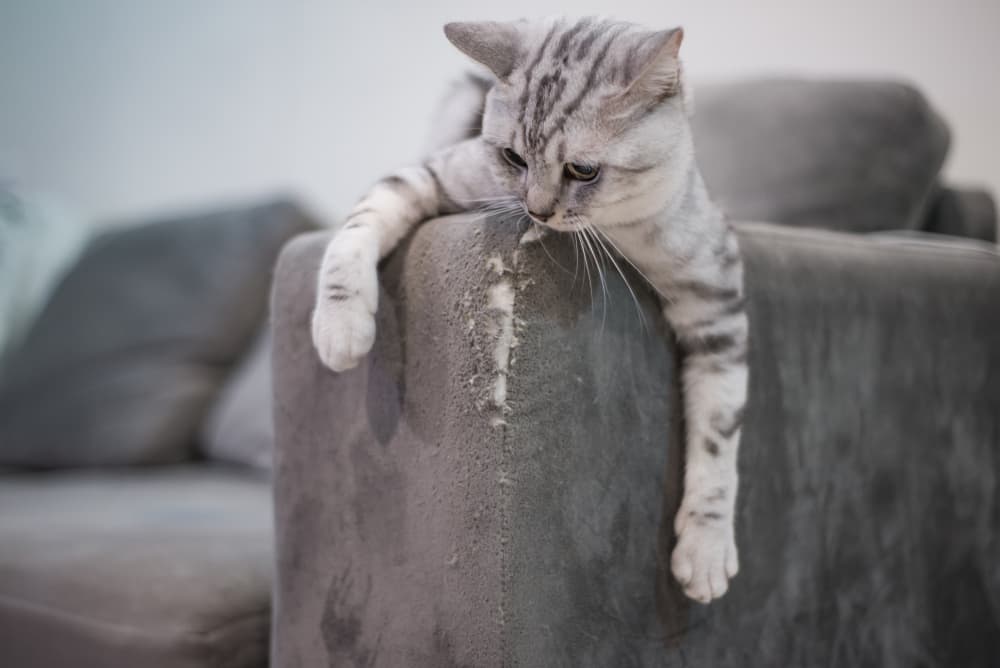
Have you ever wondered why your cat uses your stylish couch as their personal scratching post? Understanding the following reasons can offer insights into why your furniture often becomes the target for those feline claws.
Sturdiness
“In the wild, cats scratch on trees which are tall [and] sturdy, and won’t move or tip over, even if they put all their weight on them,” says Bell.
Unfortunately, many commercially available scratching posts fail to meet these critical criteria. They often lack the height for a cat to fully extend their body and may wobble under the intensity of a spirited scratch. This drives cats to seek alternatives like furniture, which mimics the tall and sturdy characteristics of a tree in the wild, Bell explains.
Convenience and accessibility
Furniture, like couches and chairs, tend to be centrally located in homes, making them easy targets for a cat looking to engage in a quick scratching session. They’re convenient, readily available, and often at the perfect height for a cat to stand on their hind legs and stretch while scratching.
Territorial marking
Similar to the way big cats mark in the wild, when your cat scratches your furniture, they’re physically marking it and leaving behind an olfactory signature. This signals to other cats and animals that this piece of furniture – and by extension, the surrounding area — is claimed territory.
Attention-seeking behavior
Cats quickly learn that certain actions will result in specific reactions from their human companions. If scratching the couch makes you get up and interact with them — even if it’s just to shoo them away — your cat may continue to do it to get your attention.
Why Do Cats Scratch People?
“The reasons behind cats scratching people are very different from why they scratch furniture,” says Bell. Let’s review the most common reasons:
Defensive behavior
Cats might scratch people if they feel cornered, threatened or unsafe. This is a defensive behavior intended to protect themselves from a perceived threat. It’s always essential to approach cats — especially unfamiliar ones — slowly and cautiously to avoid triggering their defensive instincts.
Playfulness and overstimulation
Cats, especially younger ones, have a strong play drive, and they often use their paws and claws as tools for exploration and play. Young cats might not yet understand how to regulate their claw use, leading to scratches. Similarly, adult cats can become overstimulated during play and might scratch as a result.
Anxiety or stress
Just like humans, cats can act out when they’re feeling anxious or stressed. If you notice a sudden change in your cat’s behavior, including increased scratching, it may be worth investigating any changes in their environment or routine that could be causing stress.
Accidental
Sometimes, scratching is purely accidental. Your cat might be trying to leap from your lap but uses too much claw in the push-off, or they may be aiming for a toy and miss.
How to Stop a Cat from Scratching Furniture (or Other Inappropriate Items)
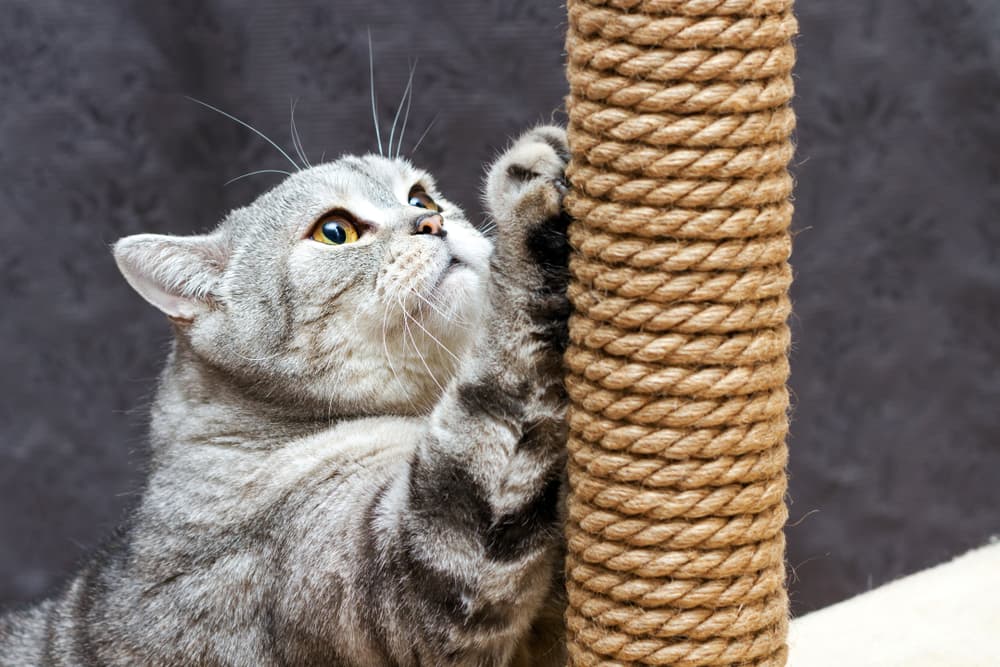
While scratching is a natural and essential behavior for cats, that doesn’t mean your furniture has to be the sacrificial offering. Here are some ways to guide your cat away from the furniture and toward their designated scratching posts and pads.
Provide alternatives
The most effective way to keep your cat from scratching your furniture is to offer them more appealing alternatives. A high-quality cat scratching post, cat scratching pad, or cat tree with built-in scratching areas can give your feline friend a designated place to fulfill their scratching needs.
Place the cat scratchers near the furniture your cat tends to scratch. This way, they’ll be more likely to choose the post or pad over the furniture when they feel the urge to scratch.
Remember that scratching serves as a way for cats to mark their territory. For this reason, it’s also important to place scratching posts and other scratching surfaces in rooms your cat frequently occupies, like the living room and bedroom.
Use positive reinforcement
When your cat uses their scratching post or another appropriate surface, offer praise, affection, treats, or playtime as a reward. Positive reinforcement can be highly effective in shaping your cat’s behavior.
If your cat starts scratching an inappropriate object, gently interrupt and redirect them to their designated scratching post. You can even place a treat or toy near the post to encourage usage.
Once they make the switch, immediately reward them to reinforce the positive behavior. This combination of interruption, redirection, and positive reinforcement can help train your cat to scratch only where it’s acceptable.
Add scratching pads to furniture
Using a furniture scratching pad can be an effective compromise between preserving your furniture and allowing your cat to engage in their natural scratching behavior.
By attaching a scratching pad directly to their favorite scratching spots on the furniture, you offer a designated area for them to scratch without damaging your belongings.
Over time, you can gradually shift the pad closer to a more appropriate scratching area, using positive reinforcement to encourage this behavior.
Regularly trim claws
While it won’t stop your cat from scratching, keeping their claws trimmed will reduce the amount of damage they can do. If you’re unsure how to do this safely, your veterinarian or a professional groomer can help.
Consult a cat behaviorist
If you’ve exhausted various strategies and your cat continues to scratch furniture or other inappropriate areas, it may be time to consult a cat behaviorist. Although scratching is a natural behavior, persistent issues may signify heightened stress levels or deeply ingrained habits that could necessitate professional advice.
Cat Scratching: Other Tips and Advice
As we conclude, let’s explore some additional tips that will come in handy for managing your cat’s scratching behavior:
Never punish your cat for scratching
It’s crucial to remember that scratching is a natural, instinctive behavior for cats. Punishing your cat (including spraying them with water) for doing what comes naturally can confuse them and damage the trust between you. Instead, focus on redirecting their behavior to appropriate spots.
Rotate scratching toys and surfaces
Like humans, cats can get bored with the same old thing. Keep your kitty’s interest piqued by rotating their scratching toys. This variety will also allow you to figure out which materials and types of scratchers your cat prefers.
Invest in quality scratching posts
Not all scratching posts are created equal. Invest in high-quality posts made from materials that are attractive to cats and will withstand their clawing. The post should be tall enough for your cat to fully stretch and stable enough to bear their weight without tipping over.
Consistency is key
When training your cat to use a scratching post or pad, consistency is essential. Always reward good behavior and gently redirect them when they scratch inappropriately. Use the same type of reward — whether it’s a treat, verbal praise, or a quick play session — to reinforce the behavior you want to see.
Remember, the aim isn’t to eliminate scratching, but to direct it in a way that suits both feline and human members of the household. With understanding, patience, and consistent effort, you can achieve a peaceful coexistence that respects your cat’s natural instincts and your furniture.
Reference:
- Moesta A, Keys D, Crowell-Davis S. “Survey of cat owners on features of, and preventative measures for, feline scratching of inappropriate objects: a pilot study.” J Feline Med Surg. (2018 Oct) (10):891-899. doi: 10.1177/1098612X17733185. Epub (2017 October). PMID: 29082814.
When Do Kittens Calm Down?
- 2024-01-09T20:02:32
- Linda Childers
If you’ve recently added a kitten to your family, you’ve probably discovered two undeniable truths: your new feline friend is the cutest thing ever and they also have boundless energy. While hyperactivity is totally normal in kittens, it can come as a surprise if you’re a first-time cat owner or used to living with an older cat, leaving you wondering: when do kittens calm down?
Whether your kitten thinks your sofa is a scratching post or is experiencing the zoomies at night and running around your living room, there are many ways to channel your kitten’s energy in a positive way.
Read on for what you need to know to better understand your kitten’s temperament and successfully manage their energy levels.
Why Is My Kitten So Hyper?
Stephen Quandt, a feline training and behavior specialist with Feline Behavior Associates in New York City, says most (but not all) kittens have the same energy level as a 4- to 7-year-old child.
“Everything is new to kittens and they exhibit high energy as they learn how to manipulate their world,” he says. “There are two categories of high energy: desirable (which encompasses running, climbing and vocalizing) and undesirable (which involves getting play-aggressive).”
Although it’s normal for kittens to engage in rough and active play, it’s also important to intervene early and to teach your kitten not to bite your hands and other limbs.
“Kittens have natural prey instincts,” Quandt says. “Use toys that put distance between your cat and your hand, such as a feather wand or a plush toy.”
Quandt notes that many shelters and rescue groups recommend adopting kittens in pairs, since they need interactions with other kittens for healthy social development.
“A kitten learns a lot in the first few months of life from their littermates,” he says. “Kittens bite and wrestle with each other and if they are separated from their family before they’re 2 to 3 months old, they may not have learned appropriate play behavior, and think it’s ok to bite and wrestle with you.”
While being energetic as they explore their new surroundings is totally normal kitten behavior, their hyperactivity can catch some cat parents off guard.
“Kittens can act a little crazy, which can be a bit overwhelming for cat parents,” says LeeAnna Buis, a certified feline training and behavior specialist with Feline Behavior Solutions in Vancouver, Washington. “While all cats need daily play and enrichment, kittens need quite a bit more. Just like young children, they’re curious about everything at this age because it’s all new, and they’re learning how to ‘cat.’”
Although Buis says kittens have natural instincts, they aren’t born knowing how to climb, balance, hunt, and play, and they need to learn these behaviors through watching, testing, exploring, and practicing.
Do Kittens Calm Down as They Age?
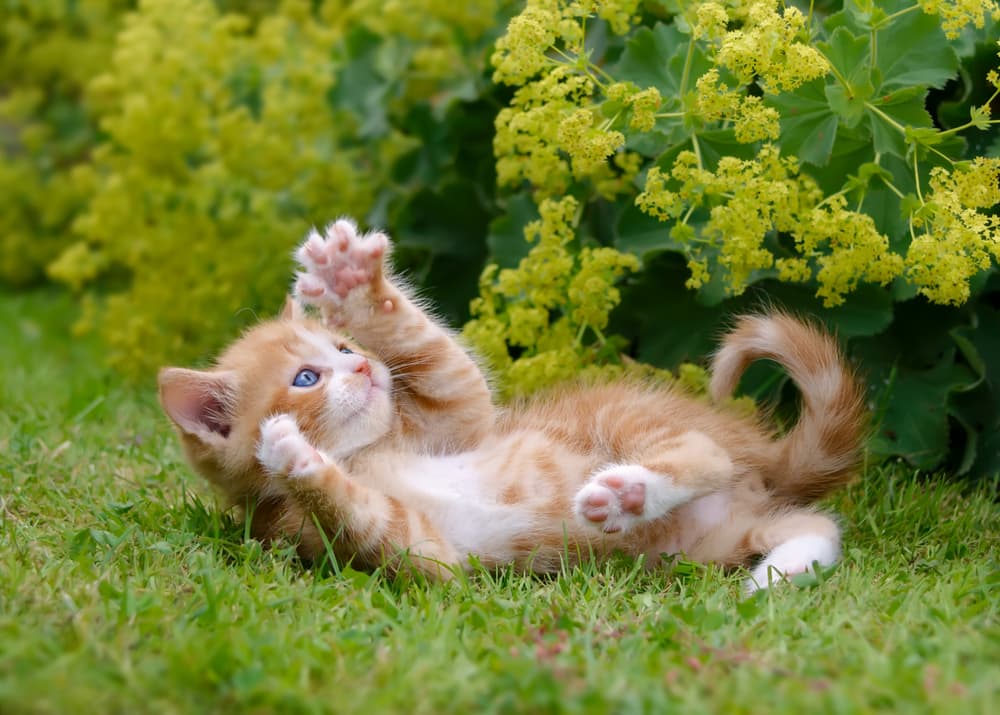
The good news is your kitten’s energy level will typically decline as they get older.
According to Buis, while all kittens have different levels of energy, their hyperactivity tends to peak around 9 months of age, then they begin to calm down.
Keep in mind that even if your cat’s high energy levels lead to challenging behavior such as jumping on a kitchen counter or clawing your furniture, Quandt says it’s important to never yell at or physically discipline your kitten. “This will only cause them to be stressed and teach them to avoid you,” he says. “It’s much more effective to redirect your cat by enticing them with treats to use a cat tree or to provide them with a scratching post.”
If your kitten is scratching your furniture, Quandt says it’s not because they’re acting out. Scratching is a natural part of your kitten’s development and a way for them to relieve stress, express emotions, mark objects with their scent, and remove the dead part of their nails.
“Bitter apple spray can work if your kitten tries to chew on something like an electric cord, and putting double-sided sticky tape on your sofa can deter them from scratching,” Quandt says.
He notes that climbing is also a normal part of your kitten’s development that satisfies their curiosity to play and explore. In addition, climbing to a higher perch can make kittens feel safe, allow them to survey their surroundings, and offer them their own spot to chill out.
How to Keep Your Kitten Calm
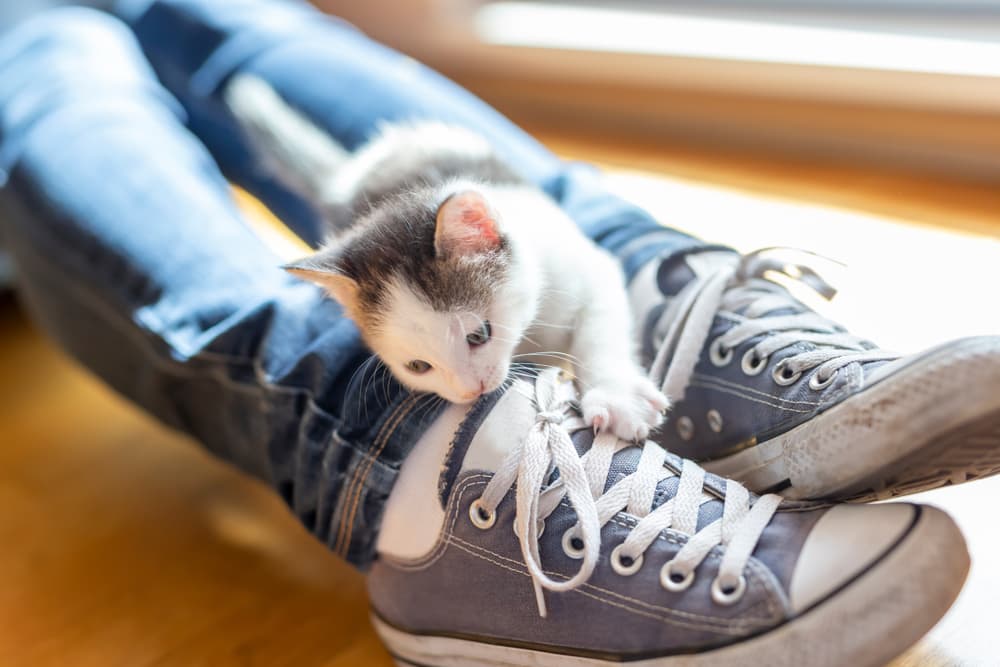
Let’s go over a few tips on how to calm a kitten down.
Provide self-play options for your kitten
The first step in calming your kitten, according to Buis, is to offer them several sources of play and enrichment. “Kittens need to know how to entertain themselves, so make sure they have lots of self-play options,” she says. “Swap toys on a regular basis so your kitten always feels like there’s something new to grab their attention.”
Set aside time for personal playtime with your kitten
Since kittens also need interactive play, Buis recommends playing with your kitten at least a couple of times each day for 15 to 20 minutes.
“Wand toys are one of the best ways to replicate hunting, which is vital for all cats young and old,” she says. “And don’t forget mental enrichment – having your kitten use their brain can be as exhausting as using their body. Giving kittens age-appropriate food puzzles, letting them hunt for treats, even doing some clicker training is fantastic brain work and will help manage their kitten energy.“
Quandt agrees that a bored kitten can often lead to behavior problems. “It’s important to play with your kitten and to also offer them activities that engage their mind,” he says. “Cat puzzle feeders allow your kitten to get treats as rewards for problem solving, while cat tunnels give kittens a personal space where they can play.”
Plan for play to align with cat instincts
Quandt also notes that kittens are motivated by their primal instincts to hunt, kill, eat, and then sleep, so that’s something to keep in mind as well. “Plan a playtime with your cat right before you feed them dinner,” he suggests. “Use a toy that will satisfy their hunting instincts such as a stuffed mouse or a wand. Once they finish ‘hunting’ the toy, you can feed your kitten and they’ll typically fall asleep soon after.”
How to Litter Train a Kitten: 5 Steps and Valuable Tips
- 2023-12-19T19:33:06
- John Gilpatrick
Litter box use feels like a modern convenience brought on by a desire for cats to live comfortably and cleanly in human homes. While that’s largely true, it’s also something that deeply conforms with learned feline behavior.
“Cats are descendants of desert animals, and they are instinctively attracted to eliminate in sand,” says Katenna Jones, a certified cat behavior consultant. Additionally, kittens learn a lot from watching and following their siblings, as well as their mother and her scent, Jones says. This makes litter training not much of a task for a large number of cat owners. Most kittens should be fully trained and eager to use the box well before they come home with you.
That said, there are always exceptions, including some orphans who might need help learning because they didn’t get that valuable time with Mom. And some kittens and cats may eliminate outside the box for reasons unrelated to training, which pet parents should be prepared to address. Keep reading for valuable litter tips, including how to litter train a kitten.
When to Litter Box Train a Kitten
According to LeeAnna Buis, a certified feline training and behavior consultant for Feline Behavior Solutions in Portland, Oregon, kittens can start using a tiny litter box around 3 weeks old. “Prior to this, kittens are stimulated to eliminate by their mother licking the area or their human caregiver gently rubbing the area with a tissue,” Buis says.
It’s important to note that manually stimulating kittens isn’t recommended beyond 8 weeks of age, but Buis says kittens will transition fully to the box as they are ready, over a period of a few weeks following their initial introduction to it.
What You’ll Need
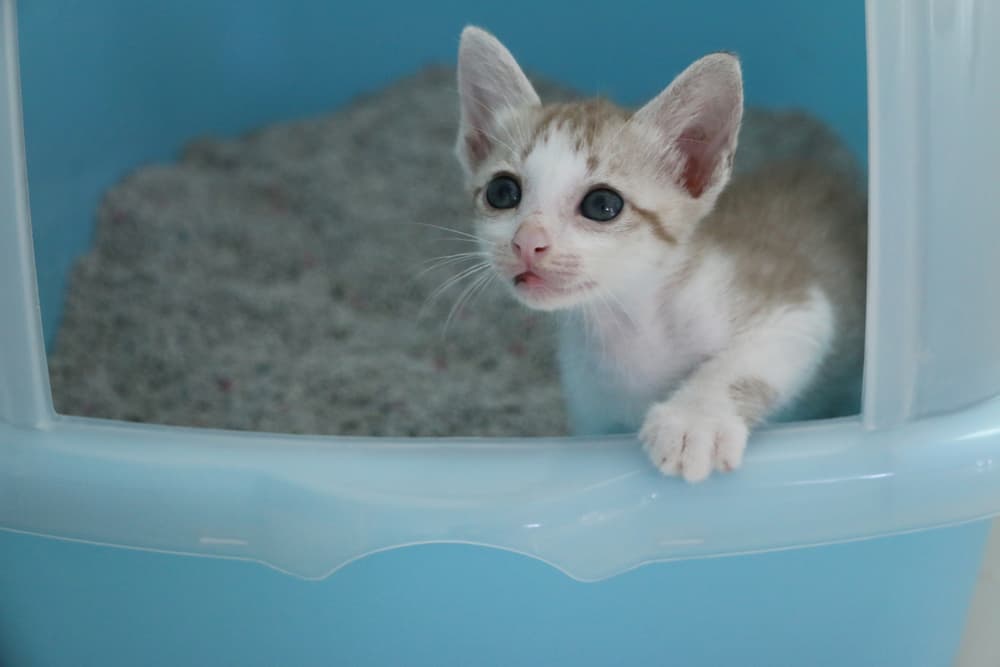
The most important things you’ll need for kitten litter box training are:
- Litter
- A litter box
- A damp paper towel
- Treats
Just be aware, if this is your first time going through this process, you may be surprised to find out how many litter/litter box choices are available to you.
Let’s dive a little deeper into each important must-have on our list:
Litter
When it comes to litter, Buis says cats instinctively prefer something very fine. “In the wild, they tend toward fine-grain sand or dirt where they have the option to completely cover their pee and poop,” she says, adding that this will help control their scent from wafting around, which prevents both the attraction of predators and the scaring off of prey.
For kittens, however, pellet (or another non-clumping litter) is a good starting point because clumping clay litter may prove dangerous for a very curious kitten who wants a taste of basically anything.
Litter box
With litter boxes, again, there are many types to consider: open, covered, high-sided, extra wide, and more. There’s plenty of time to figure out what works best for your growing and adult cats, but for very young kittens, Jones says selecting something with low sides for ease of access should be your priority.
Damp paper towel
While litter training for your kitten is ongoing, you’ll need a clean, damp paper towel on hand to use for stimulation (if age appropriate).
Treats
It will also be important to reward your kitten for litter success, so whatever high-quality treat they love the most will be your best friend during this process.
How to Litter Train a Kitten
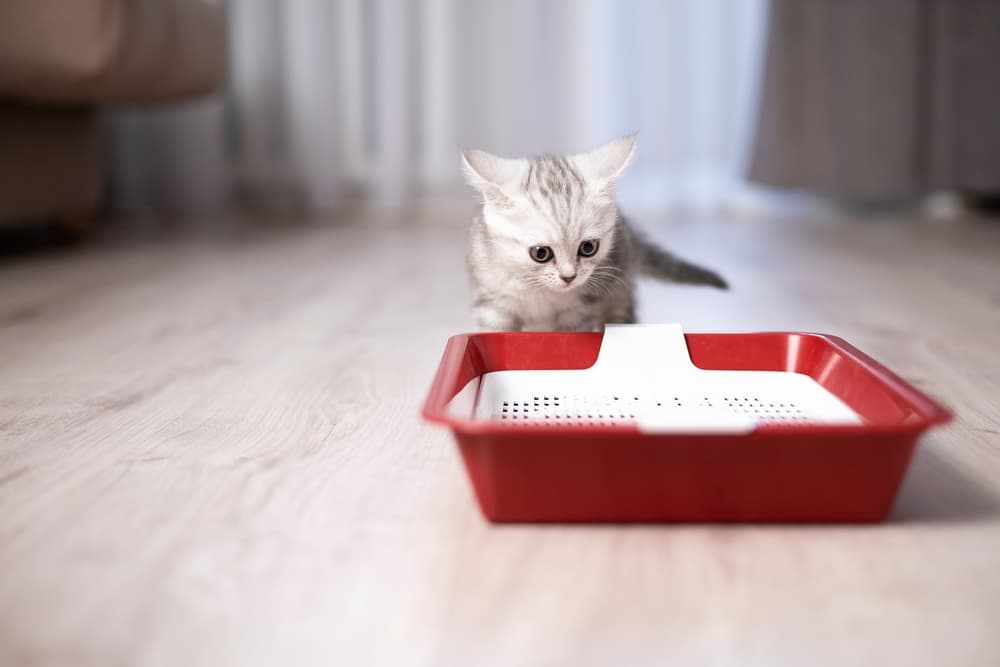
While both Jones and Buis agree that kitten litter training by a human is typically not necessary, there are some basic steps to follow in the unusual case where training is required. Let’s go over how to litter train a kitten, should the need arise.
1. Set up your litter boxes smartly
You already know what kind of litter and boxes to consider getting, but it’s as important to know how to arrange the boxes so that your kitten is set up for success.
One rule you’ll want to follow is called the “plus one rule,” which states that the number of litter boxes you should have around your house is equal to the number of cats you have in the house, plus one. So if your feline baby is an only child, two litter boxes should suffice. If they have a sibling, increase it to three, and so on.
Additionally, placing litter boxes in areas where your kitten feels comfortable using them is another crucial step toward litter independence. “Litter box setup is a huge reason cats choose to eliminate elsewhere,” Buis says. “Look at things like how easily they can get into and out of the box, whether another pet is bothering them while they’re in the box, whether the box is in an area where they feel safe and secure, and whether there is a loud appliance or speaker near the box.”
2. Manually stimulate the kitten
A kitten’s mother will do this for her baby with her tongue in most cases, but when she’s not present for whatever reason, you can help facilitate elimination and eventually litter box use with your hands and a damp paper towel.
Simply hold the kitten with one hand and gently rub the areas where urine and feces will come out. You can do this over a litter box to catch whatever the towel misses and to create an association between this space and the act of eliminating.
Once the kitten is done, Jones says you can place the soiled paper towel in the litter box as a scent attractant.
3. Show them how it’s done … sort of
Look, we’re not talking about you getting down in there with your kitten, but during training, they may need a gentle reminder as to where they should be going. In this case, it can be helpful to bring your kitten over to the box periodically and perhaps paw gently at the litter itself as a demonstration. Again, litter use is generally learned quite easily because it’s instinctual. A kitten will get the hints without too much prodding, but don’t be afraid to offer them.
4. Reward, reward, reward
Did your kitten go to the bathroom in the litter box? Great! Now reinforce it with a treat reward. As with most behaviors, this is one of the most crucial steps when it comes to making the lesson stick.
5. Observe and adjust as needed
There’s no mark of a kitten being officially and fully litter trained; it will most likely be a sliding scale of using it “properly” and “improperly” for a few weeks until they really get the hang of it, Buis says, and it’s different for every kitten.
But while yours is getting used to this crazy new thing, it’s helpful for you to make notes about what’s working. Are there two different boxes, and does your kitten gravitate heavily toward one? Are the litter boxes placed on different floors? They might not like something about the second, neglected box, or they may prefer doing their business in one room but not the other, which means you should consider relocating it or swapping it out for something they might like more. Just make sure you don’t try moving the preferred litter box until consistent success has been achieved.
And remember, most instances of trained cats not using the litter box are a way of communicating with us, so be sure to pay attention to their cues.
Litter Training a Kitten: Other Valuable Tips
Besides dissatisfaction with a litter box, the litter inside it, or its location, other reasons why a trained kitten or cat may not be using it, Jones says, “could be a health issue such as [a] urinary tract infection or constipation. Stressed cats also may not use the box, for example, if they are being harassed by another pet in the house.”
Buis recommends getting a vet check to rule out medical issues, adding that play and other forms of enrichment may help reduce stress.
Petting Aggression in Cats: How to Stop Bites
- 2023-11-28T04:07:31
- Katie Koschalk
Have you ever been petting your cat, enjoying some quality bonding time, when suddenly, they bite or swat at you? This behavior, known as petting aggression, leaves many cat parents scratching their heads (and sometimes nursing their wounds).
While the experience can be jarring, petting aggression in cats is a common behavior, and rest assured, it doesn’t mean your kitty hates you or that you’ve failed as a pet parent.
So, what provokes these unexpected nips? Read on to uncover the hidden reasons behind petting aggression and learn practical tips to prevent those pesky bites.
What Is Petting Aggression in Cats?
Petting aggression (aka petting-induced aggression) is when a cat suddenly becomes aggressive or agitated while being pet.
Though biting is the hallmark sign of petting aggression, a cat may also display additional defensive postures or behaviors, such as flattened ears, a tucked head, turning away from you, quickly jumping off your lap, swatting at you, raised hackles, hissing, or crouching.
So, what causes your sweet little furball to seemingly go from Sleeping Beauty to Cujo at the drop of a hat?
According to Kate Luse, an IAABC Certified Cat Behavior Consultant and owner of Healthy Cattitude, “Petting-induced aggression occurs when a cat is pet when they don’t want to be, pet for longer than they want to be, or pet on parts of their body where they don’t want to be.”
In other words, for some reason, your petting session becomes unpleasant for your cat, and they bite, swat, or scratch to communicate that they want the interaction to end.
Why Do Cats Bite When You Pet Them?
Unlike dogs, most cats have a petting threshold and are easily overstimulated. “There is individual variation in how much and where on their bodies cats like to be pet,” says Luse.
Some cats will gladly accept an hour of petting, while another might only enjoy a few strokes. Most cats fall somewhere in the middle.
Sensitivities
Luse explains that cats who are more sensitive to touch and prefer less petting are more likely to display petting aggression because their humans will likely pet them more than they’re comfortable with, or on sensitive parts of their body. “That said, any cat who is pet more than they want, or on places they don’t like to be touched, can display petting-induced aggression.”
Stress
Laura Cassiday, an IAABC Certified Cat Behavior Consultant and owner of Pawsitive Vibes Cat Behavior & Training, adds that petting aggression is more likely to occur in cats who are stressed out. If a cat is already agitated, it won’t take much for the cup to spill over, she says.
Pain
Cats who are in pain or discomfort are also more likely to show petting aggression, says Cassiday. If your normally-mellow cat begins to display a low tolerance for petting or you notice that petting certain areas of their body stimulates petting aggression, take your cat to your veterinarian for a checkup to ensure nothing is medically amiss.
Boredom
Lastly, petting aggression can be caused by a lack of mental or physical stimulation and enrichment, says Cassiday. “Bored and frustrated cats generally don’t tolerate petting as well as others.”
The Difference Between Petting Aggression and Other Forms of Cat Biting
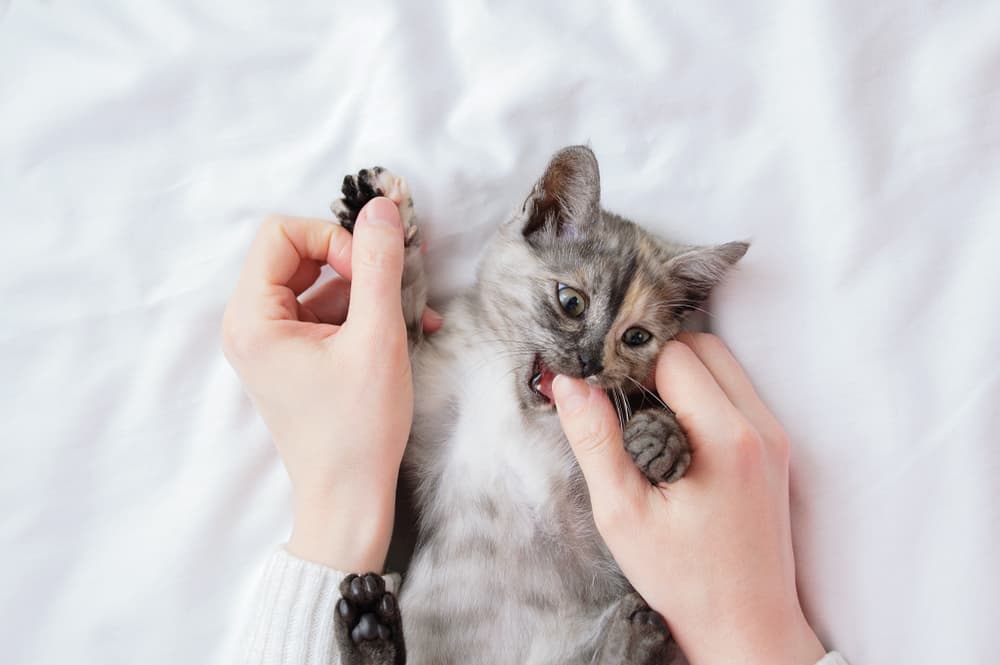
It’s important to understand the difference between petting aggression and “love bites.” Some cats demonstrate affection by giving a tender bite or nip while you’re petting them. You can recognize a love bite if your cat’s body language doesn’t display signs of fear or aggression, and they seem calm and content. Additionally, love bites tend to be more of a gentle, grasping bite rather than a forceful, aggressive one.
Petting aggression is also not the same as play biting. During playtime, cats often bite or nip as a form of playful interaction. This behavior is a natural part of a cat’s development and socialization, as it helps them practice and hone their hunting instincts, coordination, and communication skills. This type of biting can be avoided by always using cat toys, rather than your hands, during playtime.
Your cat may also give you a gentle nip if they’re “grooming” you. Cats may groom their littermates, mother, and even their human companions. This behavior is thought to be an expression of affection.
Signs That Petting Aggression May Happen
While pet parents often report that cat petting aggression seems to happen out of nowhere, this is not typically the case and points to a lack of understanding of and attention to feline body language.
Your cat may display several warning signs that signal impending petting aggression. “Body tensing up, tail twitching or thrashing, ears going back, pupils dilating, and my favorite — the look back at your hand. Sometimes it’s a full-on look, sometimes it’s just a side eye,” says Cassiday. Cat parents often miss these signs (or don’t understand them), especially when they’re absentmindedly petting their cats while watching TV, scrolling on their phones, or engaging in conversation.
How to Stop Petting Aggression in Cats
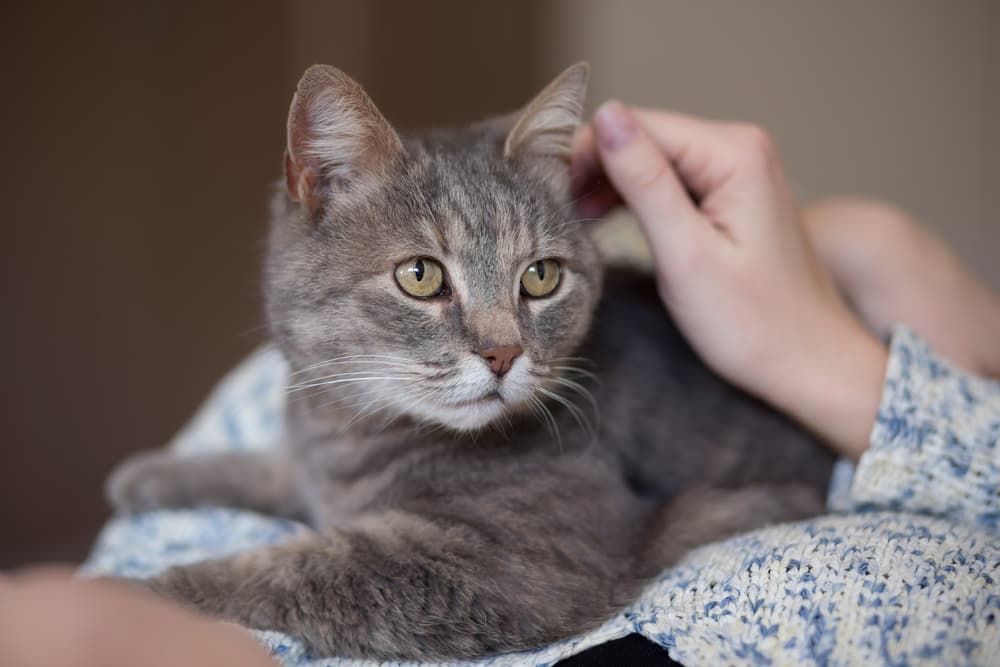
To minimize or eliminate petting aggression, consider these tips:
Do a consent test
Cassiday recommends doing a “consent test” to ask your cat if they want to receive pets. “Hold your hand out an inch or two away from your cat’s face. If they close the distance on their own, they’re saying yes, please pet me. After a few seconds, take your hand away and give them the chance to close the distance again. If they don’t move, or if they turn their head away, they’re done with petting,” she explains. “Cats who are given the chance to nicely say no and don’t have warning signs ignored are much less likely to bite or scratch.”
Keep it short and sweet
Luse recommends petting your cat for brief periods, frequently stopping to assess their body language and determine if they want more (or for you to stop).
Be mindful of petting location
When you pet your cat, focus on their head, the sides of their face, and the back of their neck. Avoid full-body petting, at least initially, as this may be overstimulating. Many cats are more sensitive near the base of their tails, on their legs, and on their bellies, so these areas are best avoided (unless you’ve already determined your cat likes pets in those areas). If your cat gives you signs that they don’t like a particular area of their body being pet, respect that and immediately stop.
Maintain a consistent play routine
Engaging in daily play sessions with your cat and providing plenty of enrichment opportunities can help calm your cat and make your feline companion more tolerant of petting. This is because playtime helps release built-up stress, tension, and energy from your cat’s system.
Consider training
For some cats, a desensitizing or counter-conditioning plan using clicker training may help them learn to tolerate and maybe even enjoy more petting, says Cassiday. This may be particularly helpful for cats with trauma or cats who weren’t properly socialized. Training, however, should only be done under the guidance of a cat behaviorist.
Never Punish Your Cat for Petting Aggression
Both Cassiday and Luse strongly advise against punishments like spraying your cat with water or giving them a bop on the head when they exhibit petting aggression.
“Cats should never be punished simply for communicating their needs,” says Cassiday. “Most cats will gradually go up the ladder of aggression and show many other signs of discomfort first before escalating to a swat or bite, and it’s up to people to learn to recognize those signs and stop petting sooner.”
Luse echoes this sentiment. “When a cat resorts to petting-induced aggression, it means we haven’t heard what they’ve tried to tell us about when and how they like to be pet,” she says. “The solution to petting-induced aggression isn’t punishment — it’s learning to read cat body language and respecting what our cats are telling us.”
On top of that, Luse explains that punishment will likely worsen the behavior. When a cat displays petting aggression, she’s in a heightened state of arousal, and punishment will likely escalate the issue and the likelihood of more aggressive behavior.
“Punishment also harms your relationship with your cat,” says Luse. “We may think we’re telling our cat that when they engage in petting-induced aggression with us, punishment will be the consequence. But more likely, the cat comes to simply associate us, not their own behavior, with the punishment. This erodes the cat’s bond with and trust in us.”
Our adorable, whiskered friends may occasionally display behaviors that challenge us, but with patience, understanding, and a little bit of feline finesse, we can make our homes a harmonious haven for both cats and humans. So, keep an eye on your kitty’s subtle cues, respect their boundaries, and shower them with love (on their terms, of course!).
Why Do Cats Chase Their Tails?
- 2023-10-06T18:57:36
- Katie Koschalk
Tail chasing is a sight all cat parents have undoubtedly witnessed at some point. The scene begins with a subtle tail twitch, only to escalate into a whirlwind of feline acrobatics as your cat spirals and somersaults in a seemingly ill-advised attempt to capture their own tail.
This peculiar display sparks a multitude of questions: Why do cats chase their tails? Is it a simple form of play, or is there a more complex or serious explanation? Let’s unravel the reasons behind cat tail chasing and whether or not it’s a cause for concern.
Do Cats Chase Their Tails?
While tail chasing is more commonly associated with dogs, canines aren’t the only ones who indulge in these antics. Cats also engage in this curious behavior, although less frequently than dogs.
Tail chasing is particularly prevalent among kittens — adult cats typically outgrow this behavior as they mature. If you notice that your adult cat is frequently or obsessively chasing their tail, it could indicate an underlying health or behavioral issue that requires treatment.
Why Do Cats Chase Their Tails?
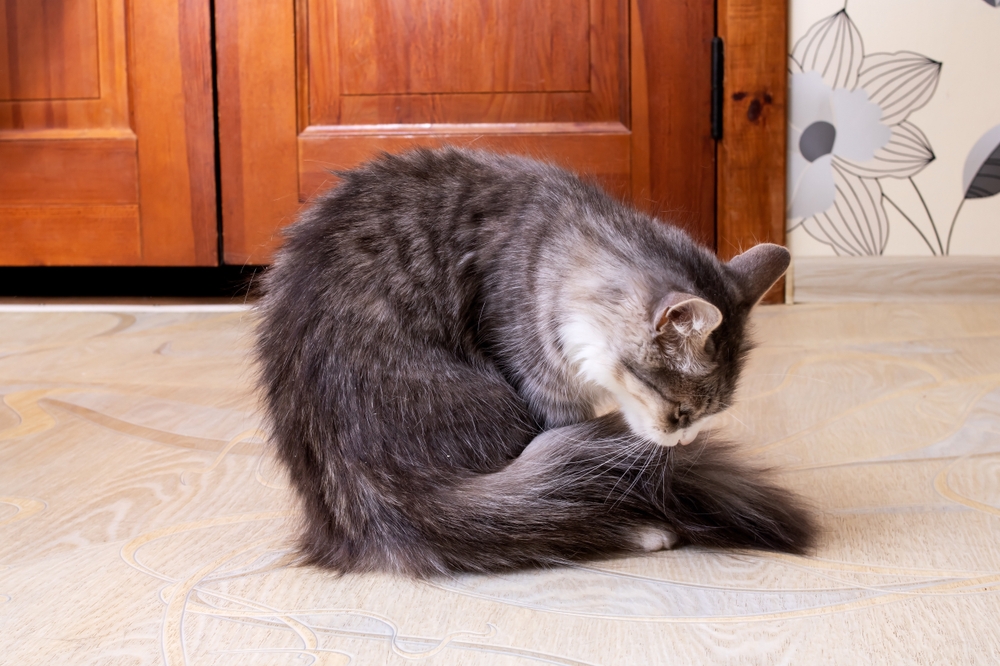
The reasons behind tail chasing range from simple playfulness to potential health concerns. As a cat parent, it’s important to try to understand why your cat is chasing their tail and ensure they receive the necessary support they need. Let’s explore some of the most common factors driving our feline friends to engage in this behavior.
#1: Play and Exploration
According to Heather Alvey, a certified cat behavior consultant and founder of Felidae Behavior Consulting, tail chasing is a normal kitten behavior. Young cats are naturally curious and playful creatures and may chase their tails as a form of self-entertainment and exploration. As cats grow older, this behavior typically fades away, but may persist in some.
#2: Predatory Instincts
Cats are natural-born hunters, and their instincts drive them to stalk, pounce, and capture prey. “It’s not unusual to see a kitten, young cat, or even an older cat who has a strong prey drive chasing their tails,” says Dr. Rachel Geller, Ed.D., a certified cat behaviorist and founder of All Cats All the Time. Kittens, in particular, will chase pretty much anything that moves, she says.
These prey instincts may become especially prevalent when there’s a lack of stimulation or opportunities to engage in hunting activities, which brings us to our next potential cause.
#3: Boredom or Stress Relief
In some cases, tail chasing may be a manifestation of boredom or stress in cats. Inactive, understimulated, or stressed felines might resort to tail chasing to self-soothe, pass the time, or entertain themselves. “Boredom and lack of stimulation can also turn innocent tail chasing into a compulsive behavior,” says Geller.
#4: Medical Concerns
While tail chasing can be attributed to play or boredom, it’s essential to be aware of potential health concerns that might be causing this behavior. If your cat seems obsessed with their tail or is biting it, they could be experiencing discomfort or pain. Some potential health issues that may result in tail chasing include:
- Injury or infection. A cat’s tail is susceptible to various injuries, including bite wounds, abrasions, fractures, and inflammation. When cats sustain an injury, their instinct is to clean the wound or alleviate pain by grooming the affected area. Consequently, you may observe your cat chasing their tail in an attempt to reach the tender spot.
- Allergies. Just like humans, cats can suffer from allergies. Allergic reactions to environmental elements, food, or flea bites can cause itching and irritation on the skin, including the skin on the tail. As a result, cats may chase and bite their tails to alleviate the itchiness or discomfort.
- Feline hyperesthesia syndrome. Feline hyperesthesia syndrome (aka rolling skin syndrome) is a neurological disorder that can cause cats to exhibit unusual behaviors, including tail chasing. Cats with this condition may experience episodes of agitation, sensitivity to touch, and skin twitching. This condition is most commonly seen in Siamese cats between the ages of 1 and 5, says Geller.
- Stud tail. Stud tail (aka supracaudal gland hyperplasia) is a condition that affects the sebaceous glands located near the base of an animal’s tail. This condition can cause excessive oil production, inflammation, and even infection. Cats with stud tail may chase, lick, or bite their tail due to the discomfort and irritation caused by the condition.
- Anal sac issues. Cats have anal glands on either side of their rectum. These glands produce a scented material that is stored in the anal sacs. The anal sacs are normally emptied when a cat has a bowel movement, but they can become impacted (blocked) or infected. Anal sac issues can cause cats to bite or chew at the underside of their tail.
How to Reduce or Stop Tail Chasing in Cats
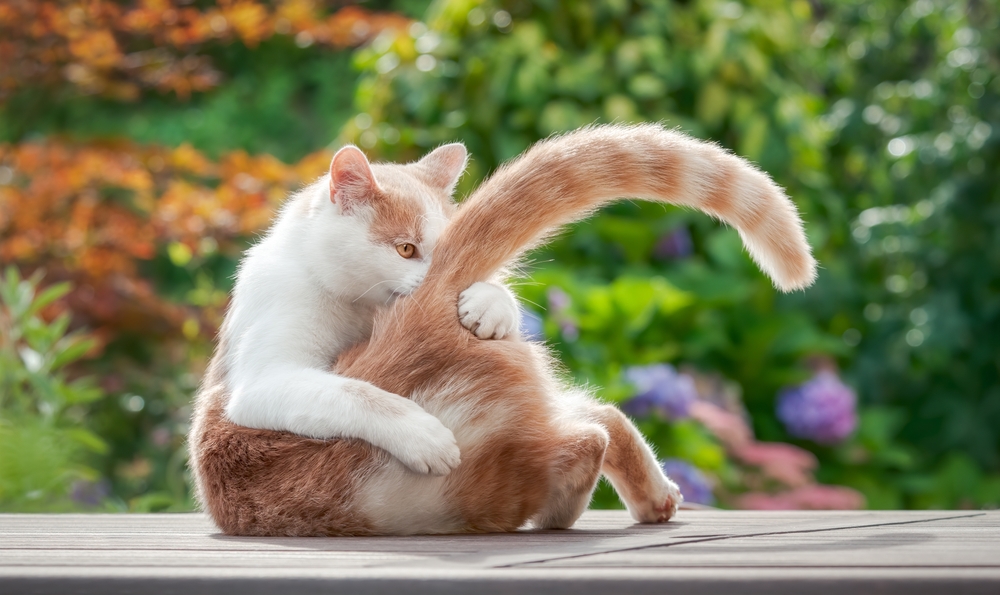
Occasional tail chasing, especially in kittens, is usually harmless. However, if you notice that your cat is engaging in this behavior frequently or obsessively, it’s essential to determine the root cause and provide them with the necessary assistance. Here are some suggestions for cat parents to curb excessive tail chasing in cats:
1. Rule Out Medical Issues
First and foremost, consult with a veterinarian to rule out any underlying health problems that might be causing your cat to chase their tail. Addressing medical concerns promptly can prevent further complications and ensure your cat’s wellbeing.
2. Provide Mental and Physical Stimulation
Because boredom and a lack of stimulation can contribute to tail chasing, keeping your cat engaged and entertained is imperative. Some ways to achieve this include:
- Engage your kitty in 1-2 play sessions daily (20-30 minutes each). The best way to satisfy cats’ instinctive need to hunt is through interactive play with a wand toy that lets them complete the prey sequence, says Alvey. “If they’re not getting that need met, they’re going to be drawn to whatever small movements they detect.” Cats with a higher prey drive may need more interactive play to prevent tail chasing or other compulsive behaviors, adds Alvey. Regular playtime also helps your cat expend energy and alleviate boredom.
- Offer a variety of toys. Providing your cat with self-play toys can help them stay engaged and active even when you’re not around. For tech-savvy felines, consider electronic toys that stimulate their hunting instincts and provide an interactive experience. Try to switch up your cat’s toys every couple of weeks to keep things interesting.
- Supply scratching posts, cat trees, and tunnels. These accessories cater to cats’ natural instincts and preferences, allowing them to scratch, climb, and find solace in secure spaces.
- Provide puzzle feeders. Excellent for mental stimulation, these interactive feeders require cats to work for treats, encouraging them to use their paws, noses, and brains to access the food hidden inside.
3. Create a Calm Environment
Since stress can be a contributing factor to tail chasing in cats, creating a calm, predictable environment — with designated safe spaces for your cat to retreat — can help alleviate stress and anxiety. To promote relaxation, you can also consider using cat pheromone diffusers, such as the Feliway Classic Calming Diffuser.
4. Redirect Your Cat’s Behavior
If your cat’s tail chasing is deemed to be a behavioral issue (rather than a medical issue), Geller recommends distracting, disrupting, and redirecting your cat away from compulsive tail chasing and toward a positive activity — such as interactive play with a wand toy, as mentioned above.
After a play session with a wand toy, reward your cat with food, as cats expect to be able to eat what they caught and “killed,” recommends Geller. “The food at the end is a natural and instinctual signal to the cat that the hunt is over — they’ve been successful and it’s time to relax or nap.” Consistent redirection and positive reinforcement can help your cat establish new habits and decrease the frequency of tail chasing.
5. Consult a Cat Behaviorist
If you’ve ruled out medical issues, taken steps to provide an engaging environment for your cat, and tried to redirect their behavior to no avail, consider enlisting the help of a professional cat behaviorist. “A professional will be able to determine the underlying cause of the behavior and work with the pet parent on a behavior modification plan,” says Alvey.
Putting an End to Excessive Tail Chasing
Although occasional tail chasing is likely not a cause for concern, persistent tail chasing may signal an underlying issue. By addressing potential medical problems, providing mental and physical stimulation, and creating a calm, engaging environment, you can help your beloved kitty overcome excessive tail chasing and enjoy a happier, healthier life.
What Smells Do Cats Love?
- 2023-08-07T16:14:57
- Katie Koschalk
Our cats may have cute, tiny noses, but don’t be fooled. Their sense of smell is mighty—around 14 times stronger than that of humans (1). This gives them a remarkable ability to discern a wide range of scents—and it’s clear they like some scents far more than others.
Pet parents may be familiar with smells that cats hate, like citrus or a dirty litter box. But what smells do cats love? We’ll share eight scents that most cats find simply irresistible, but first, let’s cover some feline olfaction basics.
Why Do Cats Have a Strong Sense of Smell?
Cats have an exceptionally developed sense of smell, with 50 to 80 million odor-sensitive cells. In comparison, humans have just 5 million of these cells (2).
Felines also possess a special scent-detecting organ called the vomeronasal or Jacobson’s organ. Located in the roof of the mouth, it allows cats to taste-smell certain pheromones, offering additional information beyond what their nose detects. Cats are pulling pheromones into this organ when they exhibit the “flehmen response,” a peculiar, open-mouthed grimace cats make to enhance their perception of a scent.
Cats rely on their keen sense of smell to interpret their environment, recognize fellow felines, choose food, and identify potential threats, such as predators or toxins. This reliance on scent harks back to their evolutionary past as wild predators.
Why Do Cats Like Certain Smells?
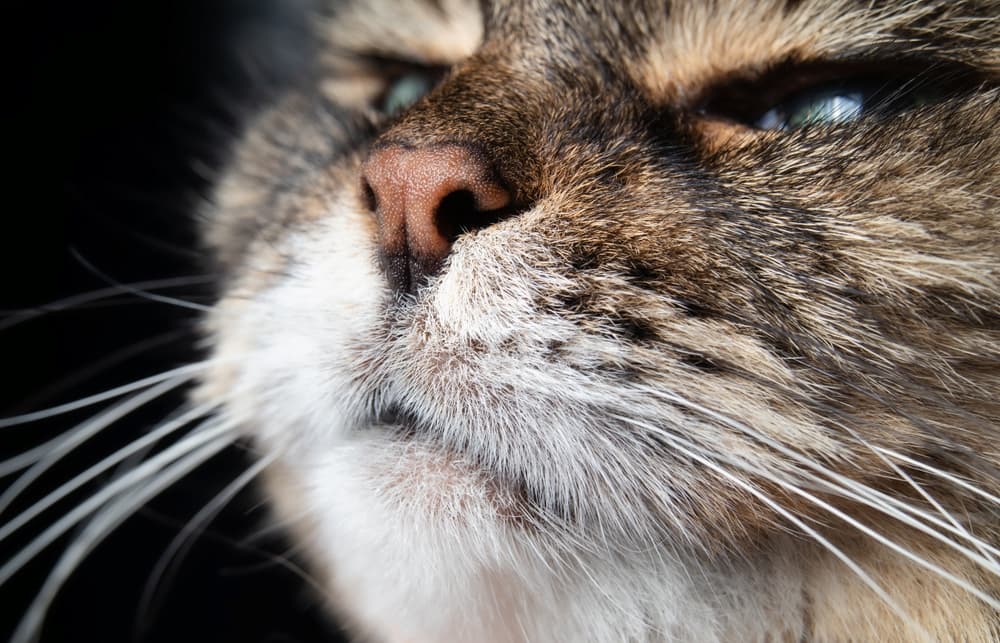
Many of the smells cats are drawn to reflect their basic needs, such as food and safety.
Cats have far fewer taste buds than humans—about 470 vs. 10,000 respectively (1). As a result, cats use their sense of smell far more than taste in deciding what to eat, explains Stephen Quandt, a certified feline training and behavior specialist and founder of Stephen Quandt Feline Behavior Associates.
Pheromones, which are chemical substances produced by animals for communication, also play a significant role in shaping a cat’s scent preferences. They’re scentless to humans but have profound effects on animal behavior. Scents that mimic these pheromones can be attractive to cats.
When a cat is attracted to a smell, they may rub their face against the source, roll over it, purr, try to eat it, or exhibit a flehmen response. On the flip side, if a cat doesn’t like a smell, they tend to retreat, run away, or show signs of distaste, like wrinkling their nose or shaking their head.
While there are certain scents that most cats tend to enjoy, not all cats react to smells in the same way. Just as humans have personal likes and dislikes, cats also exhibit individual variations in their scent preferences.
What Smells Do Cats Love? 8 Aromas That Attract Felines
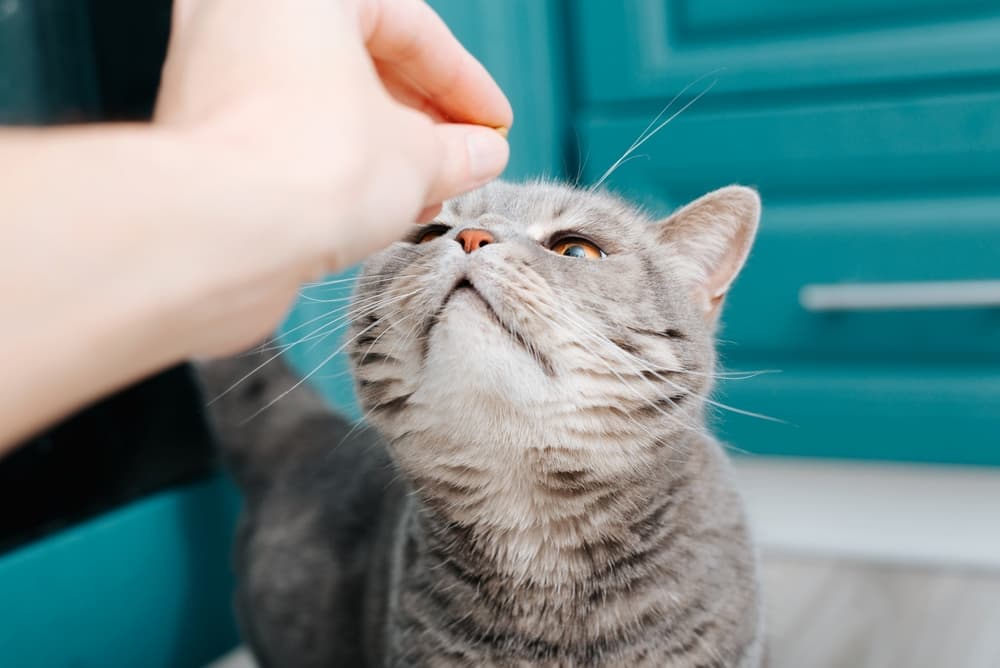
Since scent serves as a fundamental aspect of a cat’s sensory and communication experience, it’s important to provide our feline friends with a variety of appealing and safe smells to explore and enjoy.
In doing so, we can enhance their indoor environment and fulfill their instinctual need for curiosity, discovery, and engagement, says Quandt.
Let’s explore eight aromas cats generally favor and why they appeal to our whiskered companions.
1. Catnip
Catnip, an herb in the mint family, is well-known for its intoxicating effect on many cats. This effect is due to nepetalactone, a compound in the plant that may mimic the structure of a feline pheromone associated with mating behaviors. This explains why cats under the influence of nepetalactone exhibit behaviors such as rolling, rubbing, purring, and leaping. In rare instances, cats may become aggressive.
When a cat encounters nepetalactone, the compound enters the cat’s nasal tissue and binds to receptors that stimulate sensory neurons in the brain, explains Quandt. The effect is a harmless “high” that lasts about 5 to 15 minutes.
Interestingly, not all cats go cuckoo for catnip. Sensitivity to catnip is likely inherited, and 1 out of every 3 cats lacks the genetic predisposition to it (3).
Catnip can be administered via catnip-filled toys, catnip spray, solid catnip balls, fresh catnip plants, or dried catnip that can be sprinkled on toys, scratching posts, and other items.
2. Valerian Root
Valerian root is an herb that works much the same as catnip, creating a euphoric effect in most cats—at least initially. After a few minutes, the hyperactive effects wear off, leaving cats feeling calm and drowsy.
Valerian root’s effects lie in a specific compound it contains: actinidine. Like catnip, it’s thought that this compound stimulates the same receptors in the cat’s brain that respond to feline pheromones.
Never give your cat human valerian root supplements. Instead, stick to cat toys filled with valerian root or a small sprinkling of dried, finely minced root.
3. Vanilla
Anecdotally, many cats seem to like the aroma of vanilla. Because of this appeal, some supplements and medications, such as Credelio CAT, include vanilla to entice picky felines.
Credelio CAT is an oral flea and tick treatment for cats that starts working in as little as 8 hours and prevents reinfestation for one month (4). This small, chewable tablet is a great choice for cat parents who struggle with topical flea applications. In a U.S. field study, cat parents successfully administered the tablet 99.5 percent of the time (5). Nearly 47 percent of the cats voluntarily accepted the tablets when they were offered by hand, on the floor, in an empty food bowl, or with food.
4. Yeast
If you’ve ever noticed that your cat tries to steal bites of bread, this is because cats are attracted to the scent and taste of yeast. One study showed that cats preferred foods with a yeast extract added (6).
Cats can occasionally eat small amounts of baked bread, but it shouldn’t be included as a regular part of your cat’s diet. Ensure any breads you let your cat taste don’t include toxins like garlic.
In addition to vanilla, Credelio CAT includes yeast in its oral tablets to further entice our furry companions to consume this flea-and-tick-zapping medication.
5. Silver Vine
Also known as matatabi, silver vine is a plant native to Japan and China that often attracts cats with its irresistible scent. The smell of silver vine elicits a similar response to catnip in many cats.
However, “studies have shown that silver vine is more likely to affect cats than catnip,” says Quandt. This may be because it has additional chemicals that cats respond to, such as actinidine, iridomyrmecin, and isodihydronepetalactone (3).
Silver vine is commonly available as sticks or powder.
6. Olives
You might be surprised to learn that some cats enjoy the scent of olives. This is believed to be due to a group of chemicals in olives known as isoprenoids, which are similar in structure to the nepetalactone found in catnip, says Quandt.
If your cat likes the smell of olives, they might enjoy the taste too. You can give your cat a tiny piece of an olive (not a whole one) a couple of times a week. Just ensure it’s thoroughly rinsed of salt or seasoning, and that the pit has been removed.
7. Animal Protein
For many cats, nothing beats the tantalizing scent of fish or meat. These aromas are incredibly attractive to cats because they’re obligate carnivores, which means they require meat to fulfill their nutritional needs.
Smelling fish or meat can provoke behaviors like licking their lips, meowing, and showing increased alertness or excitement. Many cats will try to reach for the source of the aroma, drawn by the tantalizing scent of their preferred prey.
8. You!
It might surprise some pet parents to learn that one of the smells cats love most is the scent of their human companions.
“Cats create community scent by transferring their scent to us and taking some of our scent on them,” says Quandt. This essentially signals that you are a part of their “colony” and helps them feel safe and secure.
Your cat achieves this scent exchange by rubbing parts of their body that contain social pheromones (cheeks, forehead, and around the mouth) against you and objects in your home, explains Quandt.
Similarly, if your cat enjoys sleeping on your clothing, it’s often because they’re attracted to and feel comforted by your scent.
Smells Cats Like: Why It Matters
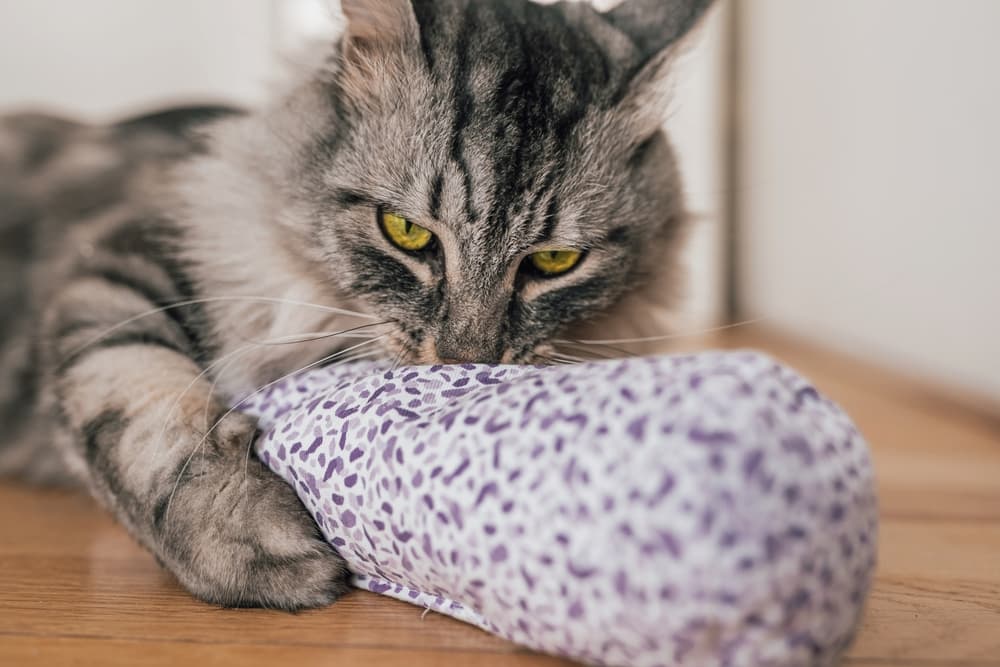
Knowing which smells your cat loves can significantly improve their quality of life and even their health. Here are some ways to apply this knowledge:
- Create a safe, comfortable living environment: Scent can be used to help your cat feel more comfortable, calm, and safe in certain situations. For instance, placing an unwashed article of your clothing in their cat carrier can help relax them when traveling to the vet. Another example is adding a loved scent to a new bed or carrier to make it more inviting, ease transitions, and reduce stress.
- Assist with medication administration: Getting cats to take necessary medication can sometimes be challenging. Some medications, such as Credelio CAT, have been formulated with enticing scents or flavors to make administering them easier.
- Adding enrichment: Scents like catnip, silver vine, or valerian root can be used to stimulate play and exercise, which is crucial for your cat’s physical and mental health. Sprinkling some of these enticing aromas on their toys or scratching posts can motivate them to engage in play behavior, reduce boredom, and potentially mitigate behavioral issues like inappropriate scratching.
- Use for training purposes: Scents that appeal to your cat can be used in training for positive reinforcement scenarios. For example, a catnip-sprayed toy or a tasty salmon treat can serve as an excellent reward for a successful training session.
How to Help Your Cat Have Positive Experiences with Scent
Understanding your cat’s scent preferences can be a fun journey of discovery. Here’s how you can decode your feline’s favorites:
- Do a “sniff” test: Present your cat with a variety of scents, one by one, and watch your cat’s reaction. Positive responses can include purring, cheek rubbing, kneading, or even rolling around in delight. Signs that your cat doesn’t like a scent may include hissing, backing away, turning their head away from the item, shaking their head, gagging, or appearing agitated. Never force a smell on your cat, and always let them retreat if they wish.
- Monitor for changes over time: Cats’ preferences can change as they age or experience changes in health. Regularly retesting your cat’s favorite scents can help you stay attuned to their preferences.
- Use your judgment: Just because your cat is attracted to a smell doesn’t mean it’s safe or beneficial for them. For instance, some cats may be drawn to the smell of substances like antifreeze or lilies. However, these substances are highly toxic and potentially lethal if ingested, even in small amounts. Always prioritize your cat’s safety and consult a professional if you’re unsure if something is safe for cats.
- Use in moderation: Potent scents like catnip and silver vine should be used in moderation, as too much exposure can reduce their novelty and, therefore, their effectiveness. Always monitor your cat’s reactions to ensure they’re enjoying the experience and not becoming overstimulated.
- Consult your vet if you notice sudden changes: If your cat suddenly seems repelled by a smell they once loved, it could be a sign of a health issue, especially if accompanied by other changes in behavior, eating, or litter box habits. Always consult your vet if you’re concerned.
Your cat’s love of certain smells is not just a cute quirk—it can be an important aspect of their care and well-being. By paying attention to their scent preferences and using this knowledge wisely, you can help make your feline friend’s world even more enjoyable.
References
- Ahmet Yavuz Pekel, Serkan Barış Mülazımoğlu & Nüket Acar (2020) Taste preferences and diet palatability in cats, Journal of Applied Animal Research, 48:1, 281-292, DOI: 10.1080/09712119.2020.1786391
- Douglas, Kate. (2009). The great pet showdown. New Scientist. 204. 32–37. 10.1016/S0262-4079(09)63262-0.
- Bol, S., Caspers, J., Buckingham, L. et al. Responsiveness of cats (Felidae) to silver vine (Actinidia polygama), Tatarian honeysuckle (Lonicera tatarica), valerian (Valeriana officinalis) and catnip (Nepeta cataria). BMC Vet Res 13, 70 (2017). https://doi.org/10.1186/s12917-017-0987-6
- Wright I. (2018). Lotilaner – a novel formulation for cats provides systemic tick and flea control. Parasites & vectors, 11(1), 407. https://doi.org/10.1186/s13071-018-2970-x
- Chappell, K., Paarlberg, T., Seewald, W. et al. A randomized, controlled field study to assess the efficacy and safety of lotilaner flavored chewable tablets (Credelio™ CAT) in eliminating fleas in client-owned cats in the USA. Parasites Vectors 14, 127 (2021). https://doi.org/10.1186/s13071-021-04617-5
- Oliveira, Rúbia & Haese, Douglas & Kill, João & Lima, Anderson & Malini, Pablo & Thompson, Guilherme. (2016). Palatability of cat food with sodium pyrophosphate and yeast extract. Ciência Rural. 46. 2202-2205. 10.1590/0103-8478cr20151651.