

Category: Dog Behavior
Great Pet Care - Pet health information — simplified.
Can Dogs Have Nightmares?
- 2024-11-08T23:50:16
- Elizabeth Claire Alberts
Veterinarian Nicholas Dodman remembers a time when his rescue dog Rusty was having a particularly bad dream.
“He was making horrible moaning sounds and movements,” says Dr. Dodman, a professor emeritus at Tufts University and the chief scientific officer at the Center for Canine Behavior Studies. “My wife and I are both vets and we looked at him and said, ‘Oh my god, I think he’s dreaming about something awful.’ It was so obvious that we actually woke him up so he didn’t need to experience it.”
For Dr. Dodman, it’s logical that dogs dream, and research supports this assumption. But can dogs have nightmares? Here’s what you need to know about dog nightmares and how to calm your pet after a bad dream.
What Do Dogs Dream About?
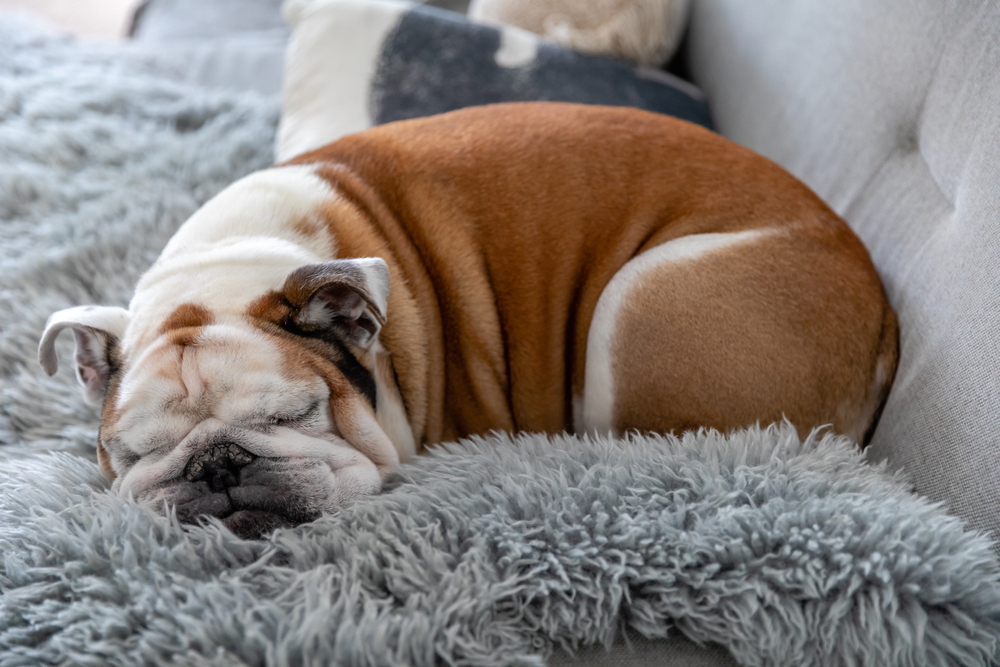
Dogs can’t tell us whether they dream or what they dream about, but most experts believe dogs do dream.
Dogs oscillate between REM (rapid eye movement) sleep and deep sleep, just like people, Dr. Dodman says. While there are some differences in brain waves between humans and dogs, Dr. Dodman says everything else about canine sleep is “exactly the same as in people.”
For instance, one study found that dogs have similar sleep-wake cycles as humans, and also that medical conditions, such as chronic pain, can affect dogs’ sleep patterns in a comparable way [1]. Another study found that periods of sleep in dogs supported memory, learning, general intelligence and healthy aging, just like in humans [2].
If dogs can dream, it makes sense that dogs have nightmares. “I think they can have very bad dreams and they can have good dreams — just like us,” Dr. Dodman says. “They’re so much like us in so many respects. It’s almost like they’re canine carbon copies of us.”
But what might cause a dog to have a bad dream, as opposed to a good dream? Dr. Dodman says it’s likely that dogs dream of things they previously experienced.
For instance, Dr. Dodman says his rescue dog Rusty came from an abusive situation, and that his past experiences probably caused him to have occasional nightmares.
“If you have those memories stored up in your brain, all these traumatic incidents, it may [play out] in your sleep as an occurrence,” Dr. Dodman says.
Is My Dog Dreaming or Having a Nightmare?
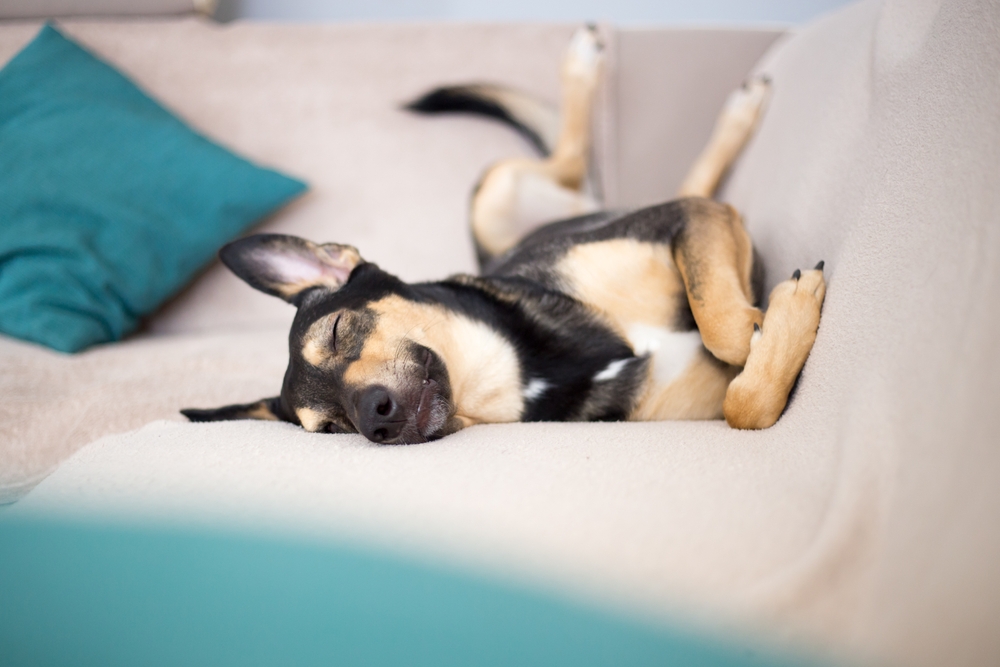
If you see your dog twitching, whining, growling, or moving their limbs, they’re probably having a dream. If your dog is experiencing REM sleep, Dr. Dodman says you might even be able to see their eyelids moving. But how can you tell if your dog is having a nightmare?
Dr. Dodman says you can make an educated guess about what’s going on. “If it looks like they’re having a bad dream,” he says, “give them the benefit of the doubt.”
A dog who just had a nightmare will not necessarily act clingy or anxious afterward, Dr. Dodman says. “It depends on what [they’re] dreaming about, but I imagine if it’s something horrific, it’s a great relief to be suddenly conscious and to realize that it was a dream,” Dr. Dodman says.
There is a phenomenon that can be mistaken for dreaming called sundowner syndrome, which is associated with canine cognitive dysfunction. “At or after sunset, they start to run around and act crazy and terrified of something — but it’s something that isn’t there,” Dr. Dodman explains. “It’s almost like a bad dream that you’re actually living out consciously. It’s very much like night terrors.”
If you see a sudden change in your dog’s behavior or sleep patterns, consult your veterinarian.
What to Do About Dog Nightmares
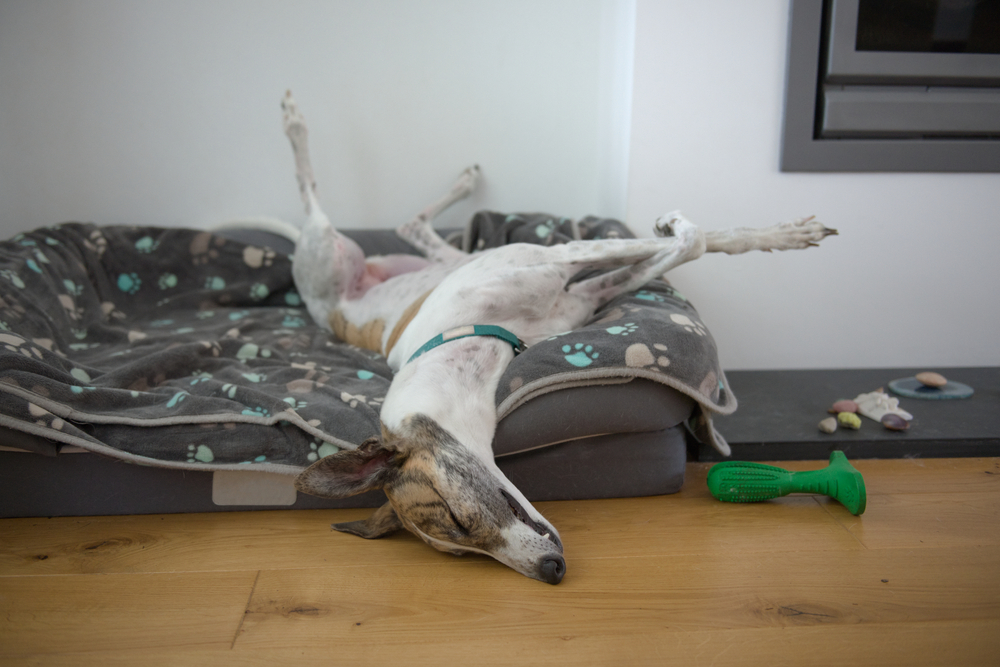
Having a bad dream might be uncomfortable for your dog, but it doesn’t mean your dog is in danger. However, if you’re worried about your dog having a bad dream, Dr. Dodman says you can gently wake them up — just like he once did with Rusty.
“I would remain calm,” Dr. Dodman recalls. “I would sit next to Rusty. I wouldn’t be suddenly shaking him by the collar for him to get up — I would just stroke him gently across the head … to lightly pull him out of the sleep that he’s in.”
If nightmares seem like a frequent occurrence for your dog, talk to your veterinarian. Anxiety and medical conditions are common causes of sleep problems, so your veterinarian is likely to recommend a thorough workup (including a physical exam, neurologic exam, and blood tests). A video of your dog’s suspected nightmares can also provide your veterinarian with more information about your dog’s episodes. While uncommon, REM sleep disorders can occur in dogs and may look like nightmares.
In addition to working with your veterinarian, you can take steps to make your dog’s environment more conducive to sleep. “If a dog has trouble sleeping, you do want them in an optimal environment,” Dr. Dodman says. “You want them to have a very comfortable place to lie and get fully relaxed. You want a dark room. You want it to be as peaceful and quiet as possible.”
References
- Woods, Hope J et al. “A functional linear modeling approach to sleep-wake cycles in dogs.” Scientific reports vol. 10,1 22233. 17 Dec. 2020, doi:10.1038/s41598-020-79274-2
- Morell, Virginia. “Brain scans show dogs learn when sleeping—just like people.” Science. Oct. 2017. Retrieved from https://www.science.org/content/article/brain-scans-show-dogs-learn-when-sleeping-just-people
Why Does My Dog Sit on Me?
- 2024-10-20T18:47:05
- Elizabeth Claire Alberts
Some dogs love to sit on us. This behavior isn’t only seen in small dogs like Chihuahuas and Pugs who can easily fit on our laps — even large dogs like Great Danes and Rottweilers are known to sit on their pet parents.
OK, but why does my dog like to sit on me? Do they simply view me as a comfy chair rather than a human?
Comfort may be one reason why dogs sit on you, but there are several other reasons as well. We asked the experts to weigh in.
Why Does My Dog Sit on Me?
Physical or Emotional Comfort
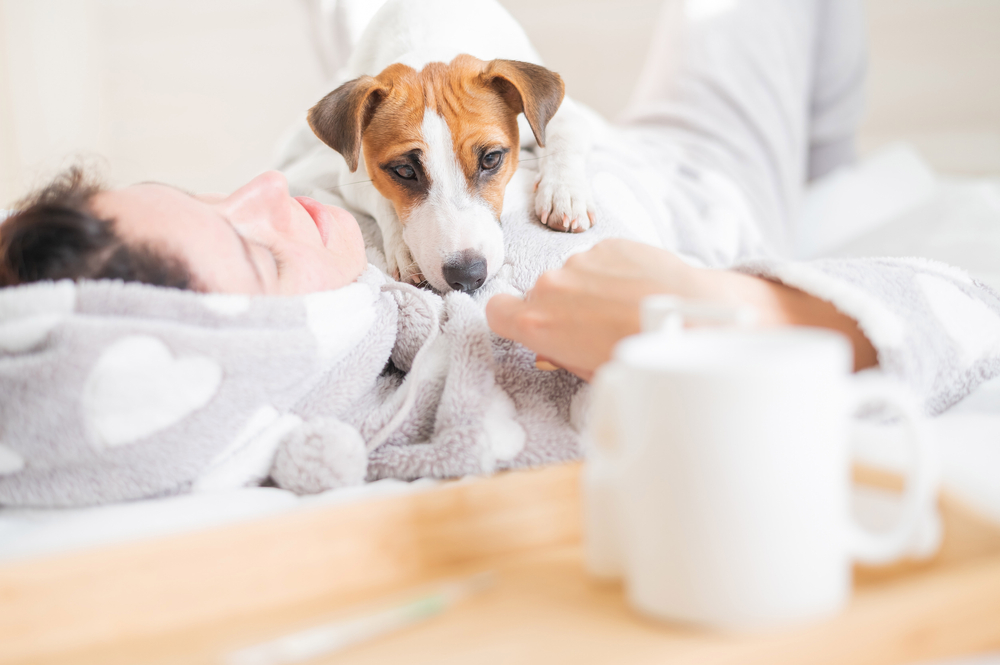
Dr. Katherine Houpt, a professor emeritus of behavioral medicine at Cornell University’s College of Veterinary Medicine, says dogs may sit on us simply because they “like to have something against their back.” Or, they might sit on us for warmth, she says.
“They’re much more likely to sit on you when it’s cold than when it’s hot,” Dr. Houpt says.
But it’s not just about physical comfort. Dogs may also sit on us when they want emotional comfort.
“You make good security for them,” Dr. Houpt says. “Part of it is puppy behavior, because puppies sleep in a group, and then as they get older, they sleep separately. But I think dogs tend to think of us somewhat as mothers.”
They’re Scared
Dogs may be more interested in sitting on us when they’re scared. For instance, they might want to sit on you during a visit to the veterinary clinic. Or, simply because they like being near us.
“It may be because … they feel safe and comfortable being close to you,” says Dr. Amy Pike, an animal behaviorist at Animal Behavior Wellness Center in Virginia.
Attention Seeking
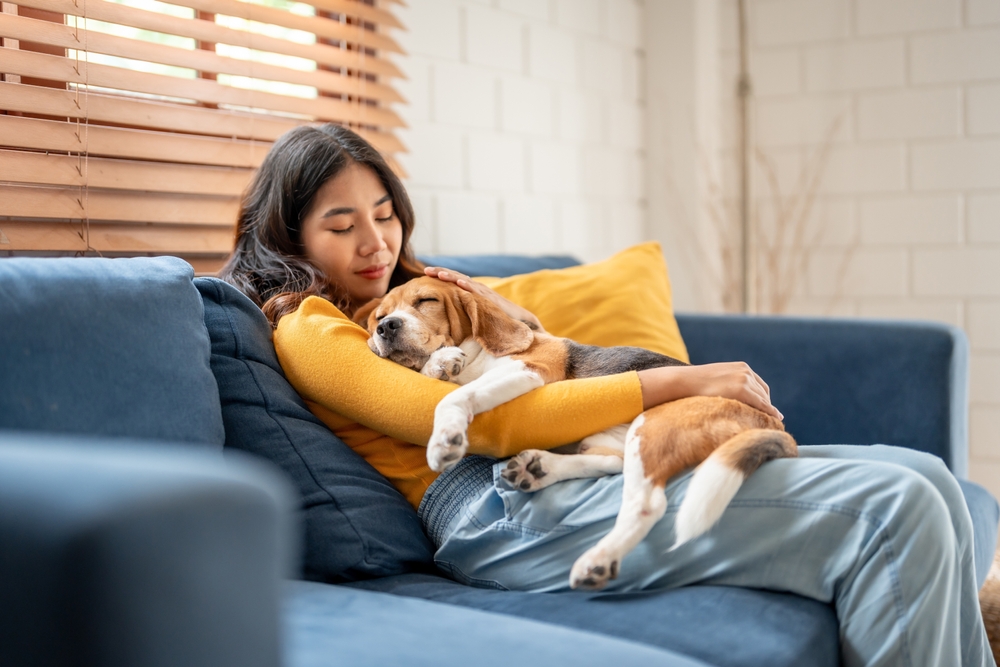
“It could be attention seeking because when they sit on you, you are likely speaking to them, petting them,” Dr. Pike says.
Resource Guarding of Possessive Aggression
It’s also possible that your dog is sitting on your lap because they are feeling possessive and they want to guard one of their most prized resources — you.
“If a dog is sitting on you and growling at people or other animals who approach you, that dog is actually demonstrating what we call resource guarding or possessive aggression,” Dr. Pike says. “This type of aggression occurs whenever a dog is in proximity to something it sees as extremely valuable, including but not limited to food, toys, resting locations, and particular people.”
Dr. Houpt says dogs may also become more aggressive toward other dogs while sitting on you because they “may hope that you will back them up in any conflicts.”
“Don’t let the dog sit on you if he has aggressed from that position,” Dr. Houpt advises.
Why Does My Dog Sit on My Feet, Chest, or Head?
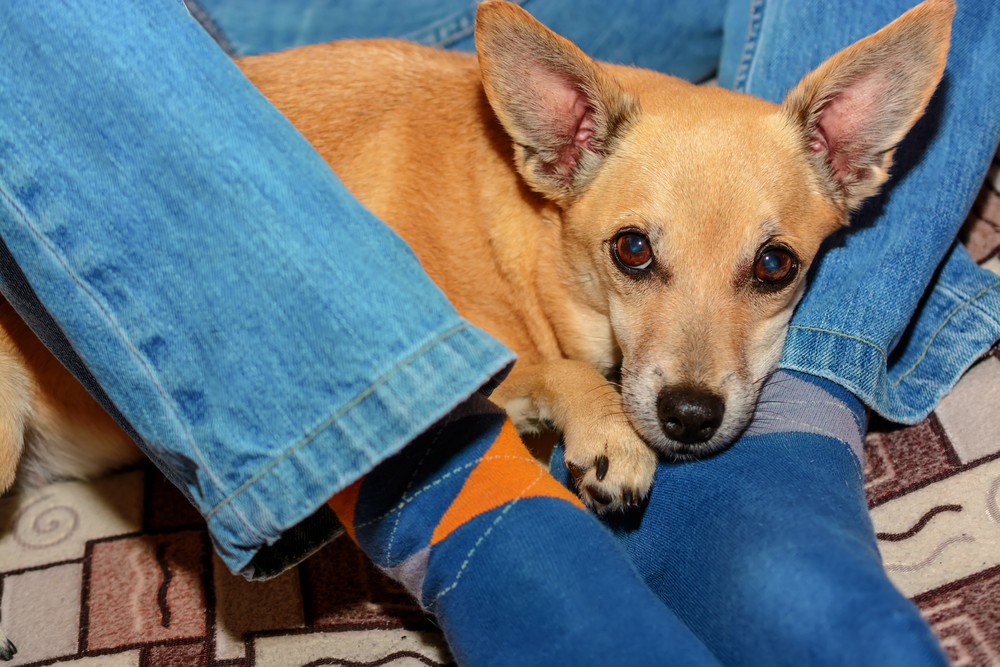
Besides your lap, dogs may also sit on your feet, which Dr. Houpt says could have something to do with scent.
“I think feet smell very interesting to dogs,” Dr. Houpt says. “And so, they’ll often sniff your shoes … so that could be part of it. I think it’s very idiosyncratic — some dogs do and some dogs don’t.”
Some pet parents have even reported that their dogs will sit on their chests — or even more ridiculously, their heads.
Dr. Pike says there is likely no specific reason for these behaviors besides “individual preference.”
“It may simply be more comfortable for them to sit on other body parts, or an easier way to access closeness to the human depending on how the human is standing, sitting, or lying down,” Dr. Pike says. “It may be that the human has purposefully or inadvertently rewarded the behavior of sitting on their feet, head, or chest by providing the dog with attention when it does so.”
All breeds and all ages of dogs may display lap-sitting behavior. “Every dog is an individual, so having a specific breed is not a guarantee that you are going to get a specific temperament profile,” Dr. Pike says.
However, lap-sitting could indicate a health problem, especially if you notice a sudden behavioral change.
Should I Worry If My Dog Sits on Me?
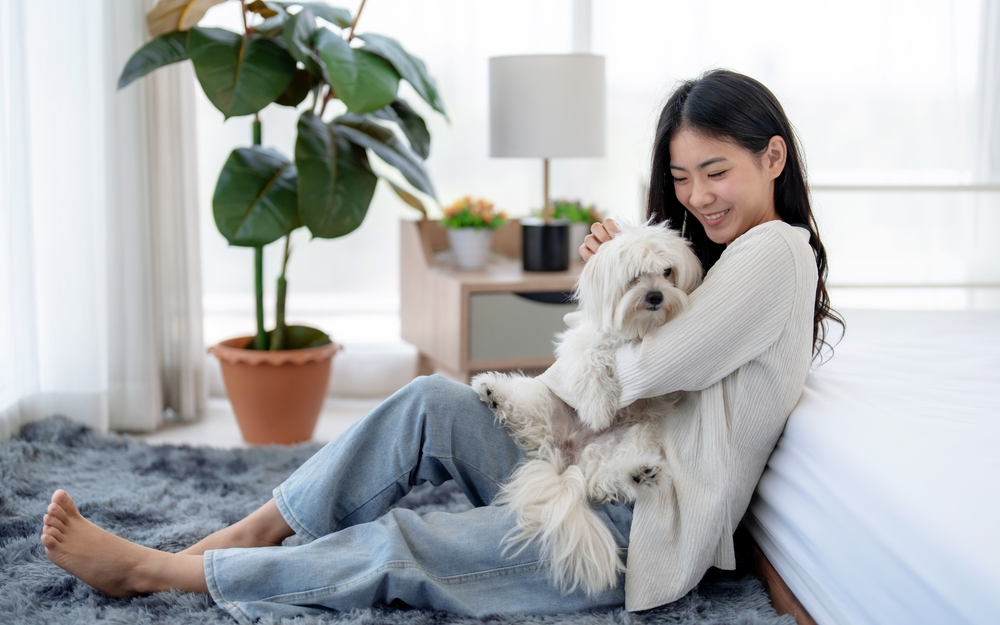
In most cases, you don’t need to be worried about your dog sitting on you. If anything, you should enjoy that your dog wants to be close to you.
However, there are some instances in which you should be a little concerned. One is if your dog suddenly begins sitting on your lap, if they haven’t done so before. It’s also worrisome if your dog regularly sits on your lap and has suddenly stopped. According to Dr. Pike, behavioral changes can indicate an underlying health issue.
“Behavior changes are often the first sign people will notice in their pets with a medical disorder,” Dr. Pike says. “For example, if you are sitting up on the bed and your dog used to sleep next to you and suddenly stops jumping up with you, it may be due to an underlying painful condition such as arthritis.
“A dog who was never really attention-seeking who suddenly becomes very affectionate may be seeking their preferred individuals for comfort because they are not feeling well,” Dr. Pike continues.
“Also, as dogs age, they can develop cognitive dysfunction, similar to Alzheimer’s disease in people,” Dr. Pike adds. “One of the many changes observed in patients with cognitive dysfunction is alterations in social interactions.”
Pet parents should also look out for resource-guarding behaviors in their dogs, which Dr. Pike says could lead to “safety concerns for other people or animals in the home.”
“Resource guarding is actually a very normal behavior, as evolutionarily, if you want to survive, you want to protect the things that are important to you that you need for survival,” Dr. Pike says. “What can be abnormal with regard to resource guarding aggression is the intensity of the dog’s response and if there is a danger to the other household members because of that intensity.”
Last but not least, a lap-loving dog may actually be struggling with fear and anxiety, which are problems pet parents should address with a veterinarian or dog behaviorist.
“Anxiety can lead to hyper attachment to a particular individual because that person is who helps the dog feel comfortable, safe, and confident,” says Dr. Pike. “I would also be concerned about separation-related behavior and if the dog is actually able to be relaxed when that particular individual is out of the home. A video of when the dog is left home alone will determine that.”
My Dog Always Sits on Me: How to Stop It
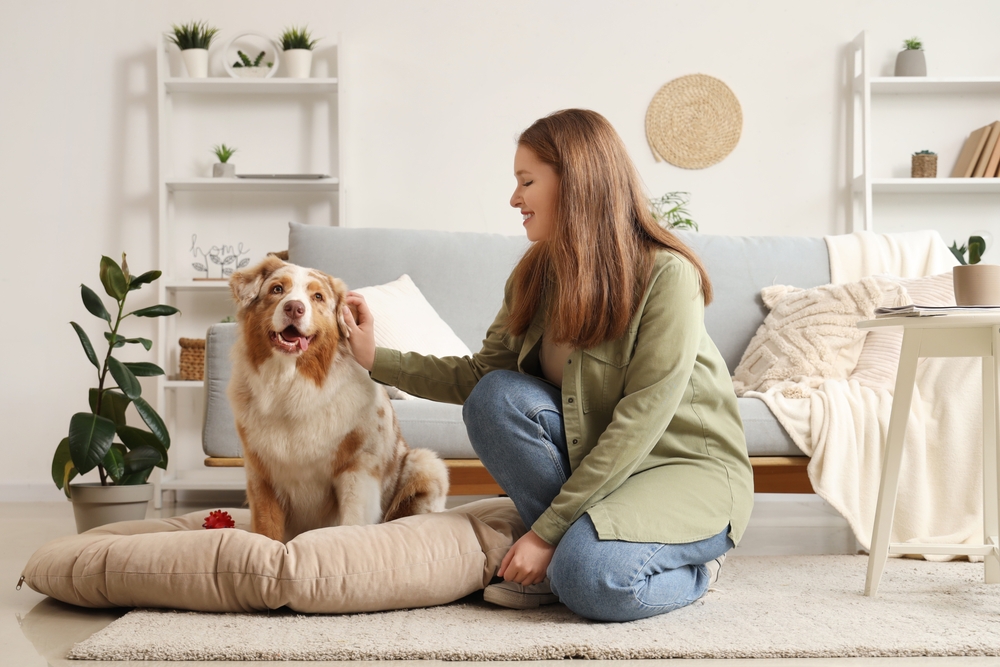
If you want your dog to stop sitting on you, Dr. Houpt says you should teach them to sit in another place, such as a comfortable bed or mat.
“Walk him over there, and as soon as his paws touch the mat, you give him a treat,” Dr. Houpt says. “You do that about 10 times, and then you should be able to follow him. You point, say ‘mat,’ and when he puts his paws on the mat, you give him a treat. Pretty soon, you should just be able to point and a dog will go there. And he gets a treat for going there, and he gets something extra special if he lies down and is relaxed. And almost every behavioral textbook will give you some version of teaching the dog to go to a mat.”
When trying to redirect your pet’s behavior, Dr. Pike says it’s important to “be consistent.”
“Dogs do not generalize easily and it can be really confusing and conflicting to have some situations where it is OK to sit on an individual and other situations that are not OK,” Dr. Pike says.
“If you do not want your dog to be on you,” she adds, “you can start by tossing treats off of you and positively rewarding calm and relaxed behaviors with treats when the dog is in preferred resting locations that are not your lap.”
Can Dogs Get Seasonal Depression?
- 2024-08-22T21:08:47
- Diana Kelly Levey
You may have experienced mood changes as the seasons shift and long, sunny days become darker and shorter, but can the same thing happen to your dog? We know humans can suffer from seasonal affective disorder (SAD). Is seasonal affective disorder in dogs something to worry about?
To find out the answer to “Can dogs get seasonal depression,” we talked to two veterinarians, Sandra Faeh, DVM, president of the American Veterinary Medical Association, and Karen Fine, DVM in Central Massachusetts, for the science behind behavior changes.
Can Dogs Get Seasonal Depression?
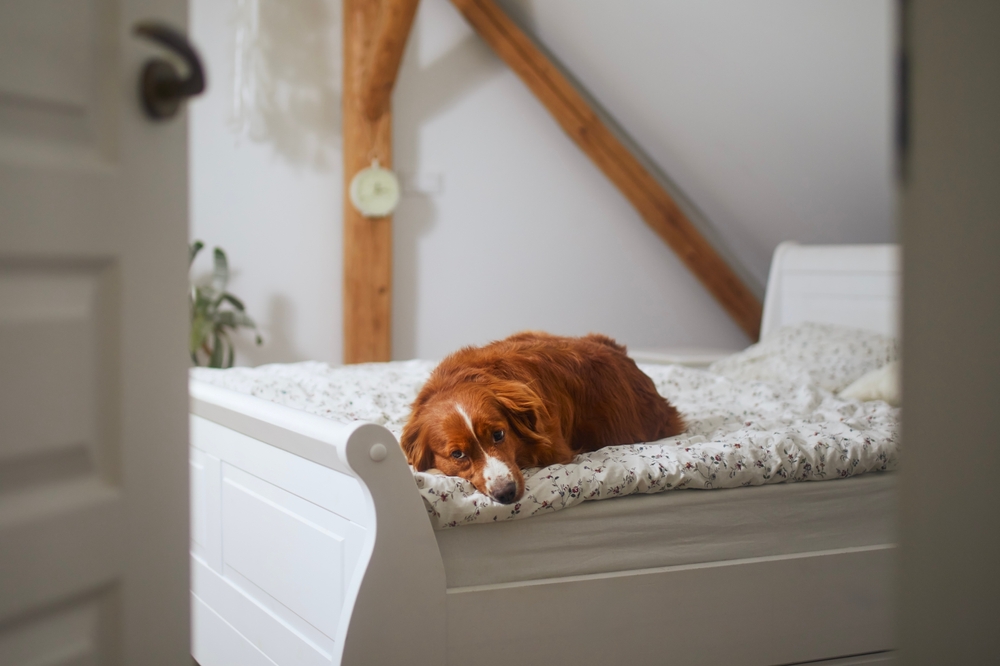
Seasonal affective disorder in dogs isn’t a known medical problem, at least not in the way humans experience it, according to our experts. That being said, your dog can experience mood fluctuations — particularly during times of the year when their humans’ schedules change.
Perhaps you had a young adult home for the summer who then moved back to college at the start of the school year. Or, if your kids were home all summer or other family members spent a lot of time with your dog and then they returned to school or work, your dog might be moping around a bit. This could lead you to ask, can dogs get winter blues?
Some dogs are very routine-oriented, from their feeding times to even putting themselves to bed, says Dr. Fine, author of The New York Times bestseller The Other Family Doctor: A Veterinarian Explores What Animals Can Teach Us about Love, Life, and Mortality. For these dogs, a disruption like a person moving out or another pet dying might have more of an impact than it would on another dog.
Signs of Seasonal Depression in Dogs
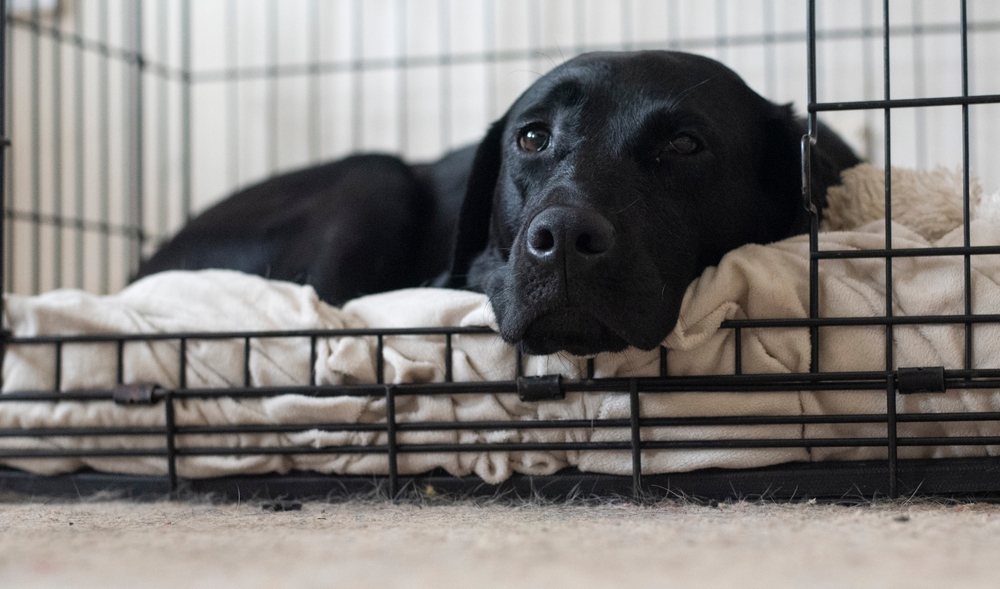
There are some physical or behavioral signs you might notice that could indicate your dog isn’t feeling like themselves. Again, while this isn’t technically referred to as seasonal depression, it’s still possible for a dog to act depressed during the wintertime.
Signs your dog has the winter blues or is generally feeling down may include:
- Decreased appetite
- Sleeping in unusual locations
- Loss of interest in playing or engaging with family
- Unexpected weight loss
- Self-soothing via licking or chewing
- Vocalizing, such as howling or whimpering
- Sad facial expressions, such as pinning ears back or droopy eyes
- Staying close to family members
If your dog is exhibiting any of these signs, reach out to your veterinarian.
“One of the first things a veterinarian will ask when they do a checkup on your dog will be something like, ‘Have there been any changes in the household or routine?’” Dr. Fine says.
Consider whether your dog is getting less attention than normal, for instance, and if that could be playing a part in your dog’s sadness or boredom.
How to Help a Dog Beat the Winter Blues
“Can reducing physical activity or mental stimulation during the colder months impact a dog’s mental health? Absolutely,” Dr. Fine says.
Here’s how to keep your dog active and happy as the seasons change:
Stick to your walking commitment. Daily exercise is good for your dog, Dr. Fine says. Make sure you’re taking your dog on a walk each day and change up the route as well. “Not only is the exercise good for them and their behavior but the sights, smells, and sounds help with mental stimulation,” Dr. Faeh adds.
Stimulate their minds. Change up your dog’s toys and add in some treat puzzles to fire up their brain. There are a lot of brain games that can keep your dog occupied.
Give them extra attention. If your dog’s favorite person in the house just left for college, they might need a little more TLC from you. They don’t understand what happened or when their person will be back. Play with your pup before or after work and make an effort to give them pets and snuggles as often as possible.
Drop them off at a doggy daycare. Taking your dog to a doggy daycare-type of setting where they are getting a lot of attention, exercise, and stimulation can be a great option for busy pet parents.
Add a dog walker to their routine. You could also recruit a local neighbor, friend, or relative or hire a professional dog walker who can take your dog out in the middle of the day. This can be especially helpful if you have a work commute and it’s dark when you leave in the morning and/or dark as you arrive home, making it more challenging to walk your dog.
Avoid rearranging or moving stuff around. While dogs don’t necessarily get depressed in the winter more so than other times of year, they do sometimes act a little differently around the holidays. This is especially true if you put up a lot of decorations and furniture or other items get moved around the home. “I had a client whose small dog would use dog pee pads in the house and he didn’t want to go on the pee pads all of a sudden,” Dr. Fine says. “So I made a house call and saw the client moved things around to accommodate Christmas decorations and the dog’s pee pads were in a new place. We moved them back to where they previously were and the dog urinated on them right away.”
Take a class with your dog. Sign up for a learning or enrichment class with your dog when the weather changes. “You can have them work on tricks or obedience, and it’s very stimulating for your dog as well as a great way to bond with your dog,” Dr. Fine says.
Will Vitamin D Supplements Help?
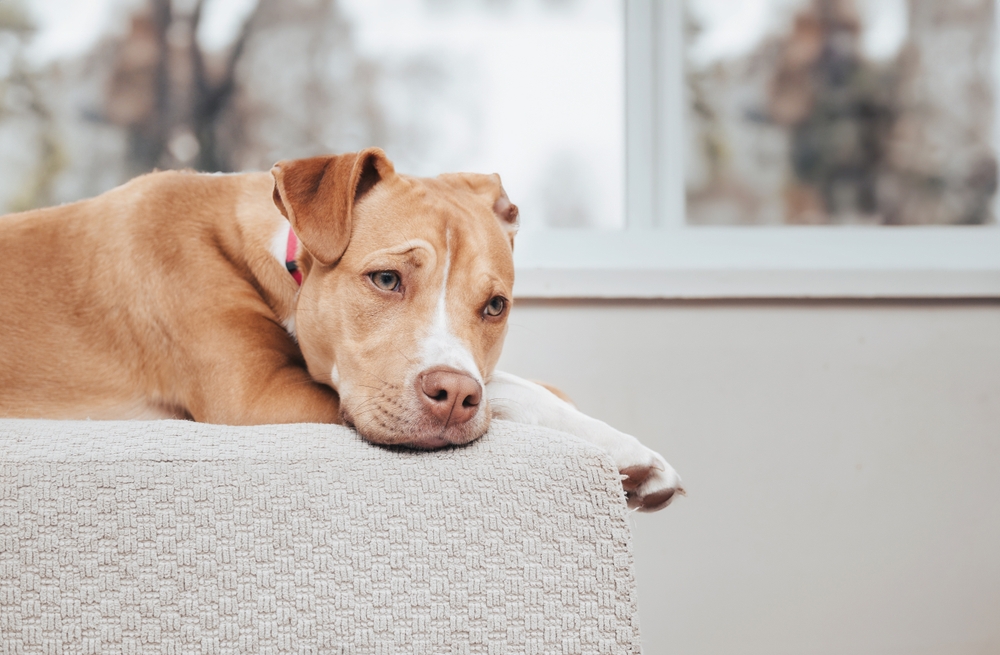
You might be wondering if dogs should take vitamin D supplements if they’re experiencing the blues or seem to be depressed or anxious.
“Unlike people, dogs are unable to synthesize vitamin D (more specifically, vitamin D3) through exposure of their skin to sunlight, and they don’t experience seasonal fluctuations in vitamin D or seasonal affective disorder as people do,” Dr. Faeh says.
Dogs get most of their vitamin D needs met through their diet. “This means it’s important to ensure they’re getting enough vitamin D through their food,” Dr. Faeh says. Feed your dog a high-quality diet that meets standards set by the Association of American Feed Control Officials (AAFCO) to ensure they’re hitting their daily quotas, she advises.
“While it’s true that too little dietary vitamin D may cause depression—and other health problems—so can too much vitamin D, which may happen when a dog accidentally gets into vitamin D supplements that someone in their household is taking,” Dr. Faeh adds. In fact, too much vitamin D can cause vitamin D poisoning, which can be fatal if left untreated. Always check with your veterinarian first before trying supplements.
Currently, there isn’t evidence that light therapy is a tool to help dogs with depression in the winter months.
Be a Good Friend to Your Dog
“When it comes to changing seasons, some dogs may be affected by shorter days or colder temperatures, as this can mean changes to their routine, including fewer opportunities for exercise and mental stimulation,” Dr. Faeh says.
Any time you notice significant changes in your dog’s behavior, it’s a good idea to consult your veterinarian, who can work with you to determine the cause and develop a solution tailored to your dog’s (and your) needs, she suggests.
If your dog is otherwise healthy, do the best you can to keep them active, give them attention and cuddles, and stay positive and calm yourself. Dogs can tell when you’re stressed and upset and may feed off of that energy, Dr. Faeh notes.
Why Do Dogs Rub Their Face?
- 2024-07-11T01:48:40
- John Gilpatrick
If your dog keeps rubbing their face on things—the carpet, grass, furniture, or even you—pay close attention. Dog face rubbing can be a sign of an underlying issue that requires treatment.
So why do dogs rub their face and what should you do about it? Here’s what you need to know.
Dog Face Rubbing: What’s Normal?
Dog face rubbing is less common than it is in cats. However, that doesn’t mean that dogs never rub their face on stuff.
Dogs may rub their face for medically unconcerning reasons, such as scratching a quick itch, displaying affection, scent marking, or enjoying the smell of something stinky.
Happy dogs may rub their faces in the grass when they’re let outside, adds Leslie Sinn, DVM, DACVB, who runs Behavior Solutions in Ashburn, Virginia. But typically, that behavior is not so face-focused. The dog is sort of rubbing their whole body over the grass, including their back and belly, when they’re feeling excited and playful.
When your dog is fixated on rubbing their face, however, it’s most likely a sign that something isn’t quite right. One way to test this is to try and distract your dog with food or a favorite toy, suggests Elizabeth Drake, DVM, DACVD, a veterinary dermatologist and associate professor at the University of Tennessee College of Veterinary Medicine. Think about whether your dog is food-motivated or play-motivated when choosing an appropriate distraction. If the distraction doesn’t work, and your dog continues to rub their face, it could be indicative of pain or discomfort.
Some dogs may vocalize while scratching or rubbing their face, which could provide another clue that there is a physical ailment causing the behavior, Dr. Drake adds.
Why Do Dogs Rub Their Face?
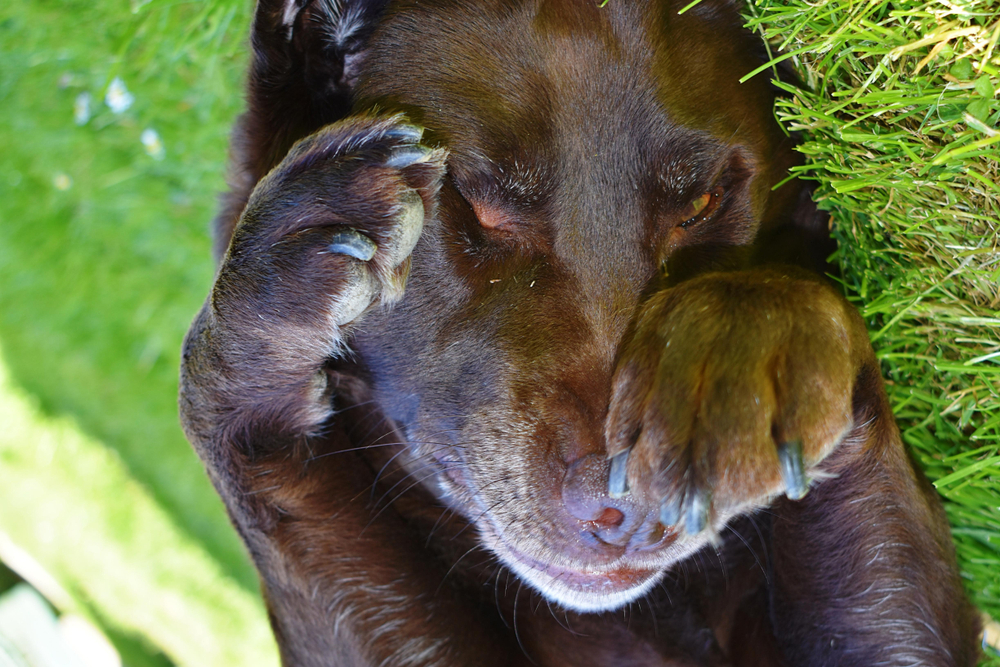
Dogs may rub their face on furniture, the carpet, or other surfaces for a variety of reasons, such as allergies, external parasites, infections, or pain.
Dogs often rub their faces because they are itchy. Allergies are one of the most common causes of itching in dogs. If you tend to see a seasonal pattern in this type of behavior, it’s likely a sign that environmental allergies are the culprit, Dr. Sinn says. “If an owner reports a spike in the fall, the cause is probably grasses. In the spring, it’s tree pollen,” she adds.
If your dog has allergies, you may notice them excessively rubbing their face with their paws or against surfaces that create an easy, soothing friction to help relieve the itch. Dr. Sinn says it can be fairly easy to identify because it’s not a playful behavior. Terriers and Golden Retrievers seem to be especially cursed with allergic itch, Dr. Sinn says. “They really seem to have a tough time with allergies.”
External parasites, including fleas, sarcoptic mites, and ear mites, can also make dogs excessively itchy. Some dogs are hypersensitive to flea bites and experience a more severe reaction than other dogs. Mosquito bites and tick bites can also trigger itching and inflammation.
If your dog appears to be pawing at or rubbing their eye on objects, this could be a sign of an eye allergy, eye infection, or another eye issue, such as ulcers or eyelids rolling inward (entropion). Similarly, if your dog appears to be focused on rubbing their ears, they could have an ear infection.
Oral health problems, such as dental disease or infection in the lip folds, could also compel your dog to paw at their face or rub their mouth, Dr. Drake says. Other signs of dental problems in dogs include bad breath, red or swollen gums, swelling on the face, and decreased appetite. “If the pet is only rubbing one side of the face and not both sides,” she says, “that implies something on that side of the face is causing discomfort, and thorough examination is indicated.”
Some pet parents may mistake head pressing in dogs as face rubbing. This is when a dog presses their head against a wall or other object, and is often due to a brain issue. Head pressing requires immediate medical attention.
Why Does My Dog Rub His Face on Me?
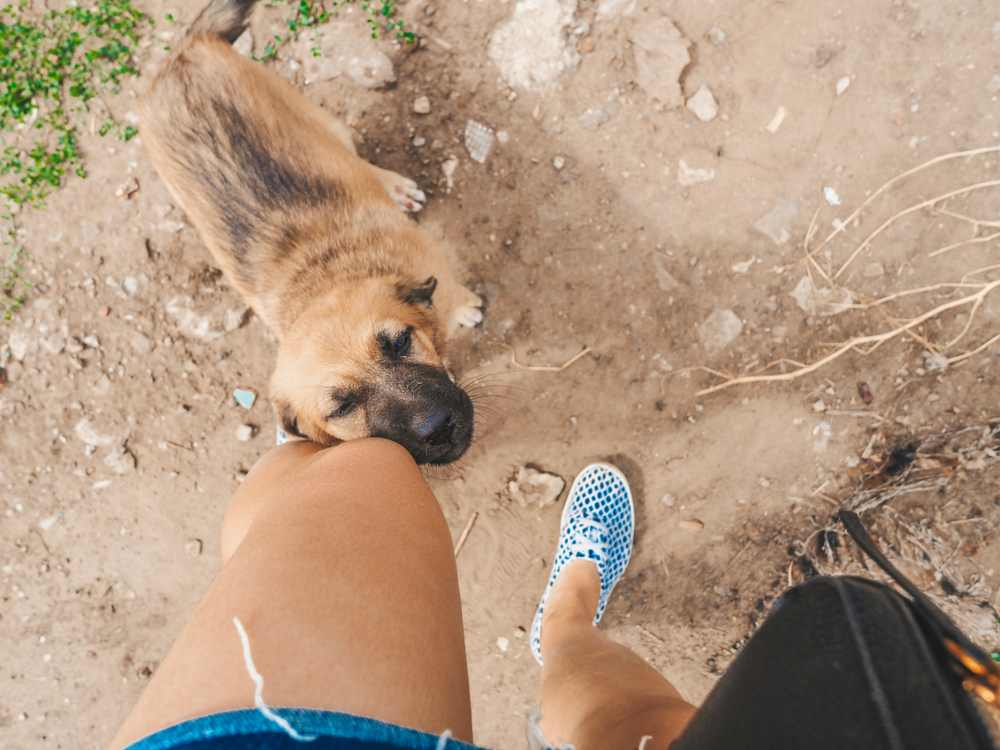
Some dogs just like to be scratched and rubbed in general. Your dog may rub their face on you, — leaning in for scratching and petting. If pet parents reinforce the behavior, they may see an increase in the behavior, Dr. Sinn says.
In that case, Dr. Sinn says a dog rubbing their face on you is only really a problem if it becomes a nuisance. “If they’re nudging you to be rubbed, they’re seeking attention,” she says. “So if you reinforce it all the time and pet him whenever he rubs up against you, it’s going to get to the point where the dog gets insistent and may begin really hassling you to be rubbed.”
Your dog may simply rest their muzzle in your lap or alongside of you, rather than rub their face on you. “Your dog is probably just saying, ‘It’s time to pay me attention,’” Dr. Sinn says.
The best way to still be affectionate when your dog is asking for pets or rubs like this is to ask them to do something else — sit or a trick, for example — before they’re rewarded with a pet, Dr. Sinn says.
Face Rubbing in Dogs: Next Steps
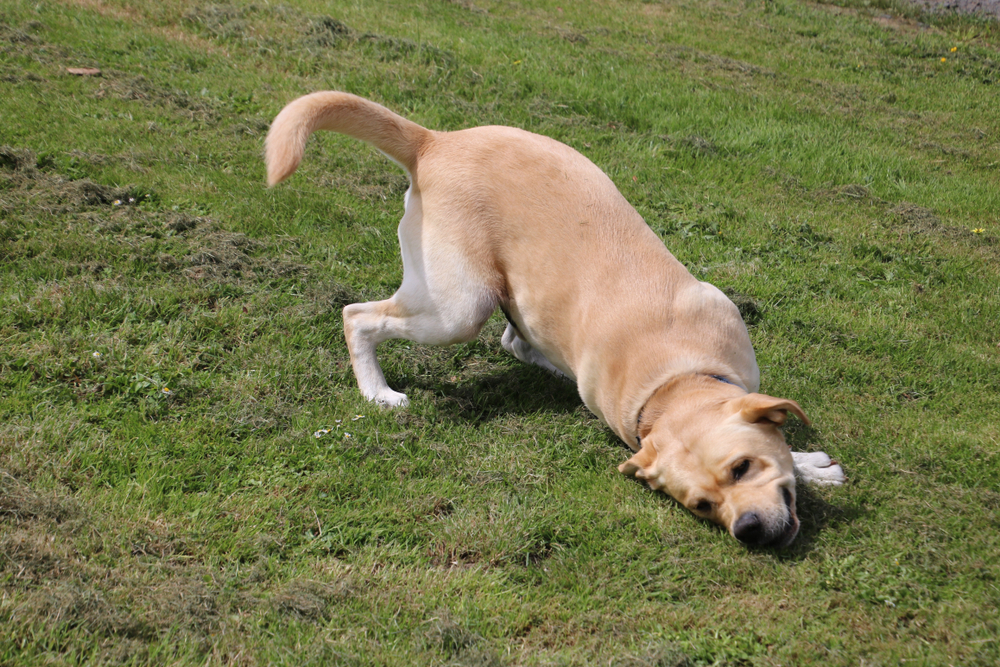
If your dog is excessively rubbing their face, schedule an appointment with your veterinarian. Once your veterinarian identifies the cause, you can determine the best course of action.
If your dog has environmental allergies, for example, your veterinarian may prescribe a dog allergy medication to help alleviate and manage your dog’s symptoms. One easy-to-administer option is Zenrelia (ilunocitinib tablets), a fast-acting oral medication you give your dog once a day to relieve allergic itch and inflammation.

Read the entire package insert before using Zenrelia, including the Boxed Warning.
In some cases, your veterinarian may suggest dog allergy testing to identify the offending allergens, Dr. Sinn says. There are blood (serum) and skin exposure (intradermal) tests available, but skin testing is the gold standard, she says. Skin testing is when small amounts of allergens are individually injected under the skin to assess for reactions. If a food allergy is suspected, your veterinarian may recommend an allergy food trial, which involves exclusively feeding an allergy diet for eight weeks.
In the case of external parasites, your veterinarian will collect skin samples to check for mites and other parasites under a microscope. This is called skin scraping. Ear mite treatments for dogs may include ear drops and oral or topical anti-parasitics. If your dog has a flea infestation, treatment will include flea medicine, medicated shampoo, and environmental cleaning to eliminate fleas from the home. Year-round flea and tick control is recommended for dogs.
For suspected eye issues, your veterinarian will perform an eye (ophthalmic) exam and other eye (ocular) tests to pinpoint the issue. Eye tests may include staining the eye to look for ulcers, a Schirmer tear test to assess tear production, or bacterial or viral cultures to rule out infection. Depending on the cause, your dog may be prescribed eye drops, eye ointment, or oral medication to help alleviate symptoms. Dogs rub at eye problems so much that it’s highly likely your veterinarian will recommend using an Elizabethan collar (e-collar) to prevent your dog from rubbing.
If your dog is scratching and shaking their head, your veterinarian will examine the external ear and also use an otoscope to look inside your dog’s ear canal. They will then take a sample of your dog’s ear debris with a swab and review it under a microscope to check for mites, bacteria or yeast overgrowth. Ear infection treatment will depend on the underlying cause but may include topical medication or ear drops.
If your veterinarian suspects oral pain, they will look inside your dog’s mouth and feel around the facial area. They may take dental X-rays (radiographs) to make a more accurate assessment. To take dental X-rays, your dog will need to be sedated. Most oral causes of pain require treatment, such as dental cleaning, tooth extraction, or root canals. Oral antibiotics like clindamycin may also be prescribed.
If your dog is pressing their head, as opposed to rubbing their face, they will require a neurologic exam. They will likely be referred to a neurologist for a cerebrospinal fluid tap (CSF) and MRI.
It’s possible for face rubbing to become so frequent and intense that your dog opens up their skin, which could lead to secondary infections, or starts losing fur in a specific area, Dr. Sinn says. This is another reason why you should always pay attention to your dog’s behavior, trust your instincts when something doesn’t seem right, and seek prompt veterinary treatment.
Do Dogs Get Bored? 7 Signs and How to Help
- 2024-06-27T23:08:37
- Kirsten Adams
If your dog has been acting restless, sleeping more, or barking excessively, it may be due to boredom. When dogs get bored, their quality of life (not to mention the bond they share with their humans) can be deeply affected.
We asked dog experts to weigh in on some signs your dog is bored, what causes boredom in dogs, and how to keep a dog from being bored. Since signs of boredom can mimic other behavioral and physical conditions, we recommend consulting with your veterinarian if your canine companion is out of sorts.
Do Dogs Actually Get Bored?
The short answer is yes, though there’s also more to it. “It’s not clear whether animals feel ‘bored’ in the same way that people do,” says Dr. Valli Parthasarathy, a board-certified veterinary behaviorist with Synergy Behavior Solutions in Portland, Oregon. Given that dogs have unique cognitive needs and don’t perceive time the same way we do, boredom is not something that can easily be measured in human terms.
Dogs do, however, benefit from enrichment, Dr. Parthasarathy says. “Enrichment can take several forms, including mental stimulation, exercise, environmental enrichment, or social enrichment.”
Bored dogs who don’t receive adequate enrichment may start to sleep more or engage in repetitive behaviors like chewing, pacing, or barking. Although these behaviors can be indicative of other problems like separation anxiety, fear, or a health issue, they’re also linked to boredom (1). An estimated 16 percent of dogs are known to engage in repetitive behaviors, and it’s often triggered by frustration, stress, or boredom.
Breed type can indeed play a role in boredom, though any dog can become bored.
“Understanding typical breed traits will likely give people a sense of what their dog’s needs might be, but there will always be exceptions and pet owners should observe and learn about the dog in front of them rather than relying on breed stereotypes,” says Anna Wong, a Karen Pryor Academy-certified dog trainer who owns Mutts Have Fun: Training You and Your Dog in Oakland, California.
In general terms, some breeds are more prone to boredom. One study, for example, found that breeds most closely related to wolves (like the Akita, Samoyed, and Siberian Husky) who were left alone at home and didn’t have backyard access, exhibited destructive and repetitive behaviors consistent with what we understand as boredom (2). High-energy breeds and active individuals may need more enrichment and stimulation to stave off behaviors associated with boredom.
How to Tell if a Dog Is Bored: 7 Signs
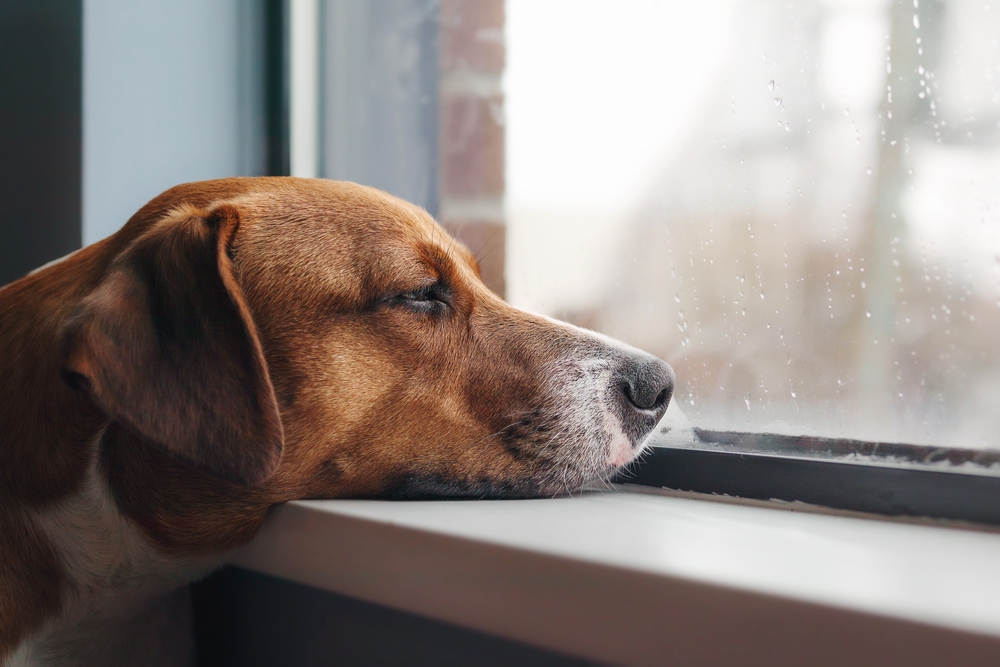
While any of the following can be signs your dog is bored, they can also signal a health or behavior problem. If these are new behaviors, have increased in frequency or severity, or you’re in doubt, it’s best to consult your veterinarian.
Pacing and Restlessness
When pacing becomes frequent or compulsive, boredom may be a factor. “It’s often said that a tired dog is a well-behaved dog,” says Bradley Phifer, executive director of the Certification Council for Professional Dog Trainers. “When our dogs don’t receive enough mental and physical exercise tailored to their specific needs, they resort to behaviors we’d rather they didn’t.” Pacing may be a way for your dog to release all that excess energy and anxiety.
Chewing on Furniture and Other Objects
Chewing is a natural behavior in dogs, especially in puppies, who teethe to help ease their sore gums, similar to human babies. Compulsive chewing that isn’t typical of certain breeds may be one of the signs your dog is bored. “In general, if a dog doesn’t have a direction to put their energy, they will do it in whatever way(s) they have available to them,” Dr. Parthasarathy says.
Excessive Barking and Vocalization
Barking is an innate behavior in dogs that facilitates communication. Some breeds, like Beagles and Icelandic Sheepdogs, are typically more vocal. Persistent barking for no apparent reason, however, can indicate a lack of stimulation, Phifer says. “Dogs are highly receptive to learning through their interactions with people, often adapting their behaviors to gain attention or access to desired outcomes.”
Excessively Licking the Floor
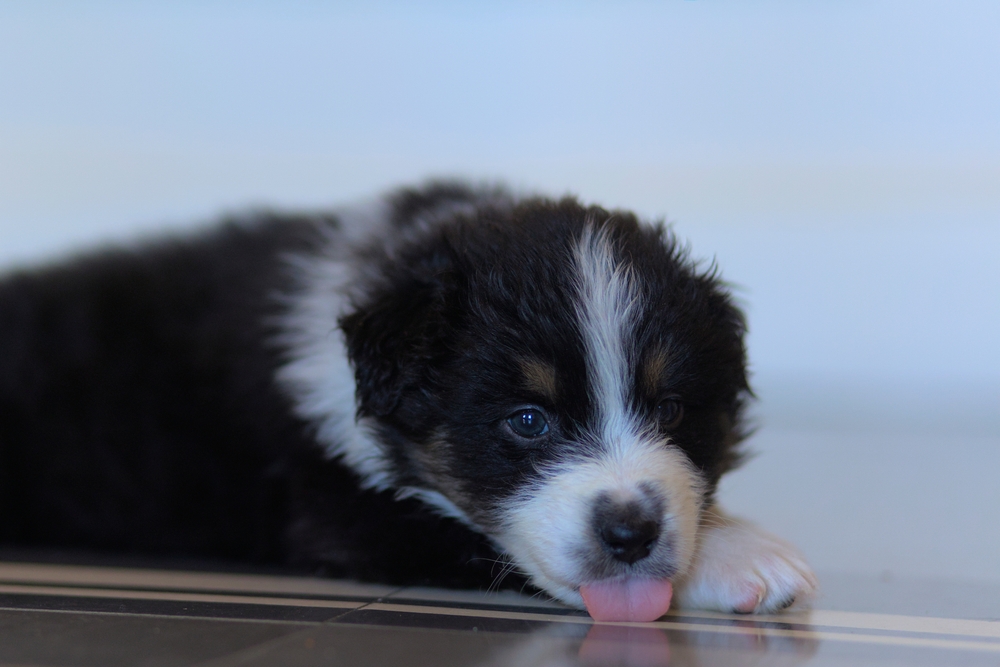
When you accidentally drop a tasty piece of food on the floor, your dog will likely lick it up on cue. Licking the floor becomes a potential problem when it lasts longer than a few minutes, is habitual, or is happening more frequently. It’s a repetitive behavior that signals something may be amiss.
Excessive Digging
Digging is inherent to certain breeds, Phifer says. “For instance, Terriers have a natural inclination to dig, rooted in their historical role.” Digging habitually, however, can indicate a lack of stimulation,” Phifer adds. A bored dog who is left alone will find an available way to keep occupied. If left outdoors, that can translate to excessive digging.
Stealing and Rummaging
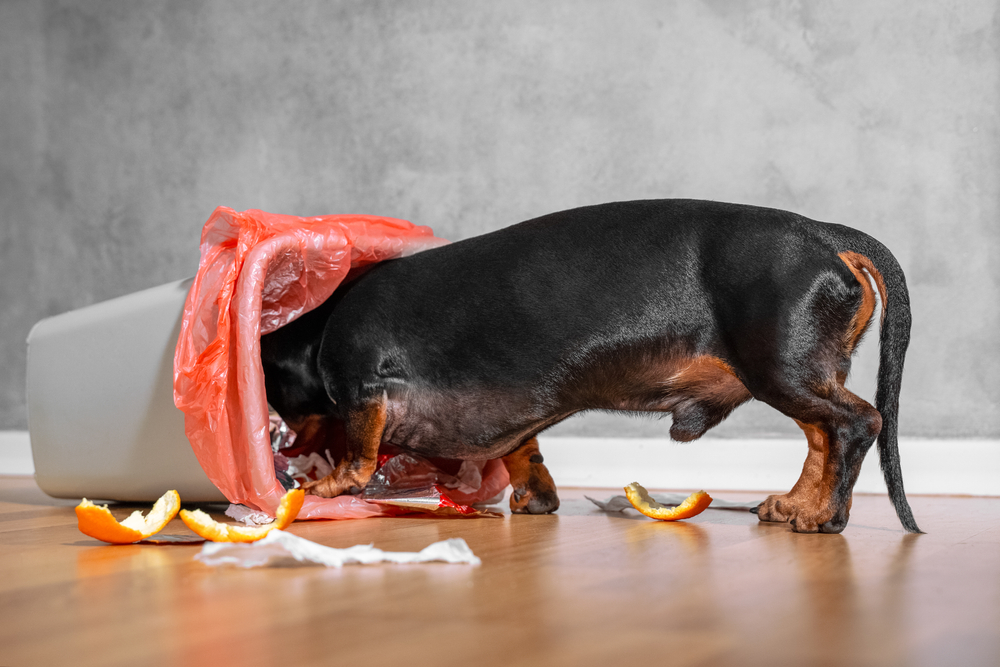
Changes in a dog’s environment can result in boredom. Say, for example, a favorite human is working longer hours and doesn’t demonstrate the typical level of attention to the dog. In these cases, the dog may find a way to seek attention in other ways. This can take the form of stealing items and running away with them to get attention or to start a fun game, Wong says.
Sleep Disturbances
A healthy dog typically sleeps between 8 and 14 hours a day, not including lounging time. Bored dogs, however, might be inclined to sleep the entire day away. A study in the Journal of Veterinary Behavior provides evidence for this hypothesis (3). It found that dogs kept in a sterile facility slept about 20 percent more than dogs kept in an environment with enrichment.
Reasons a Dog Might Be Bored

Most bored dogs typically aren’t receiving adequate mental, physical, environmental, or social enrichment, our experts say.
“Lack of opportunity to engage in proper exercise, sniffing, mental stimulation, foraging, hunting, digging, play, and other social interactions may lead to what we’d label as boredom,” Wong says.
Changes in a dog’s routine or a reduction in the amount of attention you show your dog can lead to boredom. For example, maybe you’ve recently introduced a new pet or baby to the home or are working away from home more often.
Even enrichment that’s not suited to the dog’s temperament can cause boredom, Dr. Parthasarathy says. “For example, food interactive toys may not be mentally stimulating for a dog who has a gastrointestinal disorder.”
How to Stop Boredom in Dogs
If your dog seems sad and bored, first rule out any health or other behavior problems. “It’s crucial to distinguish between normal breed behaviors and signs of boredom, while also being vigilant for any sudden or unusual behavior that could signal underlying health issues, such as gastrointestinal distress,” Phifer says.
Once you’re certain there are no other significant health issues at play, there are certain techniques you can try to alleviate the boredom. Our experts offer tips on how to keep a dog from being bored.
Customize Your Dog’s Activities
Tailoring activities to your dog’s preferences and instincts is key, Phifer says. “For example, Sighthounds thrive on chasing, so engaging them with a flirt pole can be enriching. Beagle owners might consider hiking on nature trails, while herding dog enthusiasts could explore activities like Treibball.”
Make Training Fun
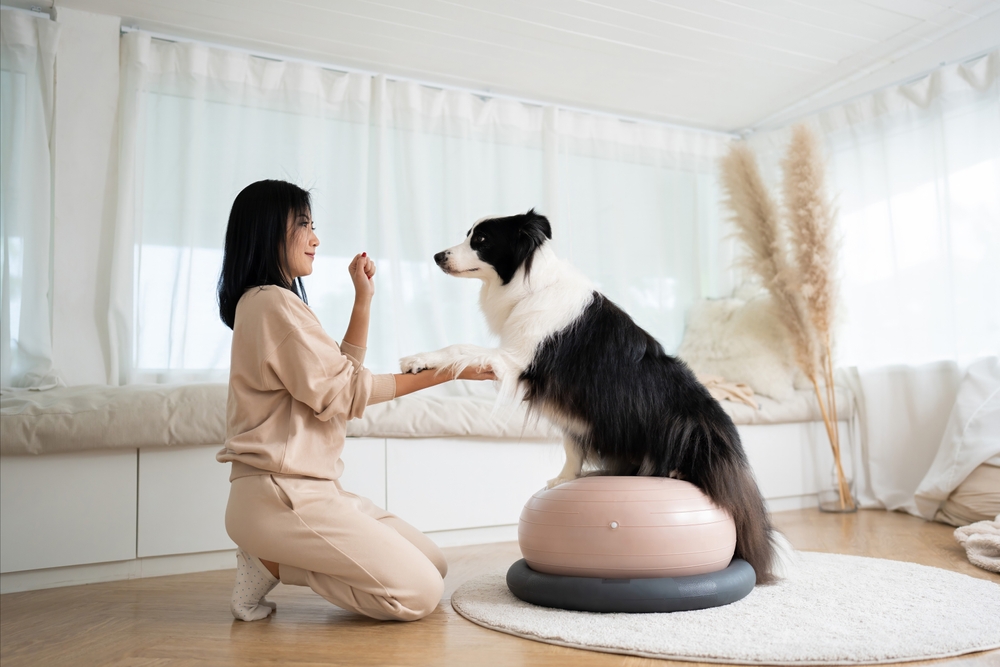
Training tires the brain and builds skills that often enhance the dog-human bond, Wong says. “If you make training fun for you and your dog, it can be a way to meet several goals: stave off boredom for your dog, build your relationship, engage the brain, and build skills that help you both live more enriched lives in the long run.”
Review Your Dog’s Exercise Plan
A good exercise regimen incorporates quantity and quality, Wong says. For example, going on nature hikes, or “allowing your dog to stop and sniff, roll in the grass, dig, or simply lay down and enjoy the sun may help meet your dog’s needs more than adding time or distance.”
More exercise is not always necessarily better, however. “It’s not always the case that a tired dog is a good dog,” Dr. Parthasarathy says. “Many of my patients are not taken on walks, for example, because it creates other issues because of overarousal or exposure to fear-provoking stimuli.”
Make sure to get your exercise plan approved by your veterinarian, especially for young dogs that are still developing, dogs with flat snouts (brachycephalic dogs like Pugs), and dogs with chronic health conditions like heart disease or arthritis.
Try Puzzles and Games
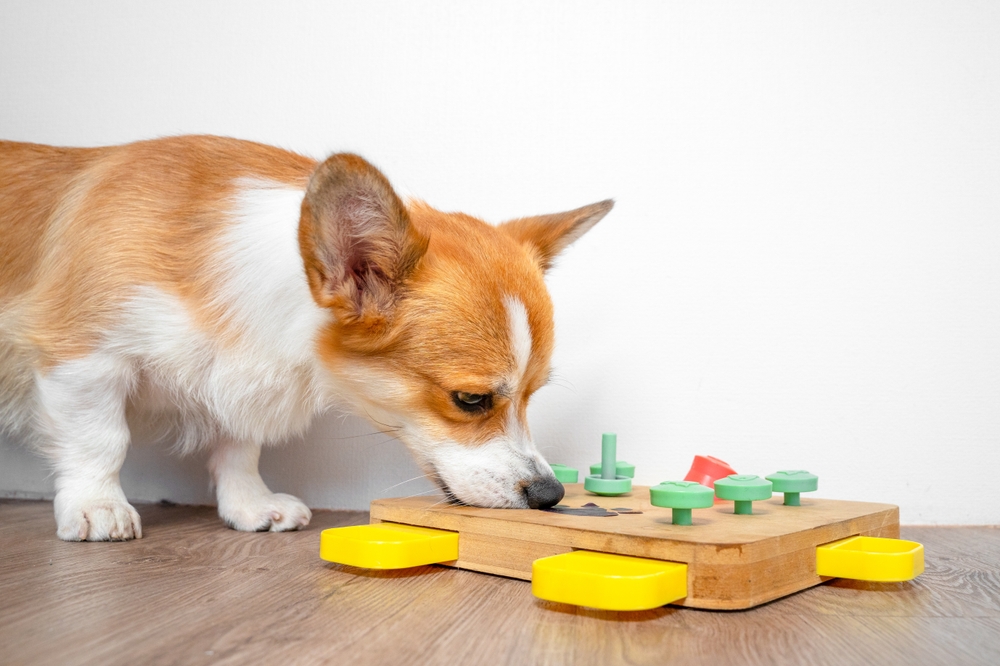
Wong likes games like Find it, where you set up treat searches in the house, yard, or safe public spaces. “You can also toss a handful of kibble or treats into the grass for your dog to sniff out.” Interactive dog puzzle toys are another great boredom buster to consider.
Incorporate Play Sessions
Playdates with other dogs can be a good way to alleviate boredom. It’s essential, however, to provide choice for your dog, Wong says. “They (and all playmates) should be able to ‘opt in and opt out’ of the interactions.” It’s also essential to “identify suitable playmates, and teach your dog safe, appropriate play skills,” Wong adds. Also be mindful of diseases like canine influenza and distemper that can be spread in social settings. Make sure your dog is up to date on their vaccines before participating in social events.
Provide Acceptable Chew Toys
Really hard chew toys can cause tooth fractures. Acceptable chew toys should have some flexibility or you should be able to indent the surface with a fingernail. Keep in mind that dogs who are left unattended are at risk of swallowing a part of a chew toy.
Let Your Dog Watch Television
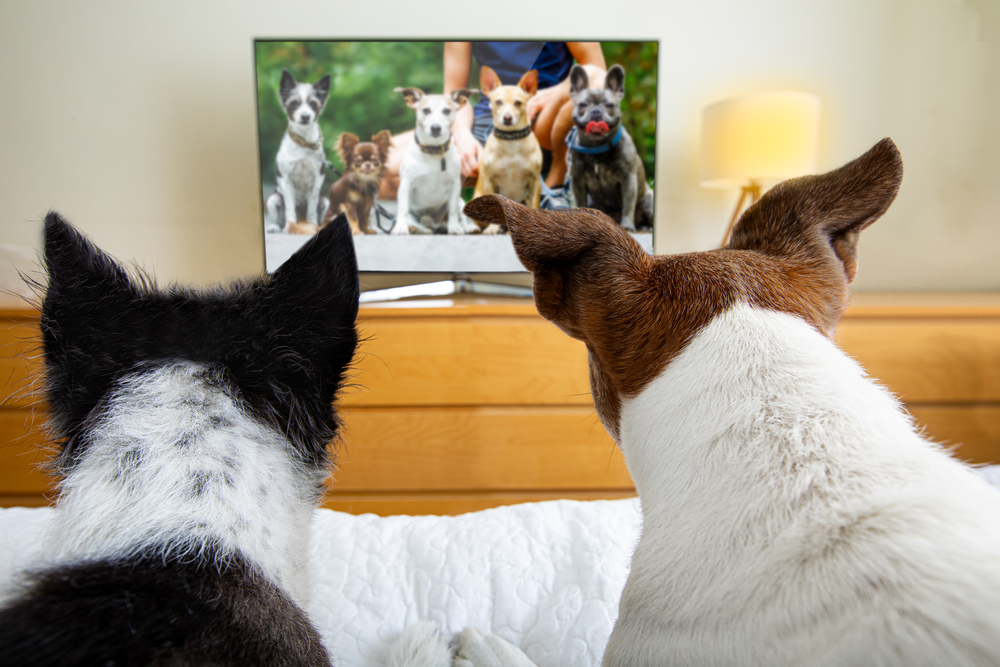
This could be a good strategy for alleviating boredom, though Wong recommends observing the impact TV has on your dog’s behavior. “Some dogs react to dogs or animals on TV by lunging or barking. If this is the case, watching those animals on TV may cause frustration, fear or overarousal, and this may not be appropriate. Other dogs may not even notice the TV is on.”
For other ideas, check out our guide on how to keep pets busy at home.
References:
- Sulkama, Sini et al. “Aggressiveness, ADHD-like behaviour, and environment influence repetitive behaviour in dogs.” Scientific reports vol. 12,1 3520. 24 Mar. 2022, doi:10.1038/s41598-022-07443-6
- Wójcik, Anna, and Kinga Powierża. “The Influence of Breed, Sex, Origin and Housing Conditions on Undesirable Behaviors in Ancient Dog Breeds.” Animals : an open access journal from MDPI vol. 11,5 1435. 17 May. 2021, doi:10.3390/ani11051435
- Zanghi, Brian & Kerr, Wendell & de Rivera, Christina & Araujo, Joseph & Milgram, Norton. (2012). Effect of age and feeding schedule on diurnal rest/activity rhythms in dogs. Journal of Veterinary Behavior: Clinical Applications and Research. 7. 339–347. 10.1016/j.jveb.2012.01.004.
How to Keep a Dog Out of the Trash
- 2024-04-15T14:25:50
- Victoria Schade, CPDT-KA
What do you get when you pair a canine super sniffer and a nose-high container filled with pungent delights? In many households, that combination almost guarantees scavenging. Unfortunately, the instinctive drive to raid the garbage bin can be both messy and dangerous.
Wondering how to keep a dog out of the trash? Read on for some of our favorite tips and tricks!
Why Do Dogs Like Trash?
Dogs are natural foragers and “opportunistic eaters,” which means they’re programmed to consume food items any time they discover them. Of course, a dog’s concept of what’s considered food is drastically different from ours, which is why the stinky, moldy stuff in the trash can is fair game for them. The reasons for a dog getting into trash can include:
Taste
It doesn’t matter if it’s gristle from a steak or spoiled yogurt. If it’s edible and available, your dog is probably going to help themselves.
Smell
Ever had a dog chow down on sandwich wrapping? Even if it’s minimally food-like, if there’s a food-like scent on it, many dogs will attempt to eat it.
Past Success
If your dog gets into the garbage can and manages to score an entire plate’s worth of delights, there’s a good chance they will now consider the waste bin the equivalent of a food slot machine.
Novelty
While there might not be anything that we consider edible in a bathroom trash can, they offer temptingly different aromas and flavors for dogs to sample.
Boredom
Dogs with too much time on their paws often find their own ways to stay occupied. That can include raiding the trash can.
Dogs Getting Into Trash: Risks to Consider
Learning how to keep a dog out of the trash is important because it’s a surprisingly dangerous hobby for a number of health reasons. No reaction is ideal when it comes to dogs eating trash, but the best case scenario would be a run-of-the-mill upset stomach that clears up after a bout of diarrhea. There are, however, more serious health consequences to worry about.
Dogs who consume high fat foods, such as fatty meats, dairy, or greasy fried foods, can be at risk of developing pancreatitis. For some pups, just one serving of the wrong kind of food is enough to trigger an attack, which means that a post-Thanksgiving trash raid could result in a trip to the emergency vet.
Some foods are toxic for dogs to eat, such as grapes, dark chocolate, onions, garlic, nuts, and items containing artificial sweeteners, like candy and jams. The same goes for discarded medications that might be found in a bathroom trash can.
Overeager garbage can raiders are also at risk of intestinal blockage and perforations. Garbage presents a number of potential hazards, including packaging, bones, string, dental floss, and discarded clothing, like old socks. These items present a serious health risk if they become lodged, and removing them could require surgery.
How to Keep a Dog Out of the Trash
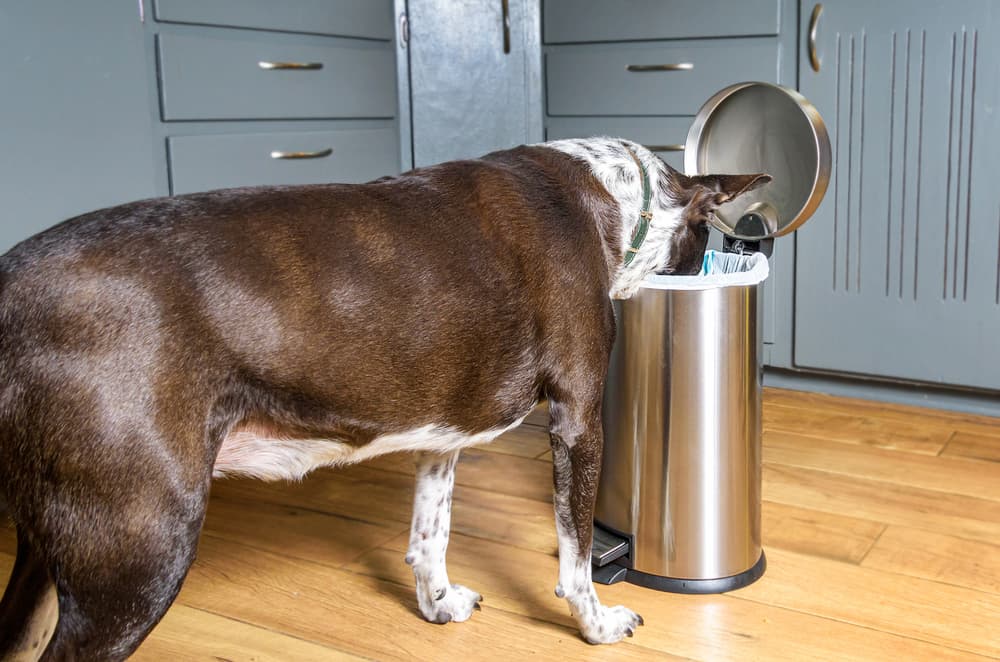
Since one successful garbage raid is often enough to kick off a lifetime of attempts, it’s best to manage the garbage situation around your home to prevent your dog from developing a habit.
Follow these helpful tips for keeping your dog out of the trash:
Dog-proof your trash can
Investing in a sturdy, dog proof trash can with a lock or heavy metal lid will make it challenging for your dog to get to the bounty. If a new trash can isn’t an option, try weighing the can down with a paver in the bottom of it to make it hard to knock over, and put a brick on the lid to keep it securely in place.
Remove temptation
Similarly, completely cutting off your dog’s access to the trash can is a simple way to prevent the problem. Putting the can under the sink or in a pantry removes the temptation.
Take out the trash
Another simple management technique is emptying your trash frequently, so there’s nothing good to get.
Practice place training
It can also be helpful to encourage behavior that’s incompatible with trash can foraging, like practicing place training with your dog while you’re prepping food. This involves helping your pup to learn that they need to remain in one spot like a bed or mat while you’re chopping veggies and throwing the scraps in the trash.
Brush up on ‘leave it’
You can also tidy up your dog’s “leave it” cue. If they try to crowd close to the trash as you work, you can encourage them to back away from it.
That said, raiding the trash can is highly reinforcing for dogs. This means that they might keep it up when you’re not around, even if you’re diligent with training exercises.
Dog and Trash Can: Final Thoughts
If you’ve got a dog getting into trash on a regular basis, try not to get discouraged. Remember that it can take a while to address this pesky behavior.
No matter how hard you work at it, this hardwired foraging behavior can reemerge at any time. You might think you’ve got it licked, but that one time you leave your powder room trash out in the open might be enough to reawaken your dog’s programmed “see it/eat it” behavior.
Like all canine behavior challenges, the easiest strategy is managing the environment to prevent the behavior from occurring.
Dog Ear Positions: What They Mean
- 2024-03-09T00:03:29
- Monica Weymouth
Everyone knows doggo ears are adorable. Even better, dog ears are powerful. These super-sensitive organs help canines hear sounds that humans can’t even detect. But have you heard (ahem) that dog ear positions can also offer insight into our pets’ moods and emotions?
“Ear positions are a great way to read a dog’s behavior,” says Dr. Lindsay Butzer, DVM, a veterinarian in Boca Raton, Florida. When you’re dealing with a dog, subtle ear movements can reveal whether they’re excited or apprehensive. “If you have a good understanding of dog expressions, this could help keep you and your dog safe,” she notes.
The more you know about dog ear positions, the more you’ll know about your four-legged friend. Ready to hear all about it? Lend us your ears!
Understanding Your Dog’s Ears: The Basics
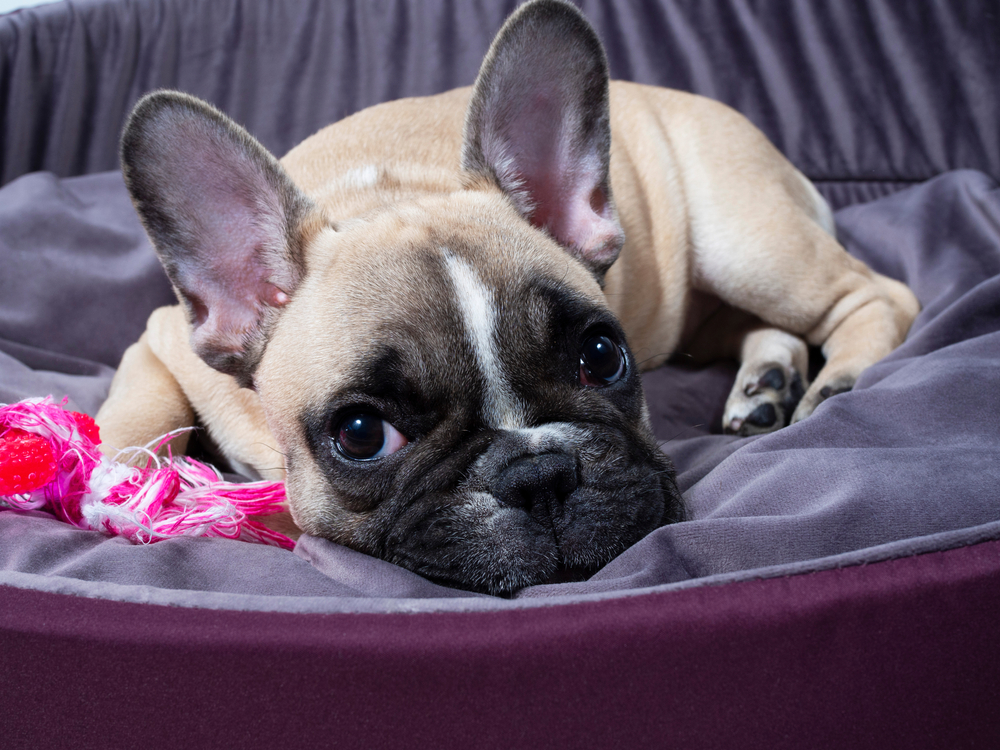
Can you wiggle your ears? In humans, this skill is extremely rare because we evolved to capture sound by turning our heads. So the muscles that control the outer ear are extremely limited.
However dogs have ear muscles that allow them to raise, lower, tilt, and turn their ears, explains California veterinarian, Dr. Bethany Hsia, DVM, co-founder of CodaPet.
This handy feature allows dogs to angle their ears toward incoming sounds to help them hear better. It also helps dogs communicate with other dogs (and humans!) through their body language.
“Ears can convey quite a bit about what a dog is feeling,” says Dr. Hsia. “Positioning can signify calmness, fear, stress, focus, and more.”
Dog Ear Position Meaning: Decoding Movements
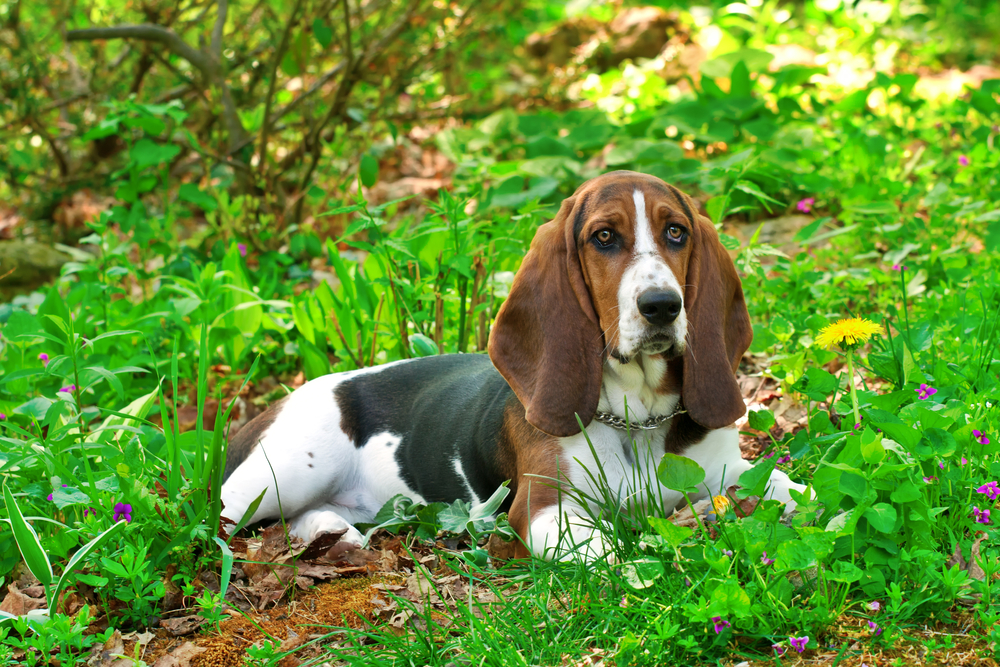
The size and shape of dog ears vary from breed to breed. Yet there are some dog ear positions and movements that most pet parents will find familiar. Here are some of the most common, and what they mean.
Neutral
“When relaxed, dogs may have their ears set at a 40-degree angle,” says Dr. Butzer. But your dog’s neutral ear position depends on their individual breed and unique anatomy.
If your dog’s ears naturally stand erect and upright, they may remain that way, even when relaxed. The same goes for dogs with droopier ears, like Poodles, Golden Retrievers, or Doodles. “Their ears may be simply floppy and flat when they are relaxed,” Dr, Butzer says.
Neutral ears usually mean all is well. “When dog ears are in a relaxed position, it typically indicates that the dog is calm and content,” says Dr. Hsia.
“We often see this ear position when the dog is at ease, feeling comfortable in their environment, and not experiencing any stress or anxiety,” Dr. Hsia notes.
Dog Ears Back/Flattened
When a dog’s ears are flattened or pinned back against their head, it can be a sign of fear or submission.
“This ear position can signal that the dog is trying to appear non-threatening,” says Dr. Hsia. “Or they could be feeling intimidated by a person, animal, or situation.” If you see this dog ear body language, your pup might need reassurance and support to feel safe, she adds.
However, flattened ears can also signal excited affection. Breeds including Lapponian Herders, Huskies, Doberman Pinschers, and Corgis are known for pinning their ears back in an excitedly playful manner, notes Dr. Butzer.
“Pinned-back ears are a hard one to decode,” says Dr. Butzer. In some dogs, it could signal fear, while others could just be acting squirrely and sweet.
Dog Ears Perked Up/Forward
Unlike pinned-back ears, perky ears are fairly straightforward. Dogs often position their ears forward if they hear something exciting, like someone opening the cheese drawer or the school bus approaching.
“This ear position shows that the dog is engaged and focused,” says Dr. Hsia. “Dogs will often raise their ears and point them forward when they are interested in a new sound, smell, or sight.”
If your dog’s perked-up ears start to lean forward even more, their anticipation may be growing. Take this as a sign that things have escalated from “curious excitement” to “it’s go time,” says Dr. Butzer. Be on your (literal) toes, as a chase may soon follow.
Changing Positions
If your dog’s ears move through a variety of positions, this can indicate a developing situation. Just as you might cycle through different expressions when reading a text message, your dog’s ears may move around as they take in information.
“Ears that are changing positions mean your dog might be thinking or processing the sounds they are hearing,” says Dr. Butzer. “They may even tilt their head to try to hear the sound from different perspectives to figure out what it is.”
Dog Ear Positions Chart
What do common dog ear positions mean? Consult this handy chart for on-the-go info.
| Ear Position | Meaning | Additional Body Language |
| Neutral | Calm, content | Loose body; relaxed gaze; slightly open mouth; soft eyes |
| Flattened (scared) | Stressed, submissive, fearful | Whining, whimpering, or barking; tucked tail; tight lips; raised hackles; dilated pupils |
| Flattened (affectionate) | Affectionate, playful | Wiggly body; “puppy eyes”; licking; wagging tail |
| Perked Up | Excitement, focus | Wide eyes; closed mouth; extended tail that may wag slightly |
| Changing | Gathering information, formulating a response | Moving eyes; tilting head; leaning forward |
Dog Ear Language: Looking for Context
As expressive as they are, dog ears only tell part of the story. That’s why it’s important to consider your dog’s ear position related to their overall body language.
Dr. Hsia recommends paying equal attention to your dog’s eyes, mouth, tail, posture, and vocalizations. “Dogs use their entire bodies to communicate,” she says. “When we look at the whole picture, we better understand individual positions and movements.”
Additionally, some ear-related movements – such as head tilting, head shaking, and ear scratching – may indicate an underlying medical condition, such as an ear infection, mites, or polyps, adds Dr. Butzer. In these cases, a prompt visit to your veterinarian is in order.
The bottom line? Just like your dog, your dog’s ears are extraordinary! “Tune in” to your dog’s ear positions to understand what they’re telling you. And consult your veterinarian if you have any concerns about your dog’s ears or their health. Hear, hear!
Grumpy Dog: 5 Reasons Your Dog Is Irritable
- 2024-02-12T15:24:26
- Elizabeth Claire Alberts
Dogs can experience many of the same emotions as humans — happiness, sadness, fear, anger. So it should come as no surprise that dogs can feel irritable, too.
A grumpy dog might let out a snarl or move away when you try to touch them. But don’t take it personally if your furry best friend acts this way toward you. When a dog experiences irritability, they usually have a good reason for their behavior.
If you have a crabby canine companion, keep reading. Our experts share potential reasons for grumpiness in dogs, plus advice on how to help a prickly pooch.
Do Dogs Get Grumpy?
Yes, dogs can act grumpy, says Dr. Maggie O’Brian, a veterinary behaviorist at Southeast Animal Behavior and Training. However, “irritable” would be a more appropriate word, she says, since “grumpy” can have a negative connotation.
“We can see irritability in dogs,” Dr. O’Brian says. “Typically that would be a dog that has a shorter fuse or a lower tolerance for certain triggers or interactions.”
How can you tell if your dog is feeling irritable? Dogs who feel this way may exhibit antisocial behaviors. “They may avoid certain interactions with people or be more likely to show aggression, such as growling or snapping,” Dr. O’Brian says.
Dr. Leslie Sinn, a veterinary behaviorist at Behavior Solutions, says you can often tell that a dog is getting irritated through their body language.
“You may see things like head ducking or showing the whites of their eyes,” Dr. Sinn says. “You may see things like lip licking as they start getting more and more uncomfortable. You can see worry wrinkles on their foreheads. You can see their ears get pinned back. Also, a crouched body posture, or leaning away from a person.”
It’s also essential to try and determine why a dog is acting grumpy, Dr. Sinn says, especially if they’re not always irritable. “Why is a dog not wanting to have that interaction?” she asks.
Experts say there is usually a medical reason for irritability in dogs — and one of the primary causes is pain or discomfort. But other factors like stress might also cause your dog to be grumpy. Let’s unpack some of the possibilities.
Why Is My Dog Grumpy? 5 Potential Reasons

Here are a few common reasons why dogs get grumpy:
Pain or Discomfort
“Irritability … is almost always pain related,” says Dr. Sinn. Musculoskeletal issues — that is, issues related to a dog’s muscles or bones — are a common cause of pain in dogs.
Dogs can experience a variety of musculoskeletal issues, such as injuries like sprains and fractures, orthopedic conditions like hip dysplasia (abnormal formation of the hip joint), and joint pain associated with osteoarthritis.
But any medical problem that causes pain or discomfort — gastrointestinal issues, headaches, glaucoma — can also lead your dog to be irritable. All of which is quite understandable, if you think about it.
“It’s similar to how someone with a bad headache may be quicker to snap or be short with their words,” Dr. O’Brian says.
Skin Problems
Another common reason for a dog being grumpy is skin problems, such as hot spots or flea allergy dermatitis.
Itchy skin — or pruritus, as it’s known medically — can cause a dog to feel irritable, Dr. Sinn says. “If you’ve ever experienced a sunburn or [sun poisoning], or if you’re allergic to poison ivy … it does not increase your bandwidth in terms of being able to deal with day-to-day life,” she adds.
A recent study also found that dogs with atopic dermatitis, which can cause excessive itchiness, sometimes result in a dog displaying behaviors associated with anxiety, fear, or aggression [1].
Stress
A grumpy dog might also be a stressed-out dog. A dog’s irritability might be exceptionally high when they encounter several stressful events around the same time, which Dr. O’Brian calls “trigger stacking.”
“For instance, if a dog’s tail got stepped on in the morning, they were separated in their crate later that day because a maintenance worker comes to the house, and then in the evening the cat in the house tries to play roughly with them, that may result in aggression,” Dr. O’Brian says. “On a more typical day, the dog may have tolerated that interaction better.”
A Change in the Environment
If the environment isn’t quite right, your dog might not be quite right. Maybe you’ve recently switched jobs or welcomed a new pet to the family, and your dog’s normal routine has been disrupted.
“Environmental stressors in general can lead to irritability,” says Dr. O’Brian. “If there is a lot of noise, activity, or if another animal or person in the environment continues to pester or disrupt the dog, this may lead to irritability. Conditions such as underlying anxiety or fear may make a dog more prone towards getting irritable.”
Aging
While age itself doesn’t necessarily cause a dog to be irritable, senior dogs are more susceptible to medical issues that may cause grumpiness.
“Aging dogs are at more risk of osteoarthritis, [cancer], sensory loss, and other disease processes,” Dr. O’Brian says. “This may lead them to not feel their best, which can then lead to more irritability. If a senior dog shows new or worsening irritability, particularly aggression, an underlying medical concern would be strongly suspected, assuming nothing else in the environment has changed.”
How to Help a Grumpy Dog
If your easy-going dog suddenly starts displaying grumpy behavior, the first thing you should do is take them to the veterinarian for a check-up. That’s because, in most cases, irritability in dogs indicates a medical problem that needs to be addressed.
With senior dogs, try to avoid chalking up behavioral changes like grumpiness to old age. “Instead of just shrugging it off and saying the dog is getting old … the dog’s getting grumpy, I would really urge [pet parents] to look a little bit deeper,” Dr. Sinn says. Have your veterinarian investigate to see if there is an underlying physical cause for your pet’s behavior.
If your veterinarian has ruled out a medical issue, there are other steps you can take to help your grumpy dog feel better. “If the environment is overwhelming, try to reduce the stimulation by providing a quiet, safe place,” Dr. O’Brian says. “This can have white noise, classical music and some food toys.”
How you respond when your dog is acting irritable is also key, Dr. O’Brian adds. “It’s important to never punish a dog for behaviors such as growling or snapping,” she says. “These are forms of communication, and dogs are asking us for space or to discontinue an interaction.
“Punishing this behavior can further exacerbate the dog’s stress level or teach them not to use their warning signals in the future,” Dr. O’Brian continues. “Dogs that don’t give warning signals but still feel the same way are more dangerous and typically more stressed. We want to give them space and speak nicely to them and try to adjust the environment to help them feel more relaxed.”
References
- McAuliffe, Lindsay R et al. “Associations Between Atopic Dermatitis and Anxiety, Aggression, and Fear-Based Behaviors in Dogs.” Journal of the American Animal Hospital Association vol. 58,4 (2022): 161-167. doi:10.5326/JAAHA-MS-7210
10 Things That Annoy Your Dog: What NOT To Do
- 2024-01-30T03:41:54
- Rebecca Smithem
First things first: Your dog adores you. They think the world of you. Of course they do – why else would they be looking at you with those big, sweet, loving puppy eyes as you read this?
But have you ever gotten the feeling that you might, ahem, annoy your faithful friend on occasion?
Just like humans, dogs aren’t always thrilled with the routines, habits, and decisions of their companions. But unlike your college roommate, your dog can’t exactly talk it out over a pizza.
Not to worry! While you probably do annoy your dog from time to time, there are plenty of ways to improve your communications skills and strengthen your relationship. Read on for expert insight into what annoys dogs, as well as important tips for bonding with your bestie.
Do Dogs Get Annoyed?
So, do dogs actually get annoyed? The answer is a murky “yes and no.” If you go by the Merriam-Webster definition – “to disturb or irritate, especially by repeated acts” – then yes, dogs get annoyed.
However, it’s important to note that dogs don’t hold grudges or assign blame, which are more complicated (some may even say “petty”) emotional reactions experienced by annoyed humans.
“Dogs and humans don’t process emotions identically,” says Dr. Cheri Honnas, owner of Honnas Veterinary in Austin, Texas, and veterinary advisor to Bone Voyage Dog Rescue. “True, our canine companions possess a spectrum of emotions, but their perception of these feelings can differ significantly from ours. If we label a dog as ‘annoyed,’ it’s more akin to the dog feeling distressed or ill at ease, not exactly the layered emotional state humans refer to as ‘annoyance.’”
10 Things That Annoy Dogs
Every dog is unique and may tolerate or be annoyed by different things. However, the following are common sources of canine contention.
Skimping on Walks
If your pup seems annoyed when you cut the walk short, you’re probably right. In addition to physical exercise, walks provide dogs with valuable mental enrichment. “Quick, perfunctory walks can frustrate dogs,” says Honnas. “Hasty strolls don’t afford them the necessary opportunity to sniff and interact with their environment.” In other words, don’t head for home as soon as “business” is complete!
Intense Cuddles
Although some dogs can’t get enough snuggle sessions, many pups dislike excessive physical affection. “While we often associate dogs with cuddliness, it’s possible to overdo it,” Honnas explains. “Some dogs, particularly those with traumatic pasts, might not take kindly to tight hugging or constant petting.”
Dog Clothes and Costumes
While some dogs (and basically all humans) enjoy a good doggie Halloween costume, most of our four-legged friends prefer their birthday suits. “Unless you have trained your dog gradually to wear clothing, dressing them up can be very stressful for them,” says Dr. Corinne Wigfall, veterinary advisor at Spirit Dog Training. “Is it that important for your dog to wear a hat, a set of bunny ears, or antlers? Probably not, so it is best to avoid doing this to your dog.”
Vacuuming
The droning sound of a vacuum cleaner is classically annoying – especially to dogs, who are easily stressed by loud noises. “Vacuuming is part of the lifestyle of owning a fluffy pup, however, this very loud moving object can be scary to some dogs,” Wigfall notes. “Avoid using it in the same room as your dog, or better yet, put your dog in the [yard] so they are away from it when being used.”
Being Left Alone
As social creatures who thrive alongside humans, dogs prefer to be with their families. Being left alone for long periods of time is annoying and stressful for our canine companions and can lead to serious conditions such as separation anxiety. “Dogs dislike prolonged isolation, and in extreme cases, they fear being alone,” says Wigfall.
Interrupting Sleep
As the saying goes, “let sleeping dogs lie.” According to Blythe Neer, a certified dog trainer and owner of Delta Tails, “Just like humans, dogs need quality sleep. And way more hours than we do! Some dogs need 16-18 hours per day.” When your pup is napping, be considerate and let them snooze in peace.
Strong Fragrances
Dogs have a famously keen sense of smell, which comes in handy for exploring the world. However, their next-level noses can make artificial fragrances and chemical-laden cleaners overwhelming. “Strong fragrances, chemicals, and artificial smells can be bothersome to dogs,” says Wigfall. “Things like scented candles, essential oils, air fresheners, and perfumes can even irritate or cause allergic reactions in some animals.”
Lack of Routine
Without a consistent daily routine, dogs are unsure when (and if) their needs will be met – which we can all agree is the epitome of annoying. “Dogs love a daily routine and are creatures of habit,” Wigfall explains. “They love consistency when they are walked [or] expecting food, and when they go to sleep.”
Staring
How rude! Just as most humans don’t like being stared at, dogs find the behavior uncomfortable. “Prolonged gazing or staring into a dog’s eyes is a threatening behavior seen as a challenge,” says Wigfall. “Avoid staring into their eyes for more than a few seconds.”
Shouting
This one can’t be stressed enough. Punishing your dog by yelling is annoying, confusing, and scary. Furthermore, it’s ineffective and can lead to more unwanted behaviors. “Dogs can’t understand the words we use, but they can understand and sense our emotions,” Wigfall elaborates. “Anxious and submissive dogs can find shouting and harsh punishment very scary. Positive reinforcement and reward training is much more effective and kinder for your dog.”
How to Tell if a Dog Is Annoyed
Your pup may not be able to talk, text, or write passive aggressive notes. But dogs offer plenty of clues about their emotional states through body language. “Dogs do get annoyed, just like humans do – they just show it differently,” says Neer.
Wondering if your dog is annoyed? Neer advises looking out for these telltale signs:
- Moving away from a person or thing
- Stiffening their face
- Lip licking
- Yawning
- Baring their teeth or growling
- Barking
- Snapping
Familiarize yourself with your dog’s personal body language and pay close attention for changes or signs of stress. “These signs may seem subtle at first, but it is important to look out for [them] to keep a happy relationship between the two of you,” Neer advises.
5 Tips to Bond With Your Dog
Like all relationships, building a strong bond with your dog takes time, effort, and understanding. Fortunately, it’s also a ton of fun! Consider these tips for helping your best bud live their happiest, healthiest life.
Practice Lifelong Training
Long after puppy school graduation, positive reinforcement training is a great way for you and your dog to have fun together and learn more about each other. “Obedience classes and training are not solely about teaching commands,” says Honnas. “They’re also about comprehending your dog’s signals and respecting their personal space. The focus should be on communication, rather than control.”
Stick to a Consistent Routine
When your dog knows what to expect day-to-day, they can relax and focus on being their best selves. “Set a daily routine with lots of playtime and walks,” Honnas advises. “If your dog can’t be with you all the time, look for a pet-sitter or ask a friend who the dog knows to spend time with them.”
Provide Plenty of Enrichment
Like humans, dogs need physical and mental exercise to stay happy and healthy. Work with your veterinarian to determine the ideal amount of physical activity for your pup and provide plenty of engaging toys and puzzle feeders to keep their brain busy. “Dogs need, at the very least, three hours of exercise per week, along with a variety of enrichment activities,” says Neer. “If you don’t meet those needs, you will see destructive chewing, barking, pulling, and other behaviors we don’t necessarily enjoy as humans.”
Recognize and Respect Body Language
Learn about canine body language and be aware of what your dog is trying to say. “Understanding a dog’s behavior is paramount in recognizing their comfort level,” says Honnas. “Familiarizing yourself with your dog’s individual traits, likes, dislikes, and comfort zones paves the way to a strong, affectionate bond with your four-legged friend.”
Visit Your Veterinarian Regularly
Routine wellness appointments can help ensure your dog is physically and mentally healthy, as well as establish their baseline “normal.” If you notice any changes in your pet’s behavior, be sure to check in with your veterinarian – new annoyances or avoidances could be a sign of an underlying illness or injury.
Dog Memory: How Much Do Dogs Remember?
- 2024-01-19T22:12:19
- Jen Phillips April
There’s nothing like thinking back over your favorite memories of your dog to bring a smile to your face. But have you ever stopped to ponder how dog memory works? Do dogs have memories like people do? And, if so, how long is a dog’s memory?
It’s only natural to wonder if dogs can reminisce about past events. And though research on dog memory is limited, there’s growing evidence showing that dogs can learn and recall words, commands, people, and places.
We talked to some leading experts to learn more about dog memory and how it works.
Do Dogs Have Memories?
So, what do veterinarians have to say on the topic? We asked veterinarian and anthrozoologist Patrick Flynn, DVM, MS, CCFP, who serves as President of the Human Animal Bond Association, which means he pays a lot of attention to the connection between people and their pets.
“I think it’s safe to say dogs do remember specific things,” Dr. Flynn says. “There are many examples — from the dog who knows right where he buried toys and bones in the backyard, to the dog whose person has been deployed for many months. The recognition upon their return is instant and deep.”
It’s important to note that some dog memories can be quite painful. “Physically abused dogs certainly remember that experience, “ adds Dr. Flynn. “It can take quite an effort to get them past that and to trust again.”
Can Smells Trigger Dog Memories?
With some dog breeds having 100 million scent receptors (way more than the measly five million or so that humans possess), dog noses can capture a lot of information. In many ways, scent is akin to language for dogs.
While Dr. Flynn is unaware of any studies that track a dog’s scent memory, he says the similarities between dog and human brain wiring indicate there could be a connection.
“I would bet they are like us, in that — even many years later — a smell can quickly surface a detailed memory,” Dr. Flynn says.
And because dogs have such an impressive sense of smell, a big part of their memory could also be scent-based.
Do Dogs Remember Their Siblings or Parents?
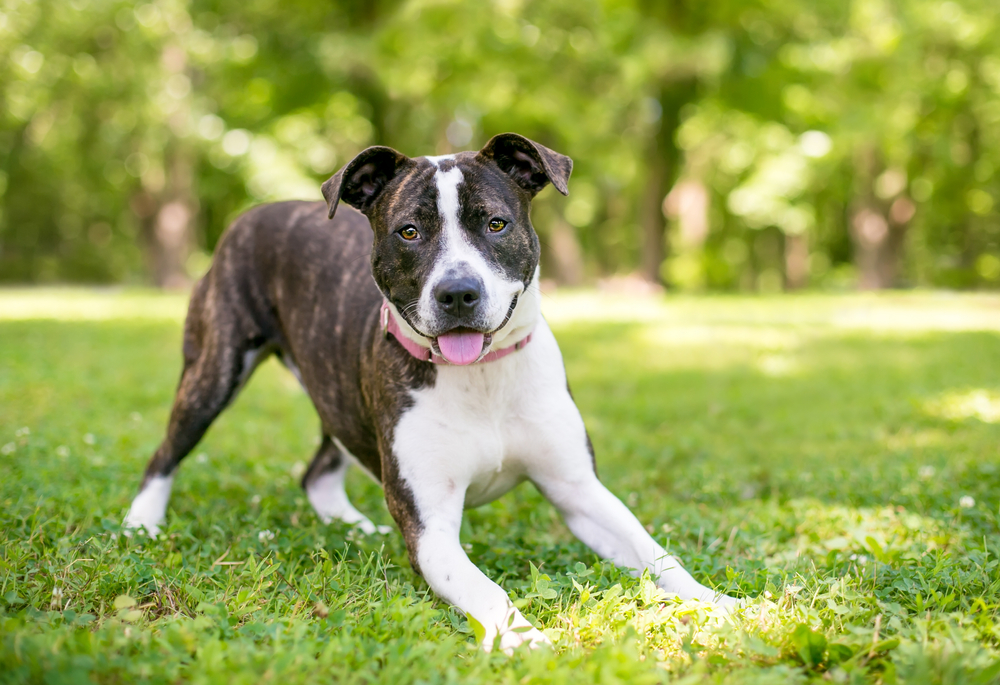
Could that advanced sense of smell help dogs remember their parents or littermates, even after a long period apart?
We’ve all heard stories about long-separated siblings reuniting by chance after an encounter in a dog park. But is there any truth to these tales?
Dr. Flynn reports this isn’t an extensively evaluated area. He does say, “In my experience as a veterinarian, I’ve seen both recognition and no response at all.” So it may depend on the dog and the situation.
“I’d hypothesize that recognition is likely a function of the amount of time spent together as young pups,” Dr. Flynn suggests. “If they all mature together, I would think there would be an increased likelihood of long-term recognition.”
Do Dogs Remember People?
So back to our original question: Do dogs possess memories of us like we do of them? According to some research, the answer is a (qualified) yes.
In general, dogs display relatively poor short-term memory. According to National Geographic, one 2014 study found that dogs tend to forget arbitrary events within two minutes. However, when it comes to events or stimuli that affect their survival — such as where to find food or the scent of a predator — dogs can form long-term associative memories.
So that means when your dog seems super happy to see you at the end of the day, it’s not your imagination. Your dog does remember you! But it has more to do with the food, shelter, and safety your dog associates with you than any particular heart-warming memory.
That’s OK, though. You have enough of those memories for both of you.
What About Cognition Skills? Can Dogs Remember Words?
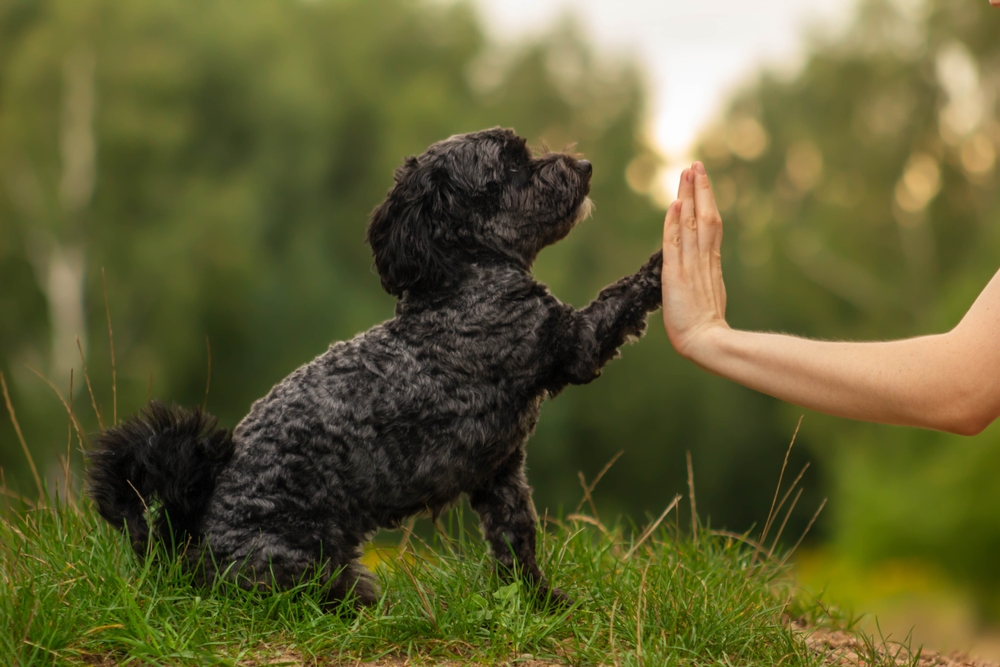
Many dog parents have pets who can recognize words like “walk,” “treat,” and “ride.” (Even when you try to get sneaky and spell them out!) But if you’ve ever wondered just how much of your conversation your dog can comprehend, the answer might surprise you.
Many dogs can learn and remember more language than you might think. Furthermore, research shows that at least some dogs can understand full sentences!
According to an article in Popular Science, one Hungarian study found many family dogs can have the same understanding of language as an 8-month-old infant. The study ran MRI tests on dog subjects and found that dog brains and human brains reacted the same way to structured language, like complete sentences.
Of course, some dogs are more capable than others. Chase the Border Collie learned the names of 1022 different toys and appeared on the PBS science show NOVA with Neil deGrasse Tyson to display his toy and name-matching prowess.
When it comes to working dogs, there seems to be no end to their recall. From herding to bomb-detecting, these highly trained dogs are trained to remember much more than your average house pet. Psychology Today even reports that service dogs in support of patients with Alzheimer’s and dementia can respond to a cue to lead the patient home if they become lost or disoriented.
How To Improve Your Dog’s Memory
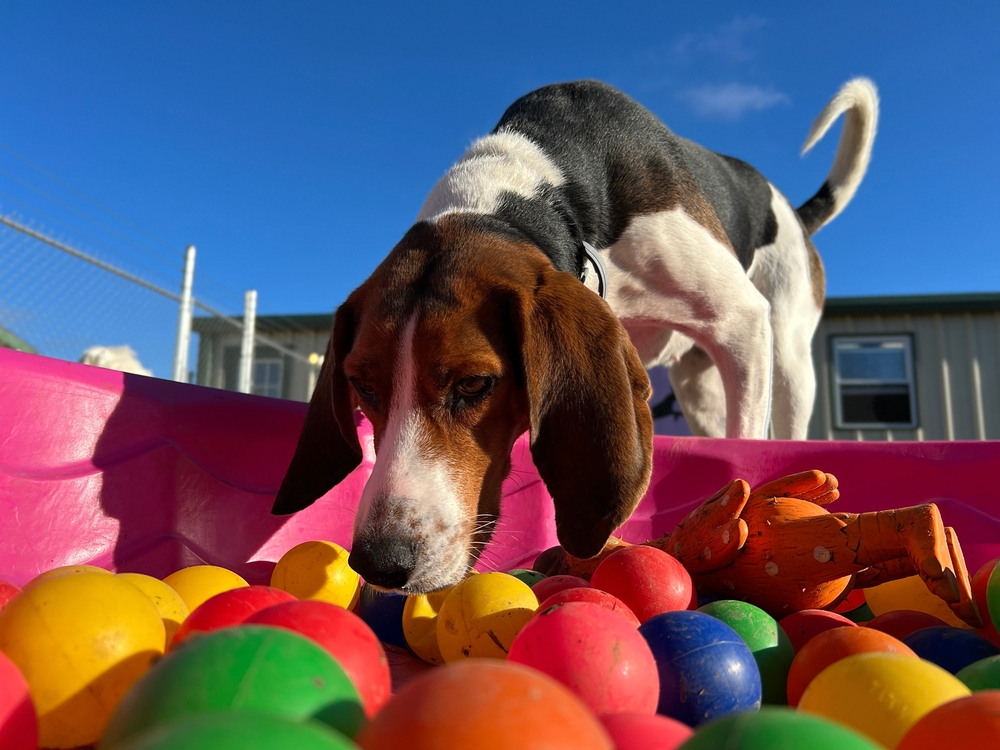
Whether you’re working with a puppy learning new skills or an adult dog, the key to boosting your dog’s memory and recall are patience and repetition.
Remember, dogs develop longer-term memories due to association. So be sure to lavish them with attention, play with them, and create positive associations with whatever behavior you are trying to reinforce.
Mental stimulation can also help your pup stay sharp. If your dog spends a lot of time alone, consider a puzzle to help keep their brain engaged.
Finally, as your dog ages, you may notice some memory changes. For example, your dog may seem confused or anxious. They may forget things, such as which way the door opens or where their bed is.
These could be normal signs of aging or a warning sign of a serious condition, like Canine Cognitive Dysfunction. Whatever the cause, always remain patient and supportive. And be sure to talk with your veterinarian about your dog’s memory lapses to come up with a plan or treatment that is best for your pet.